Dressers and bedside tables: how to choose and match them in the bedroom
In addition to the bed and the wardrobe, storage units are also of the utmost importance in the bedroom: the trick is ensuring they have the right amount of space and balance. Even though both are used for storage purposes, dressers and bedside tables are distinctive pieces of furniture, differing not just in terms of their size, but more obviously in the way they are used. It isn’t always easy to figure out which ones you need, what sizes to go for and, most importantly, how to pair them with the other furnishings.
In this article we will be looking at:
- The difference between bedside tables, dressers, drawer units and tall chests of drawers
- What storage units are required in the bedroom
- What measurements to consider before making a purchase
- How to match or combine dressers or bedside tables with the bed and the other elements in the bedroom.
- Frequently asked questions when considering dressers and bedside tables
Bedside tables, dressers, drawer units and tall chests of drawers: what are the differences?
The names might create some confusion, mainly because they are often used interchangeably in everyday life. However, in reality, each of these items of furniture is designed to meet different functional and spatial needs.
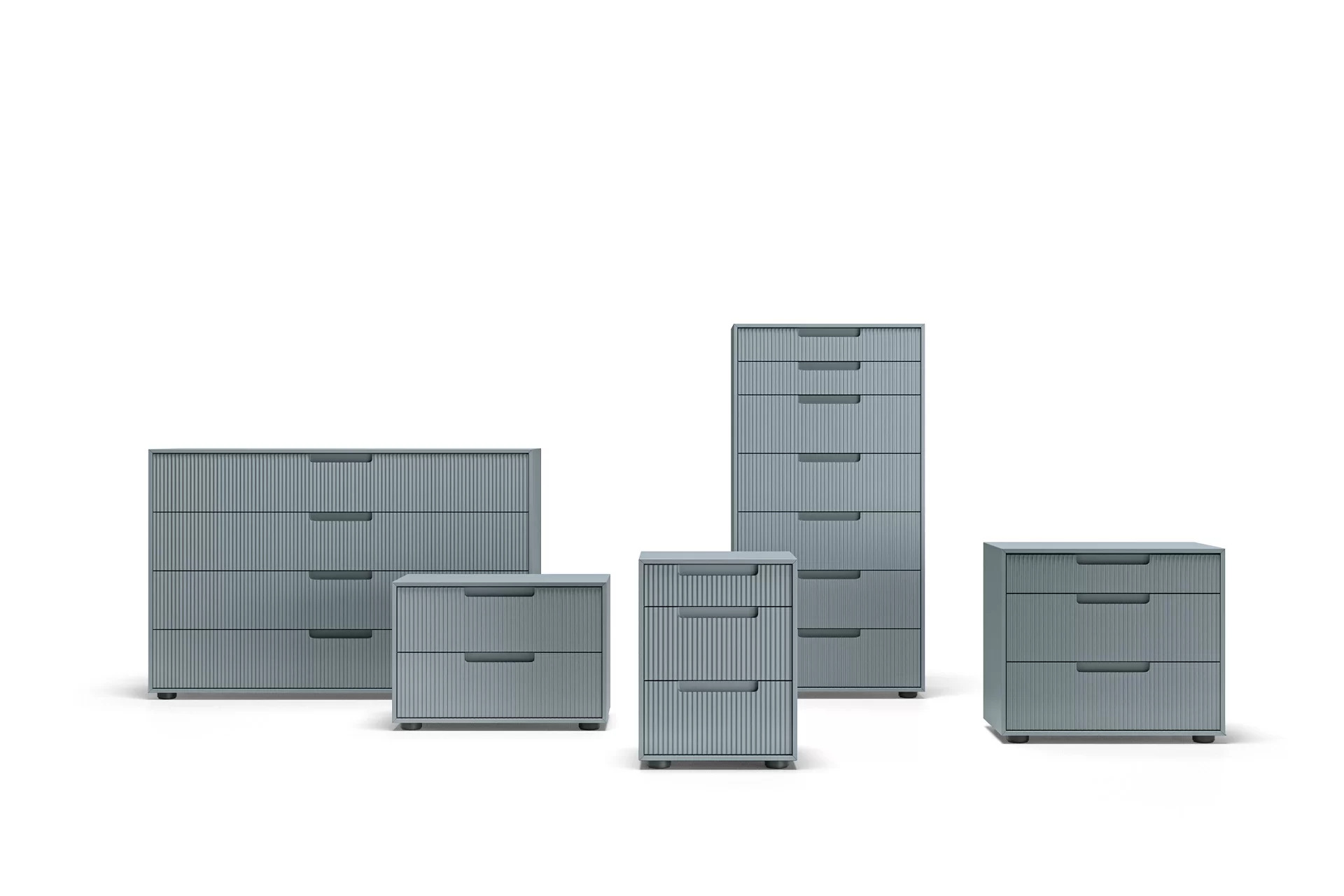
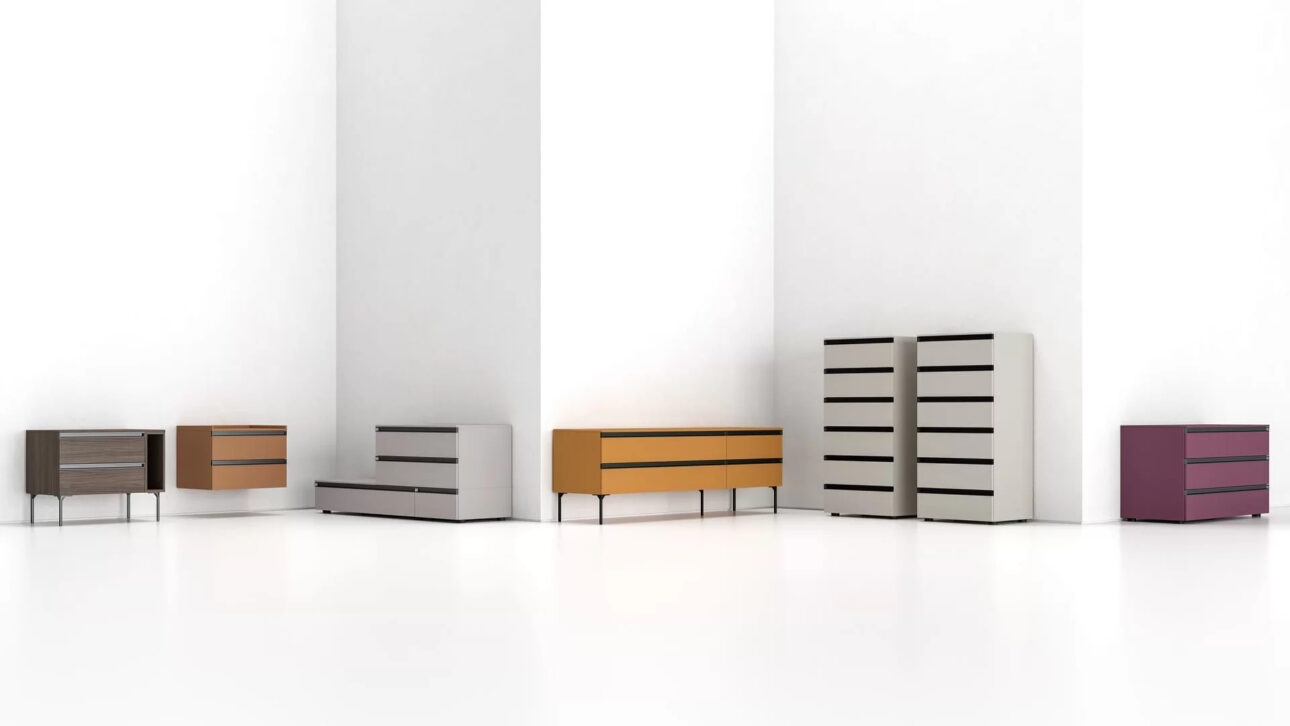
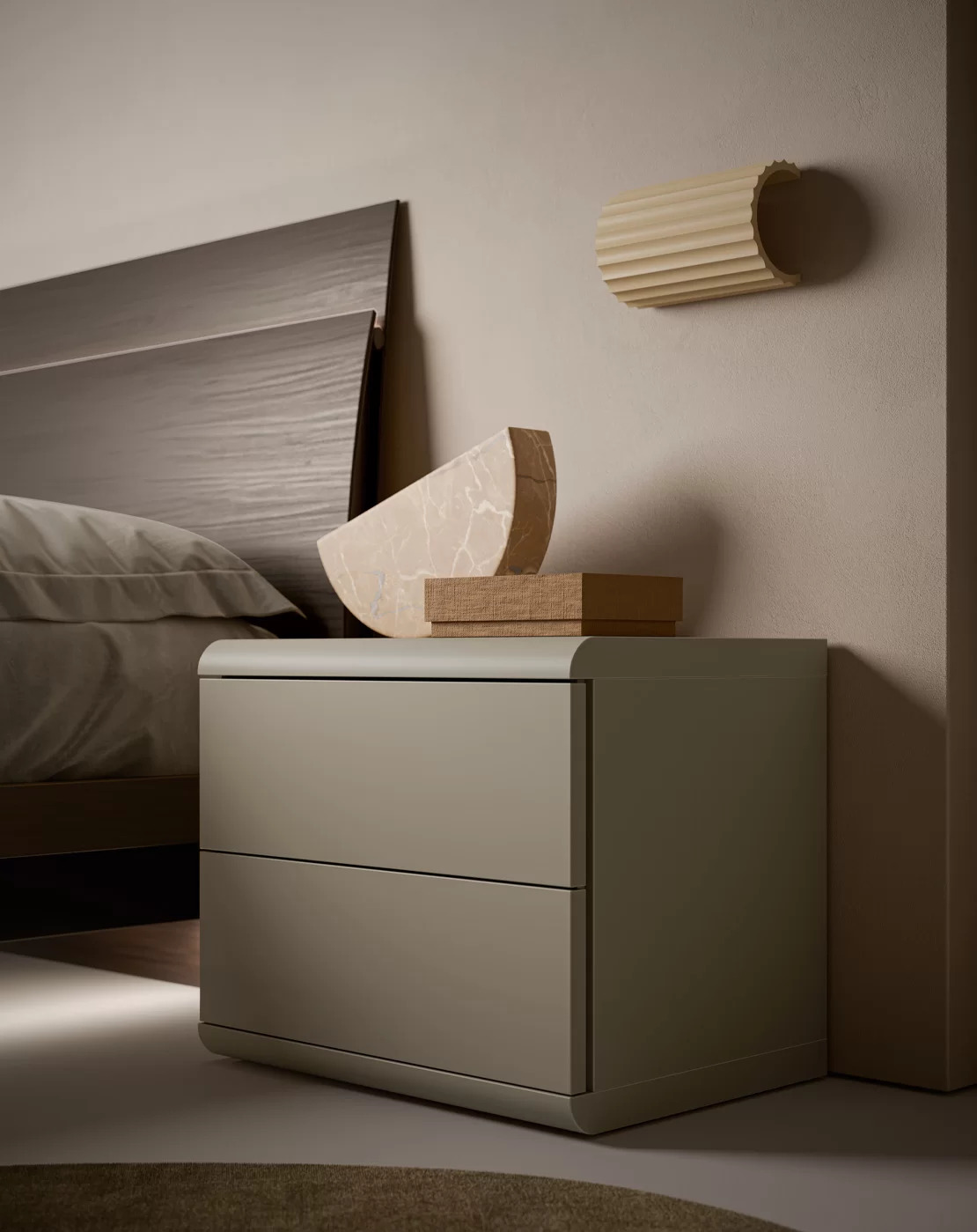
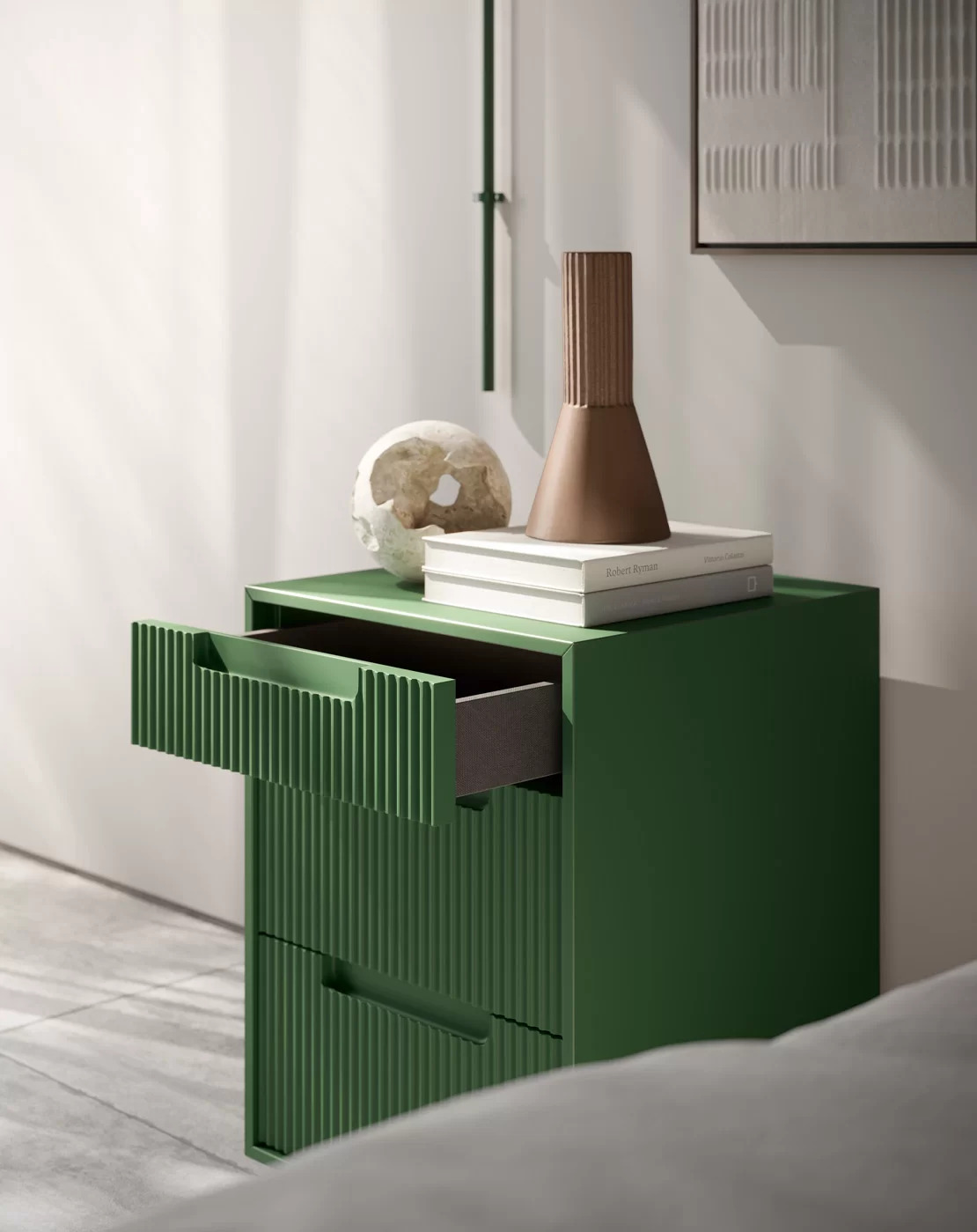
As the name suggests, the bedside table is the element closest to the bed. Generally modest in size, it can have between one and three drawers and offers a surface space for a lamp, books, glasses and all the other essentials you want to keep close at hand when in bed.
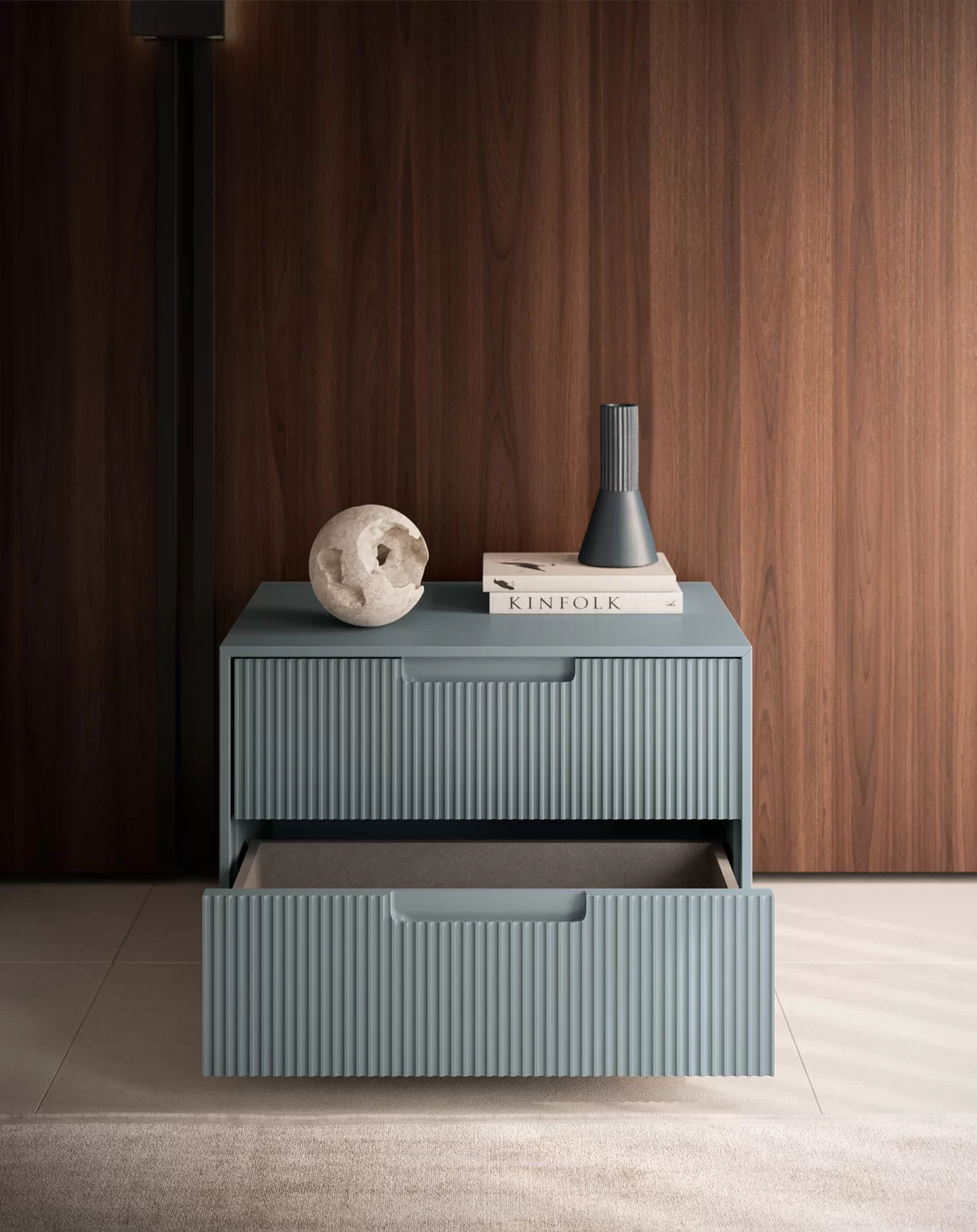
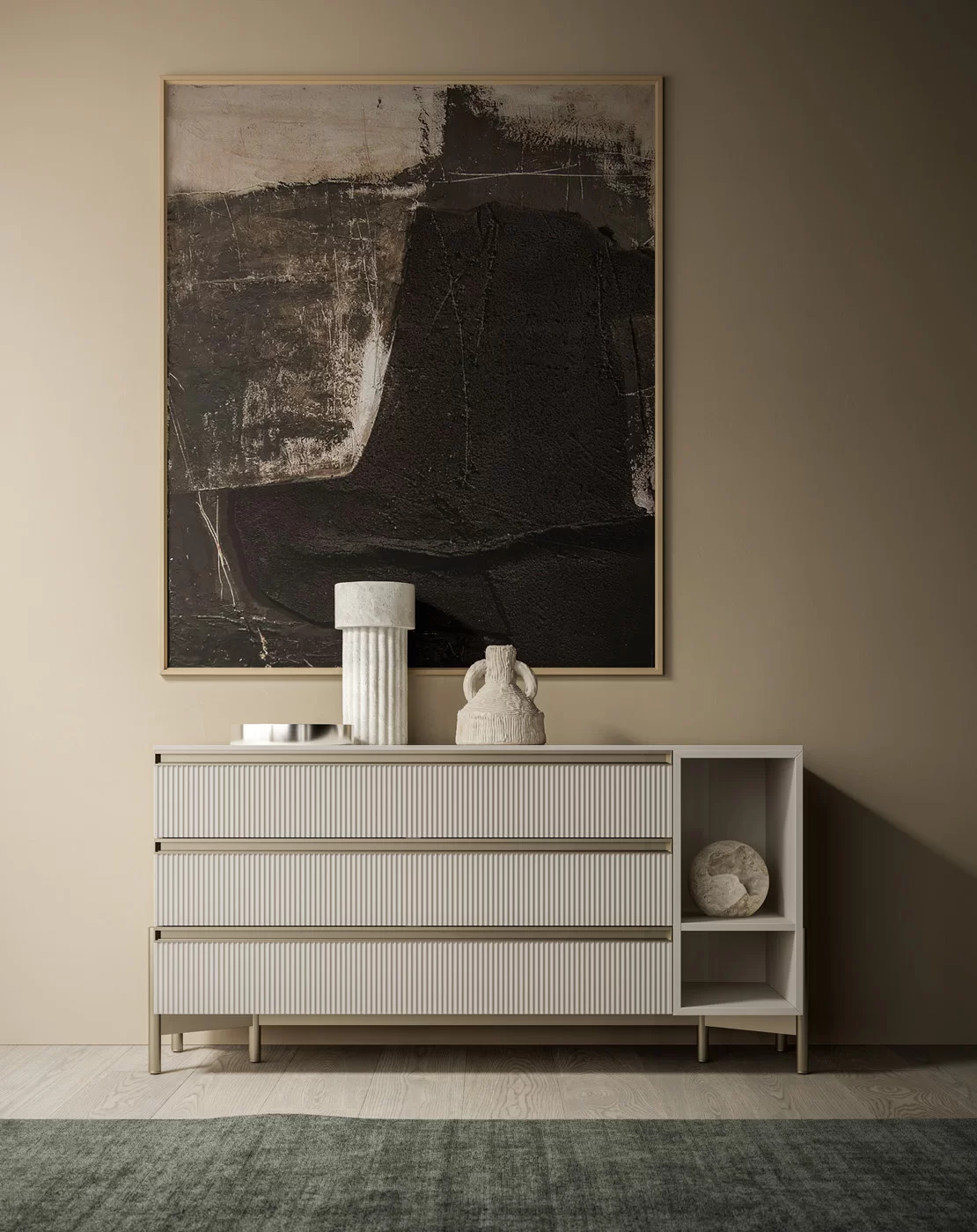
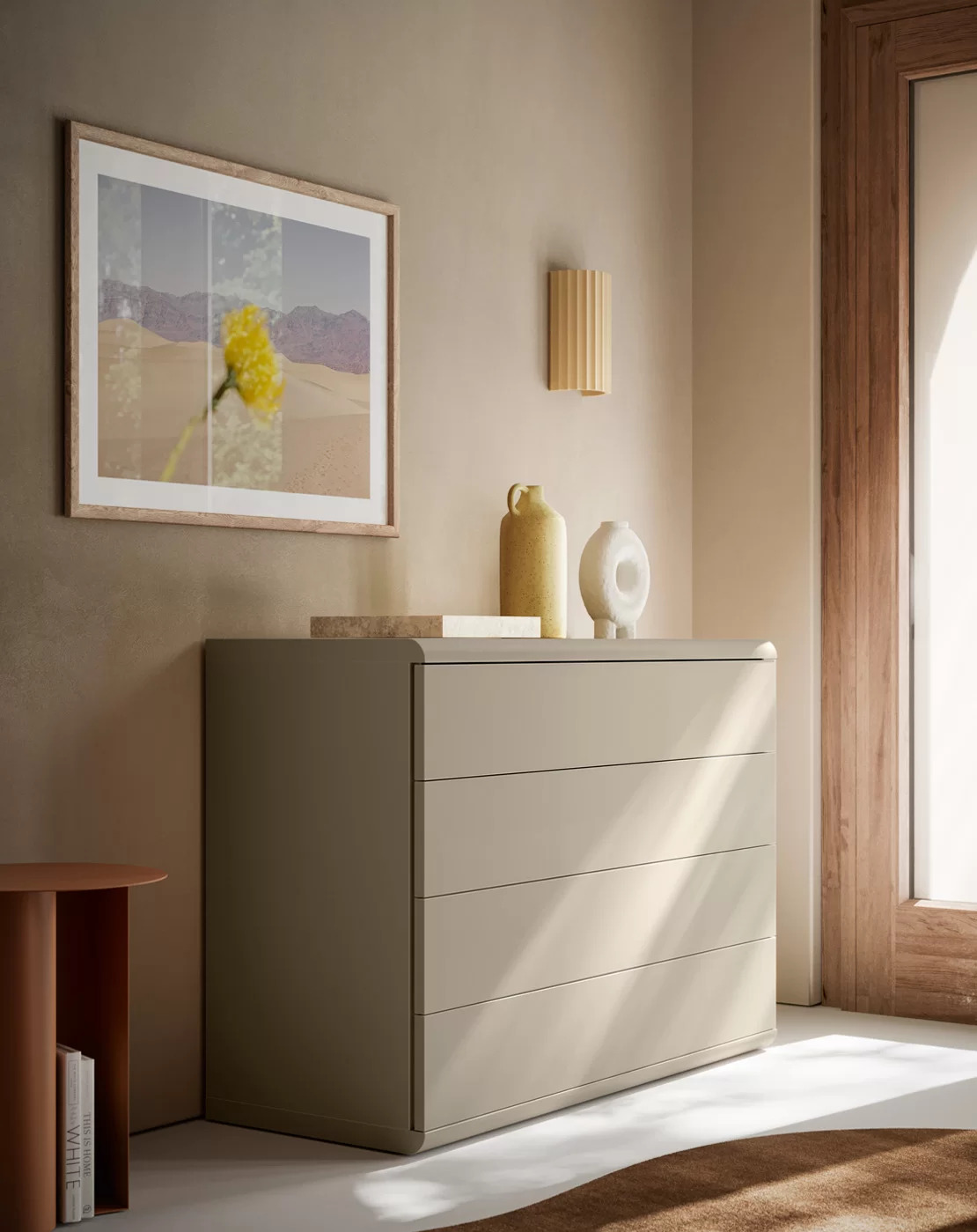
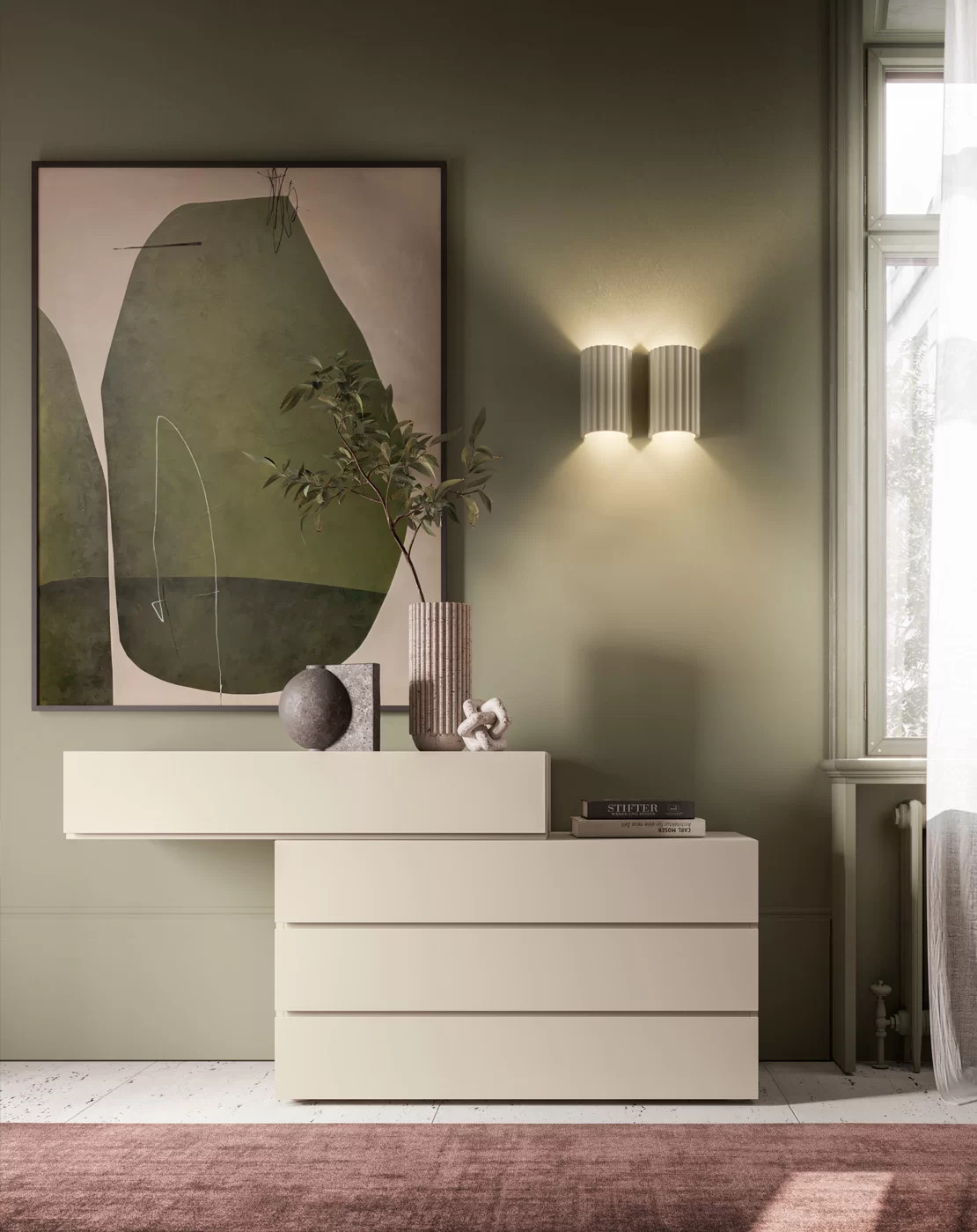
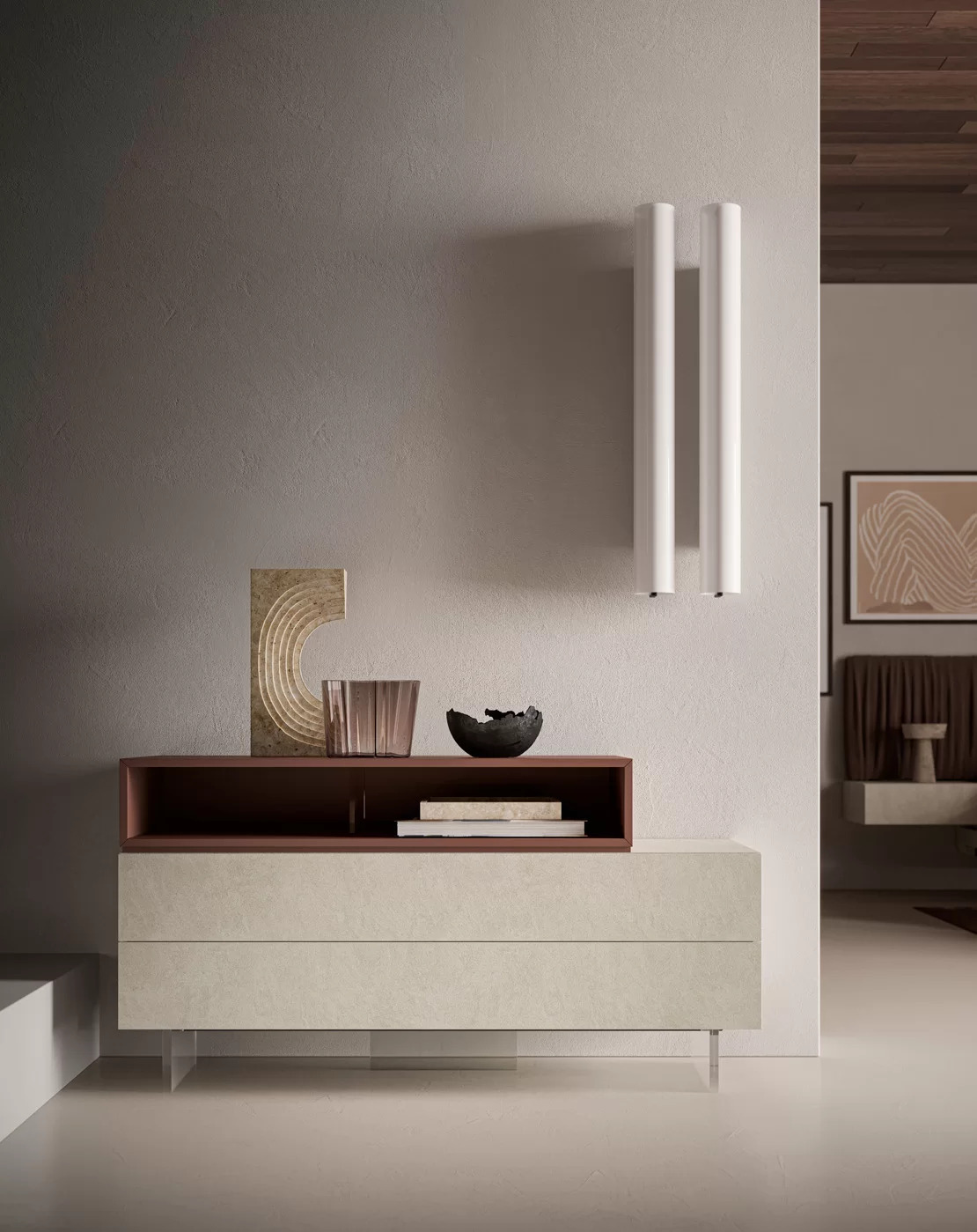
A dresser is a wide, deep unit, generally fitted with three or four drawers, which offers greater storage capacity than a bedside table. In the bedroom, it is mainly used to store linen, clothes and accessories.
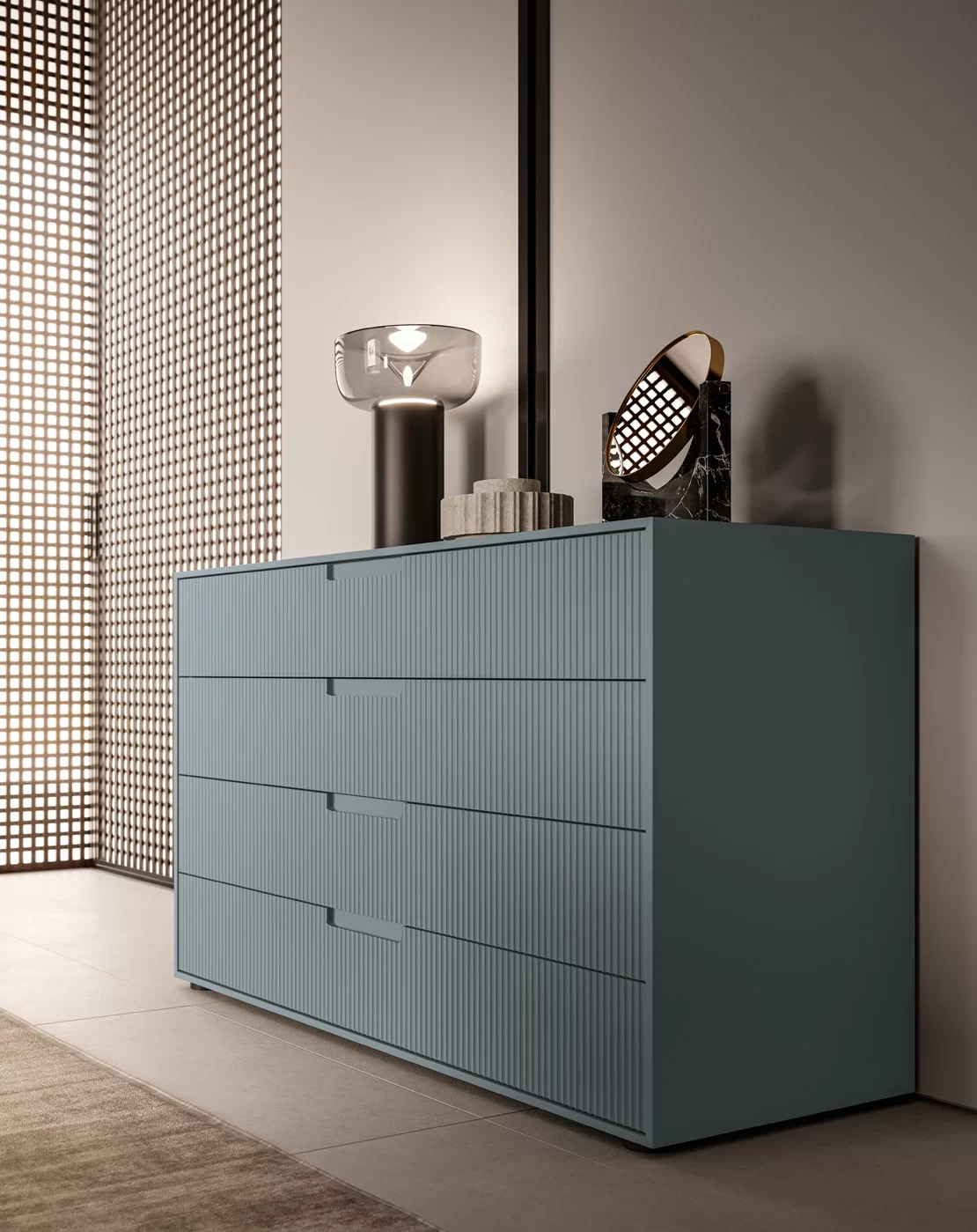
Drawer unit is a generic term for a storage unit with drawers that you might find anywhere in the house. In the bedroom, it often refers to a piece of furniture that is taller and slimmer than a dresser, perhaps with feet.
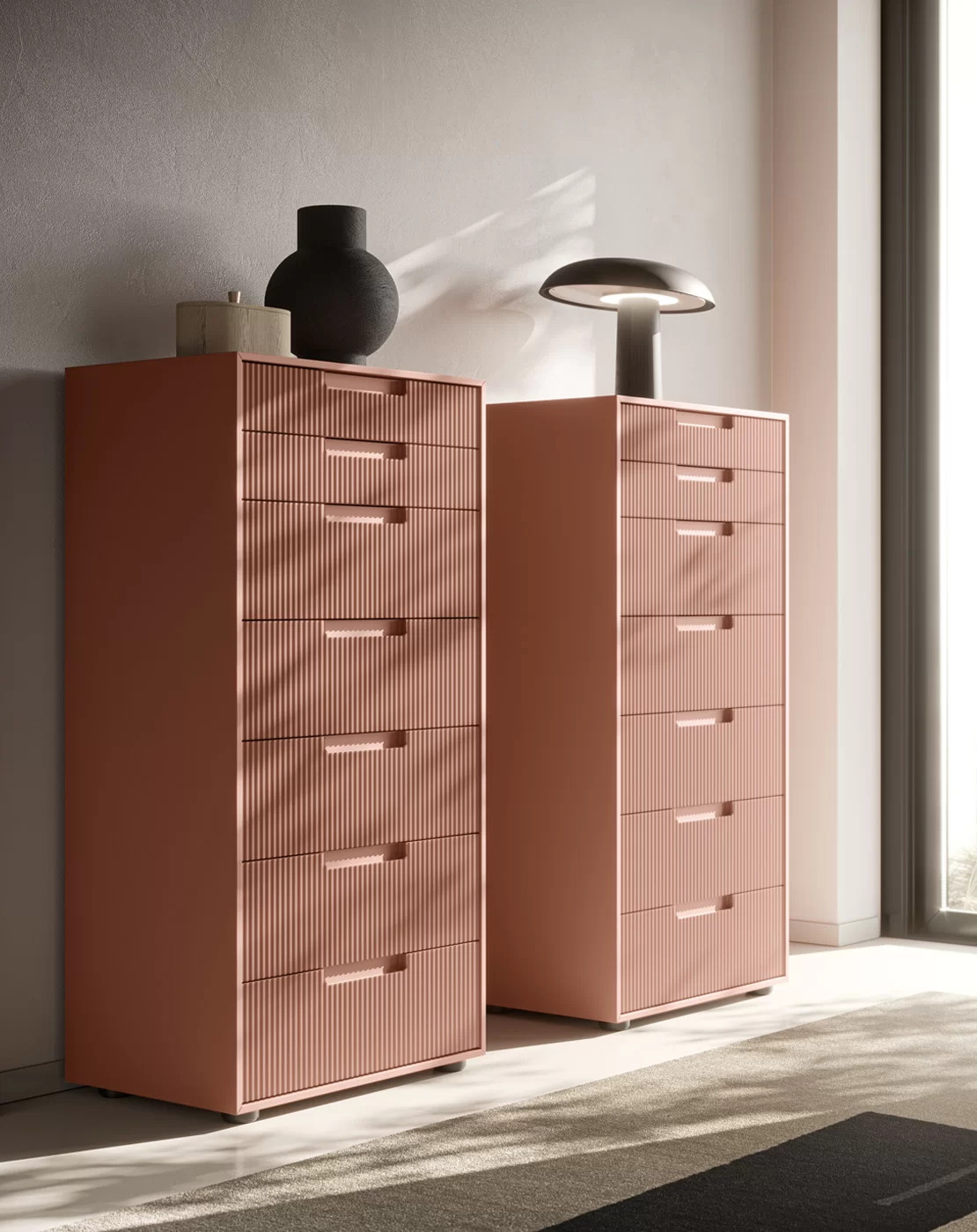
A tall chest of drawers is distinctive for its vertical design. The drawers (five or more), one on top of the other, guarantee good storage capacity even when the amount of horizontal space available is reduced.
How many storage units are needed in the bedroom?
Before choosing your dresser, bedside table or drawer unit, it is a good idea to take a step back to understand how much storage space you already have in the bedroom. A spacious wardrobe and a storage bed may already accommodate a good part of your linen and clothes. In this case, a dresser might not be absolutely essential; leaving a free wall also helps to make the room more airy.
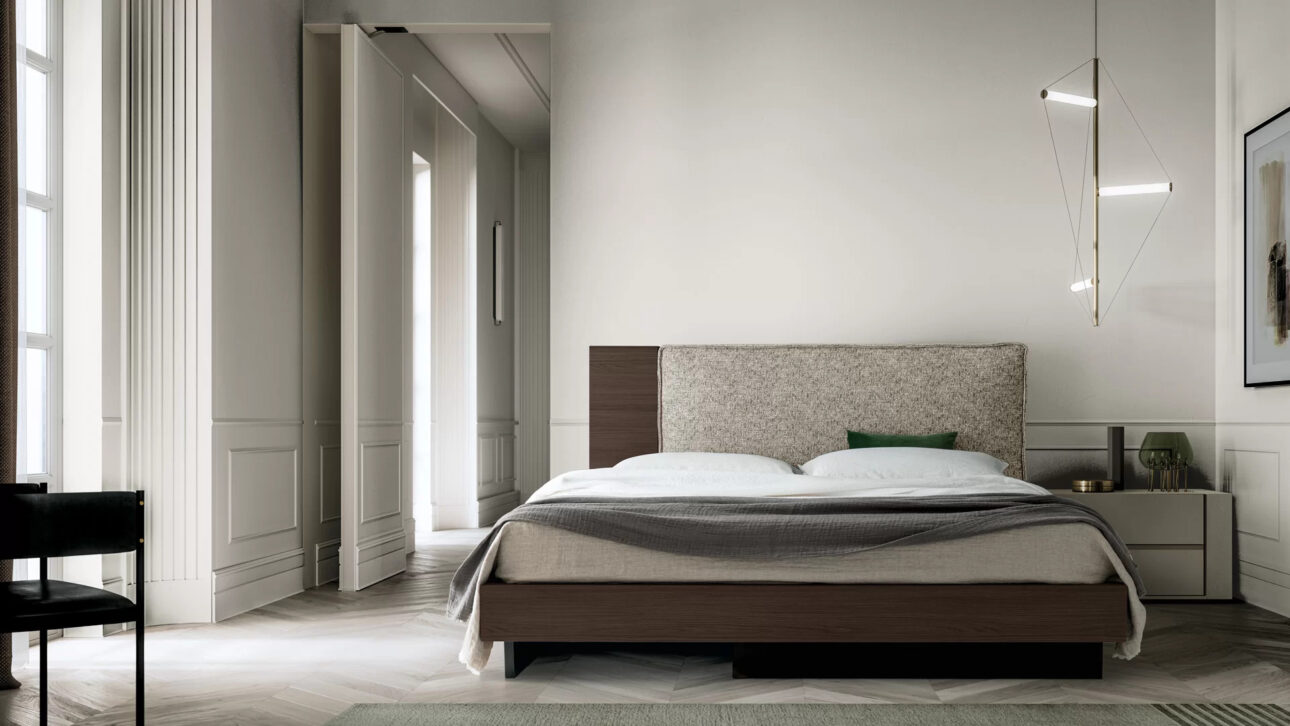
It isn’t strictly necessary to have two bedside tables either. The most common configuration involves one on either side of the bed, but in a narrow bedroom where the bed is next to a wall or close to a door, it may be necessary to sacrifice one of the bedside tables, as shown in the photo below.
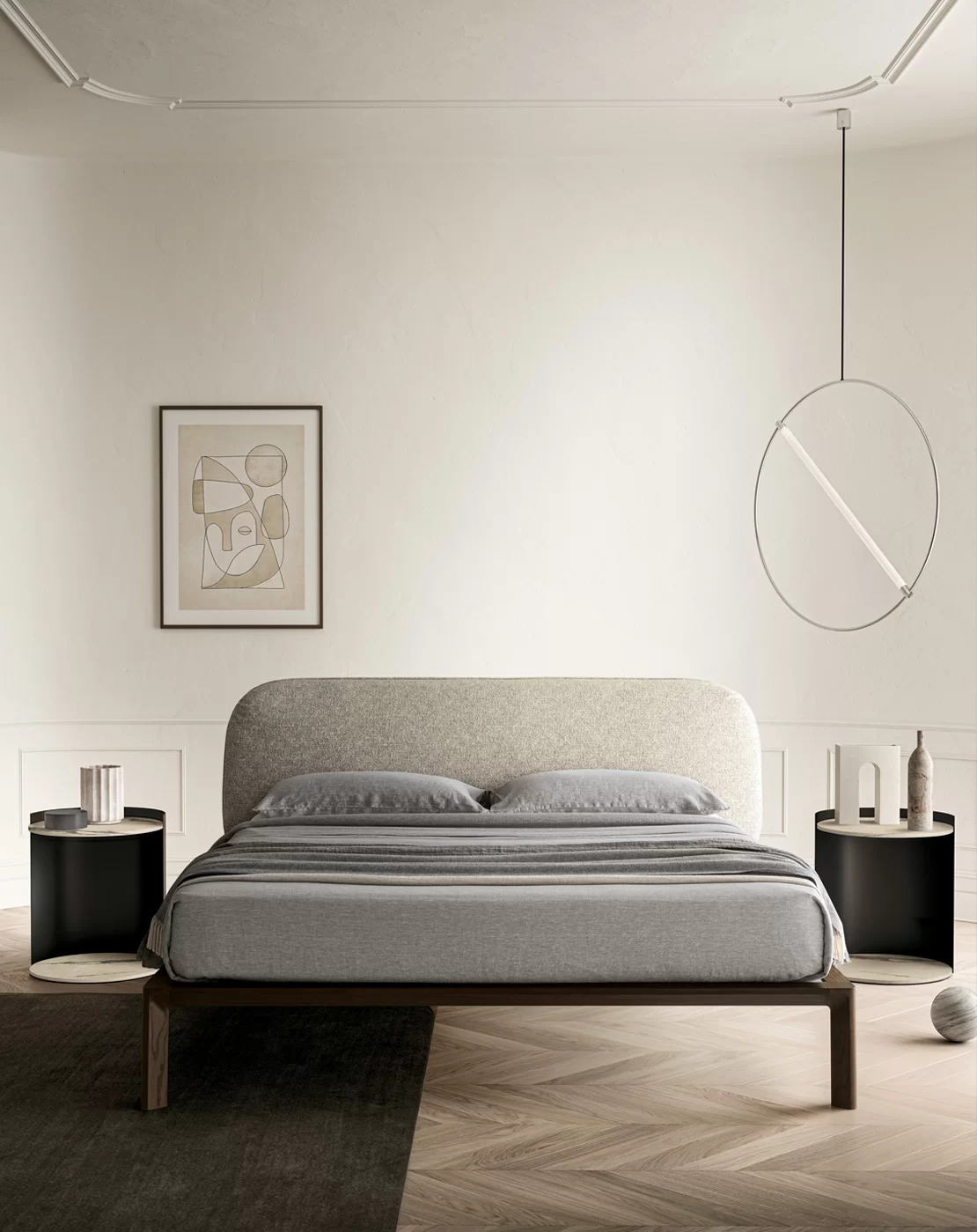
If space is lacking to the side of the bed or, more simply, you want to add a touch of originality to the bedroom, bedside tables can be substituted with side tables, a choice which sacrifices storage capacity but still offers a practical surface area for your essentials.
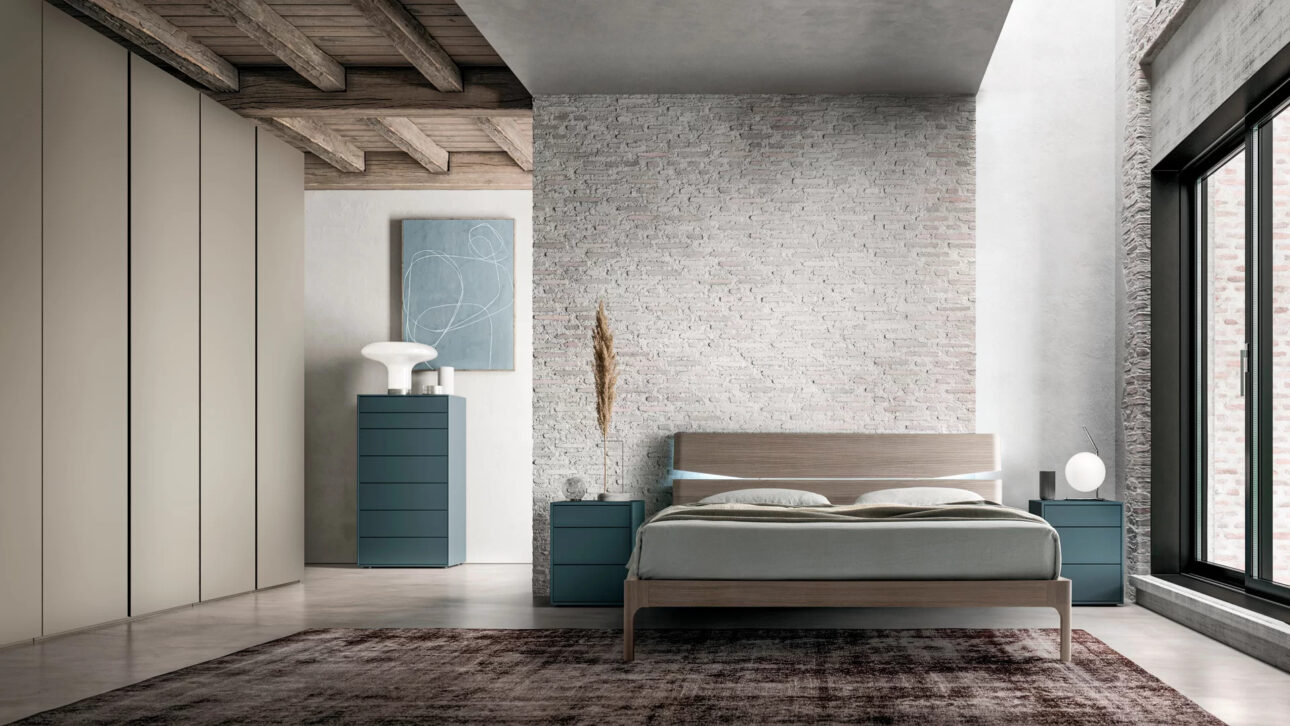
When space is lacking for a dresser, meanwhile, there are various alternatives. You can insert a generously sized tall chest of drawers that takes advantage of the vertical wall space.
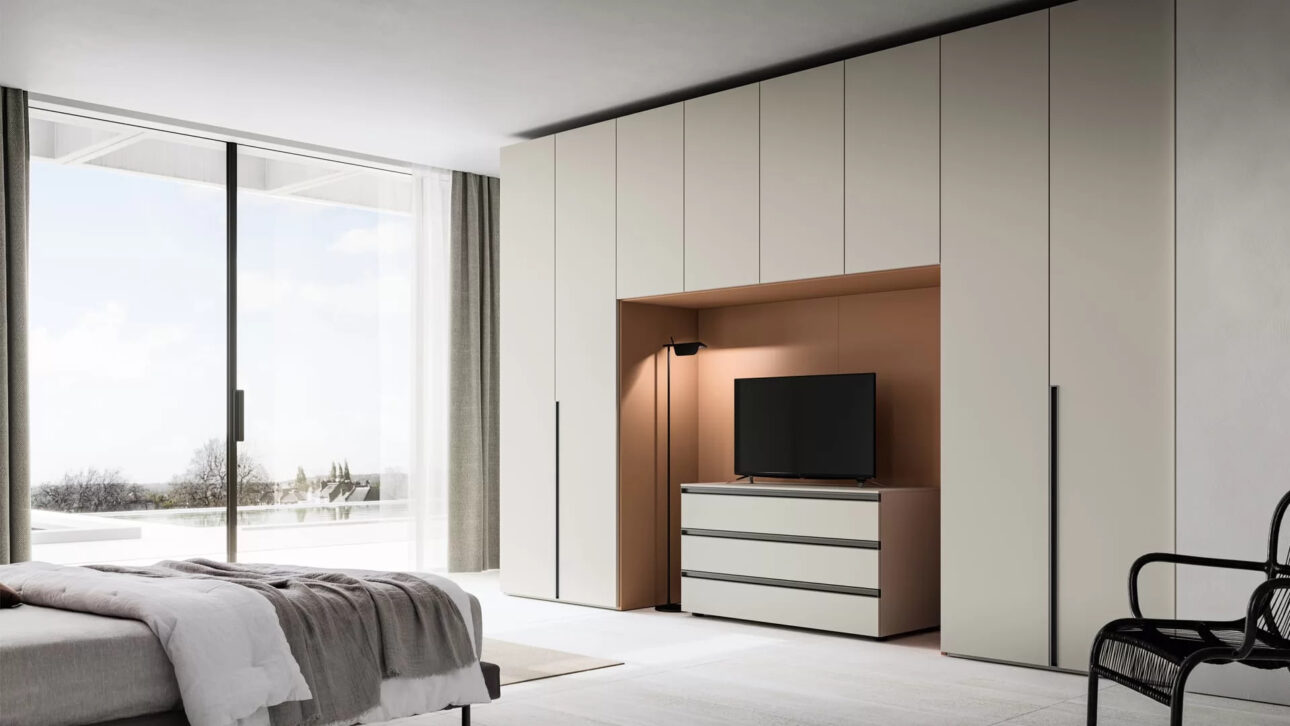
Alternatively, you can integrate a drawer unit in the wardrobe, which, as well as concentrating storage within the same space, also acts as a practical surface for those that want a television in the bedroom.
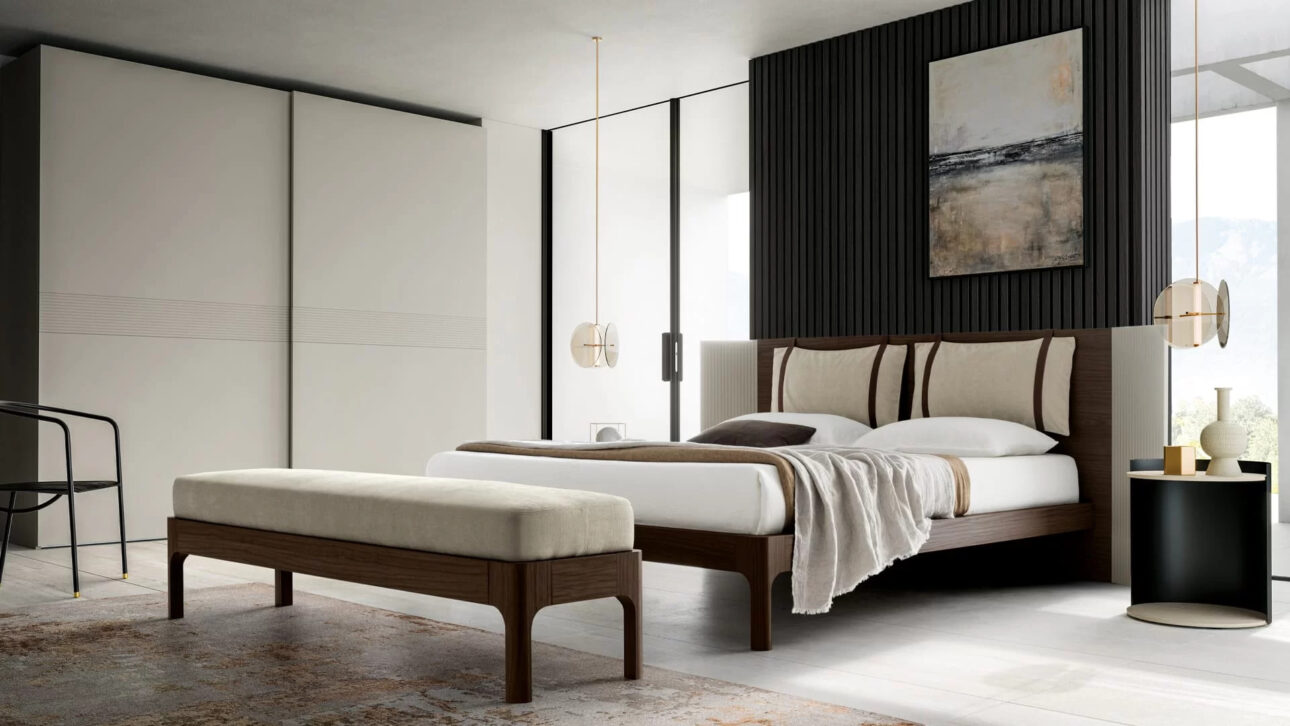
A bench at the foot of the bed can also provide added space without occupying the wall.
The simplest way of deciding which and how many storage units to use in the bedroom is to measure the available wall space and establish what functions you want the room to serve. Only then should you decide on the most suitable combination of furniture. For more on the layout of the room, you can also read the article on how to arrange furniture in a bedroom to maximise space and comfort.
The right measurements: bedside tables, dressers and passageways
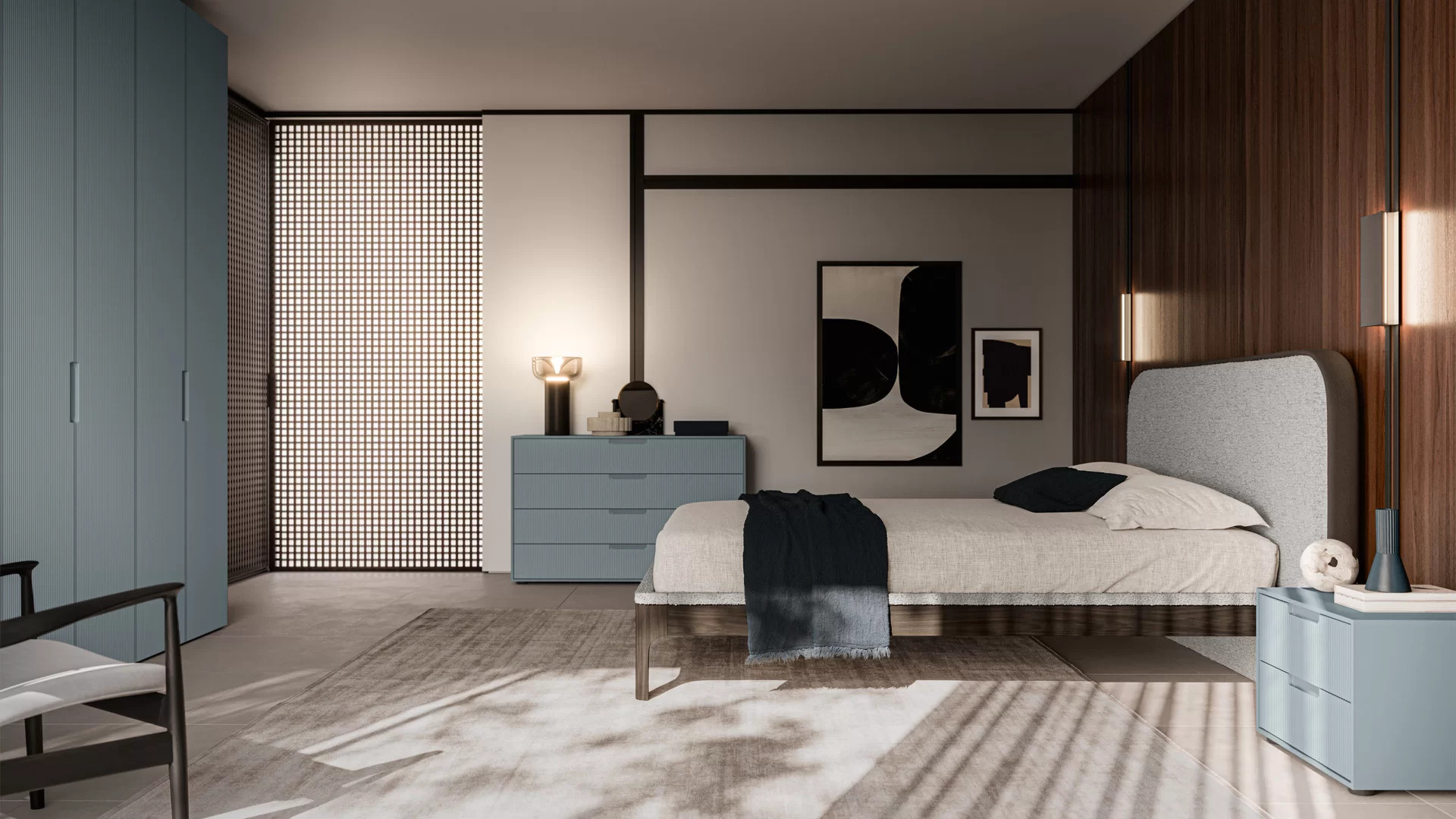
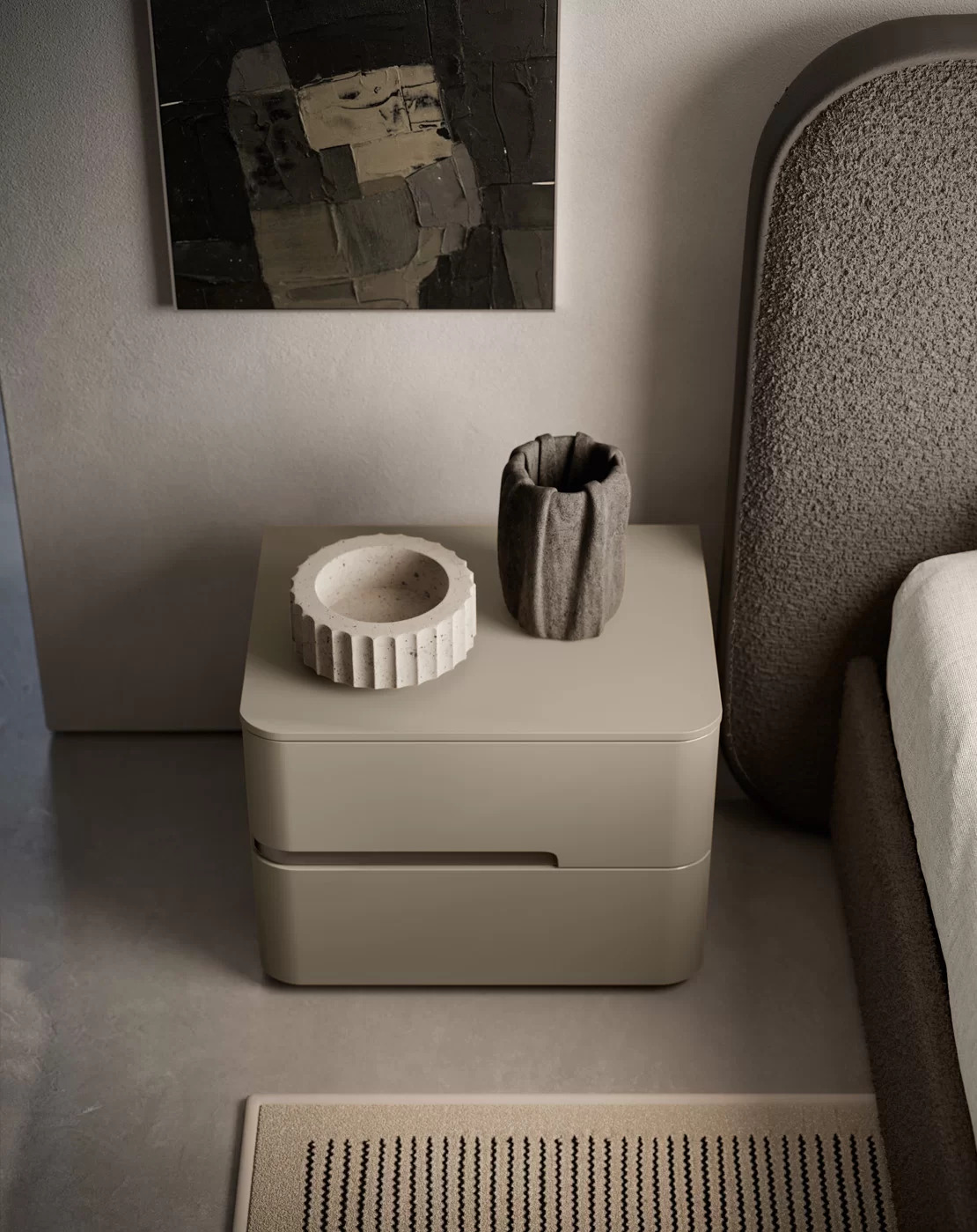
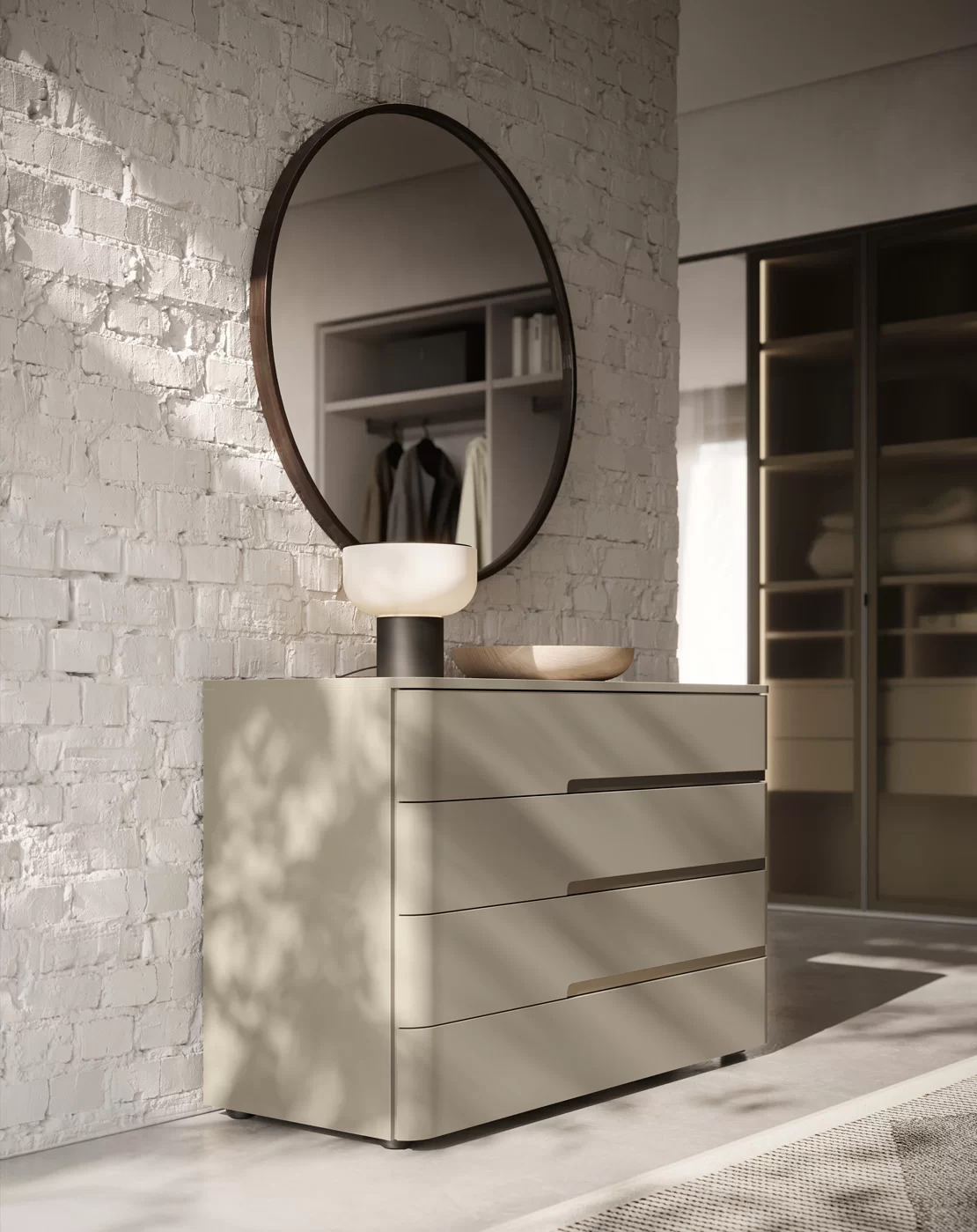
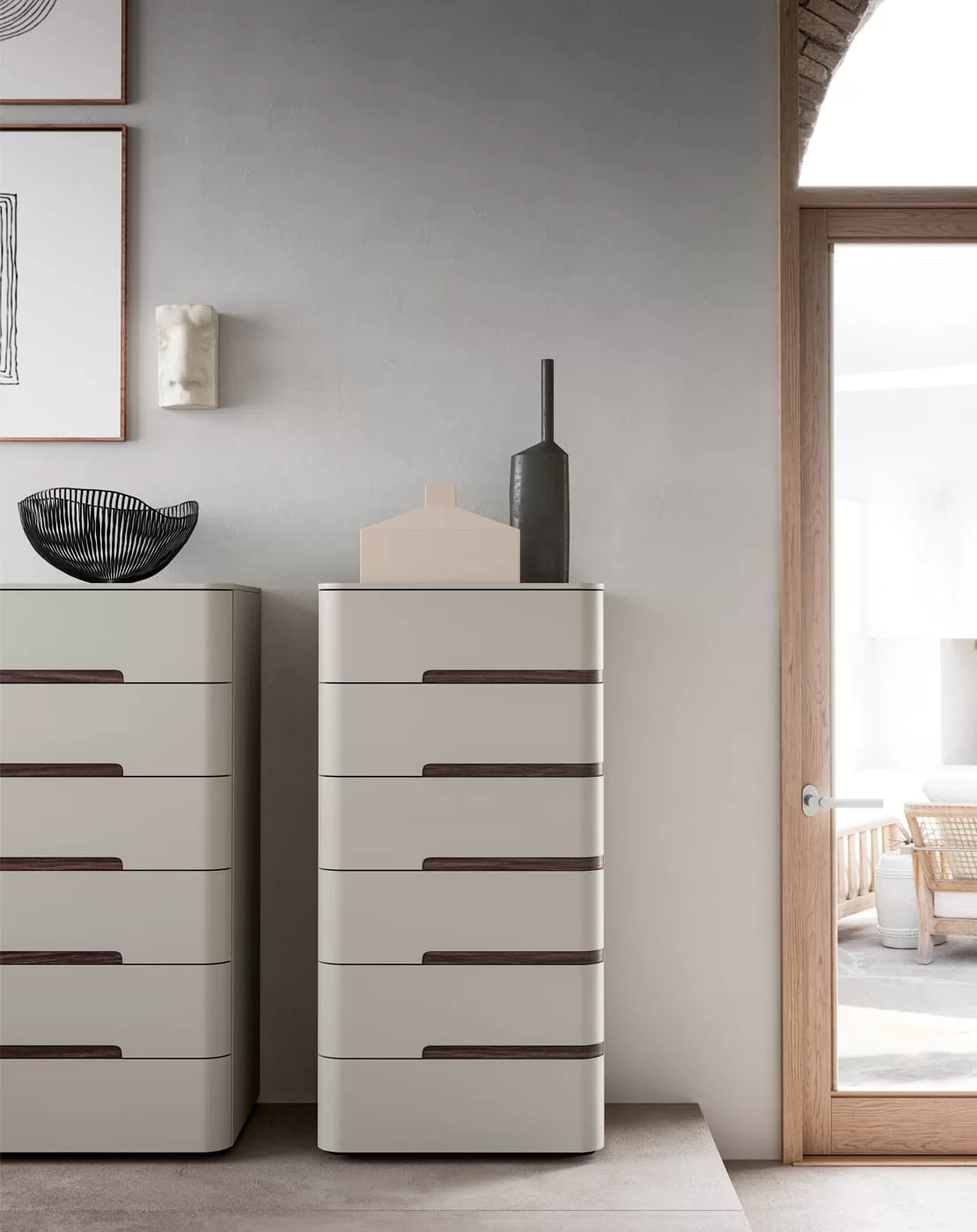
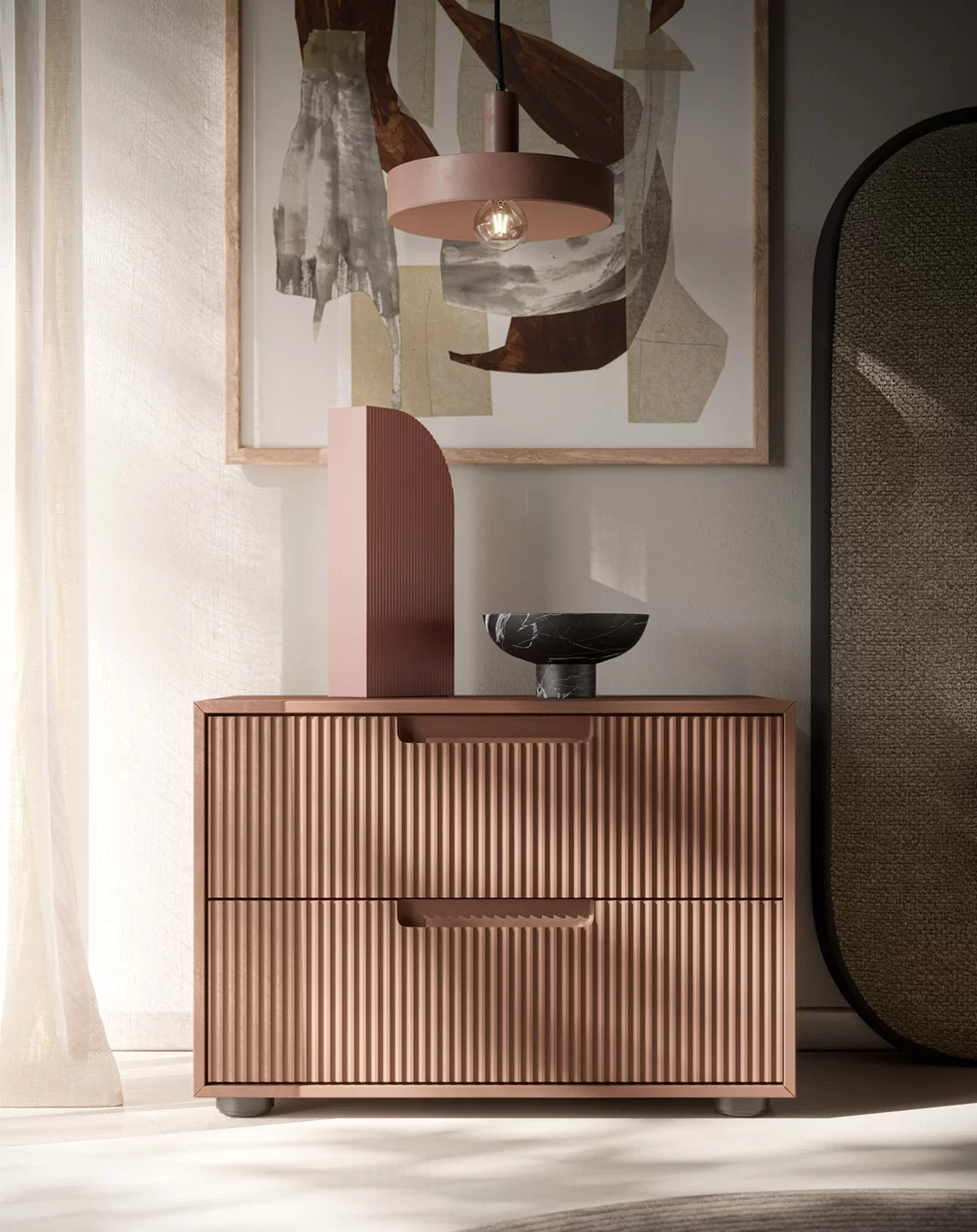
Proportions count almost as much as the model you choose. An item of furniture might be perfect on paper but turn out to be fairly impractical if it doesn’t leave you enough space to move around or easily open the drawers. Below is an example of a bedroom furnished with the Opale range, distinctive for its standard measures, rounded profiles and built-in handle.
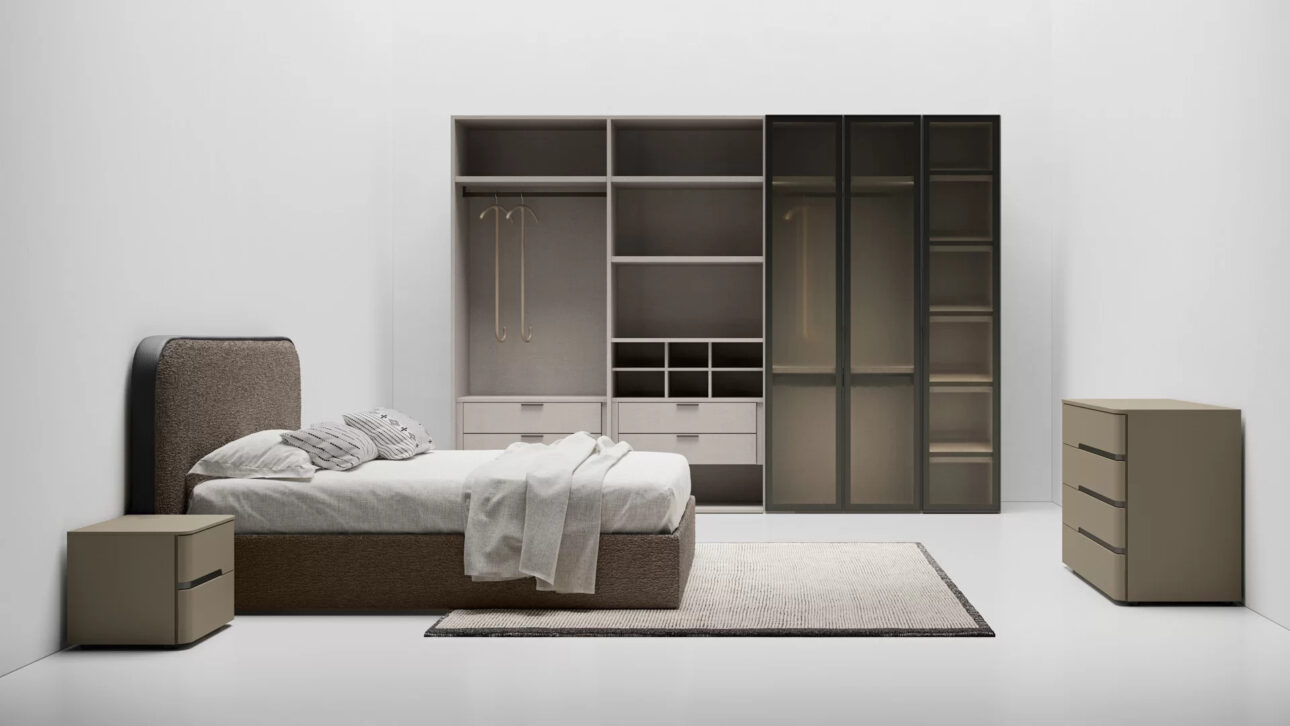
For the bedside table, the first aspect to consider is height. The unit top should be at about the same height as the mattress or slightly below, allowing you to easily reach the items resting on the surface. Remember one simple but important detail: the height of the mattress varies according to bed base, thickness and type, and so you should only decide on your bedside table after measuring the dimensions of the bed. In general, bedside tables are approximately 40-60 cm wide and 40-50 cm deep, with the height varying according to the number of drawers and the model.
The 2-drawer bedside table in the Opale range is 58.7 cm wide, 40.8 cm high and 43.2 cm deep.
There are no universal measurements for dressers either. The width depends primarily on the number of drawers and the composition, while the depth must be given careful consideration based on the amount of free space in front of the item. Depth is one of the measurements that people tend to neglect. Before buying a storage unit, it is important to check not just how much space it occupies but also how much space is left in front: it must be possible to fully open the drawers and a comfortable passageway must be left between the piece of furniture and the bed or the other furnishings. Dressers are generally positioned against a free wall, often opposite the bed and, depending on the layout of the bedroom, can be paired with a mirror or act as a support surface for the television.
The 4-drawer dresser of the Opale range has the following measurements: width 124.3 cm, height 78.6 cm and depth 51.9 cm.
The height of the tall chest of drawers depends of the number of drawers but, as already seen, what counts with this piece of furniture is the width, the discriminating factor when it comes to choosing between a dresser and a tall chest of drawers. If there is enough room, dressers, bedside tables and tall chests of drawers can be all be present in the bedroom as part of a suite.
The 6-drawer Opale tall chest of drawers is 58.7 cm wide, 116.4 cm high and 43.2 cm deep (like the bedside table).
Floor-standing or wall-mounted bedside tables
The way in which the bedside table is positioned can also change the perception of the bedroom.
Floor-standing bedside tables are more traditional and easier to insert, especially if there aren’t any space problems. They are also easy to move and ideal for those who like to rearrange the bedroom from time to time. The photo below is of the floor-standing bedside table from the Ego modular range.
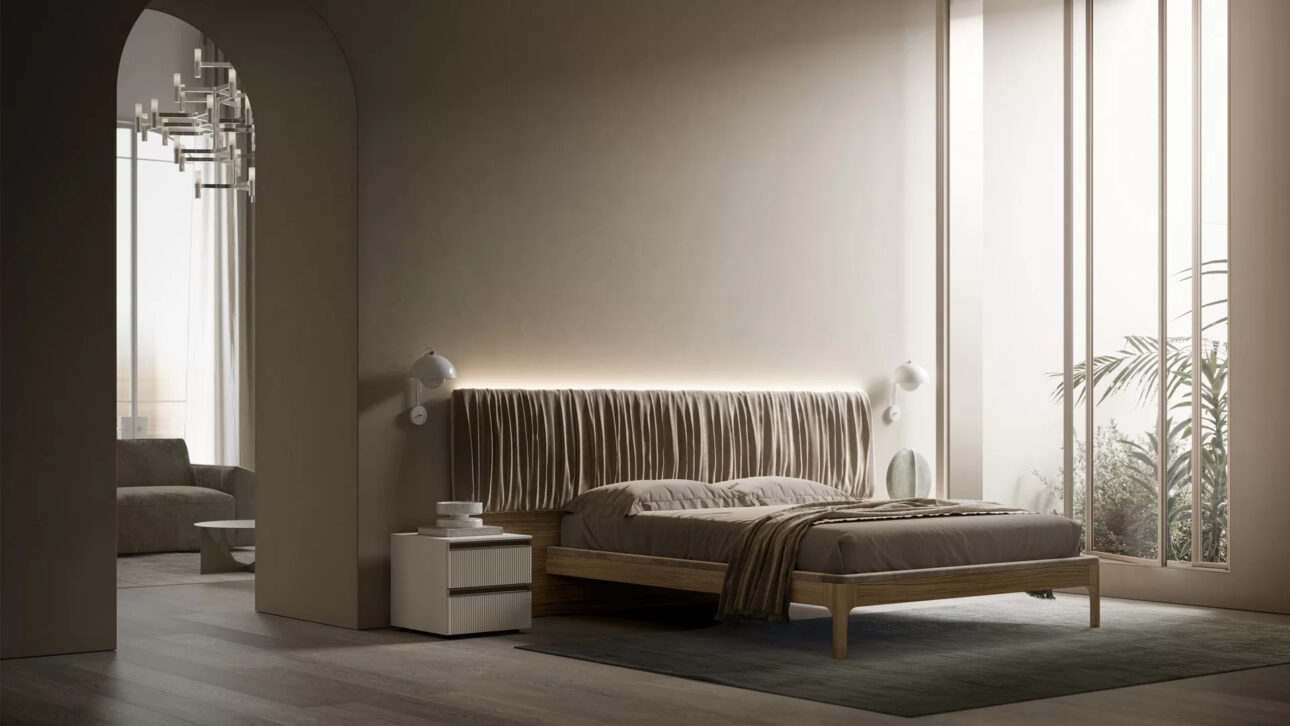
Meanwhile, wall-mounted bedside tables, like the ones in the Ego modular range, leave the floor clear, make cleaning easier and lighten the look of the composition. However, if you commit to a wall-mounted version it is important that this is done at the planning stage: the fixing system, the type of wall and the height at which to position the table are aspects to evaluate before installation and cannot easily be altered thereafter.
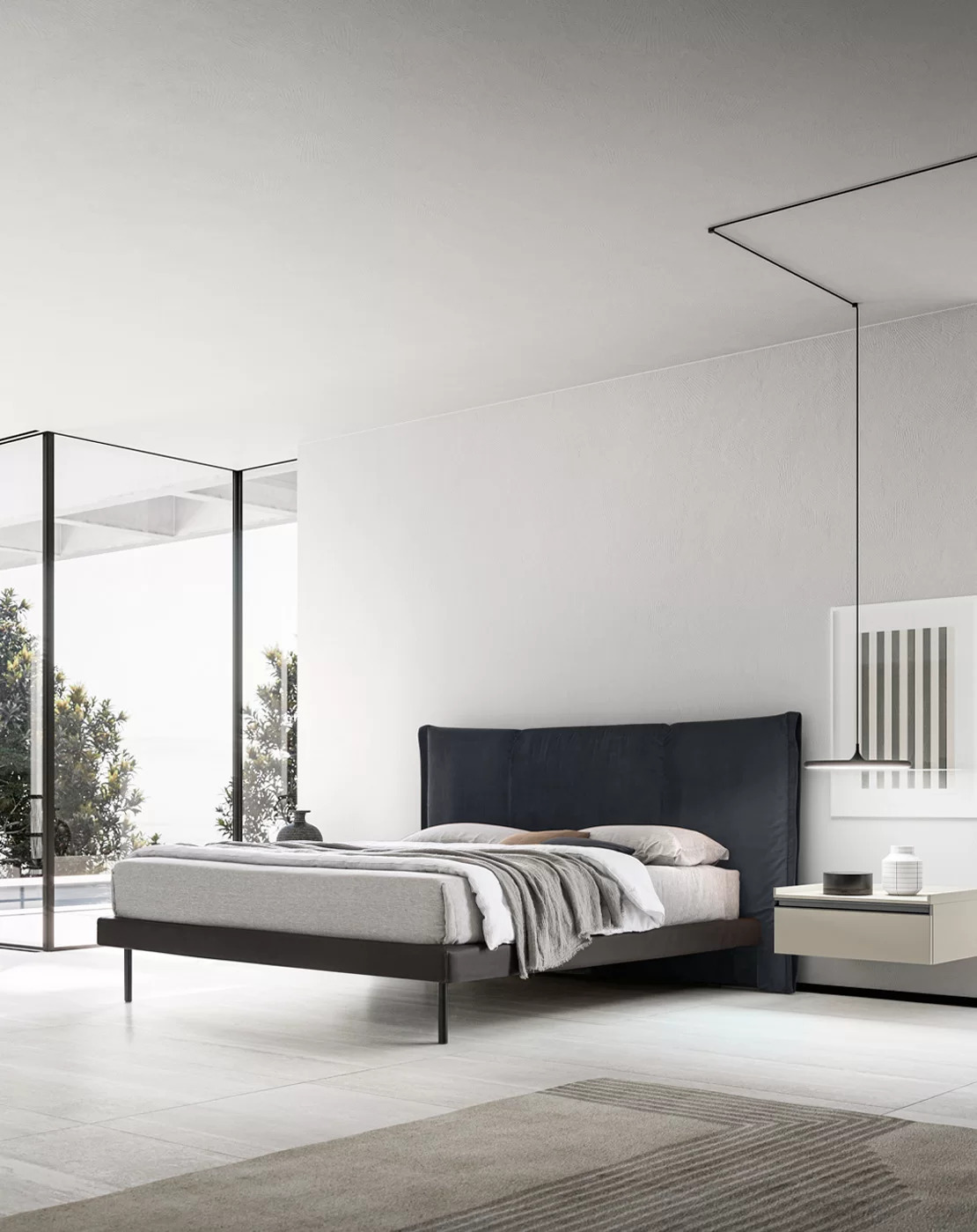
Wall-mounted bedside tables often form part of a multifunctional system, meaning that they are not independent elements but integrated with the headboard of the bed or with a wall unit. The result is a seamless composition in which the bed and storage units merge, as is the case with the Solano bed.
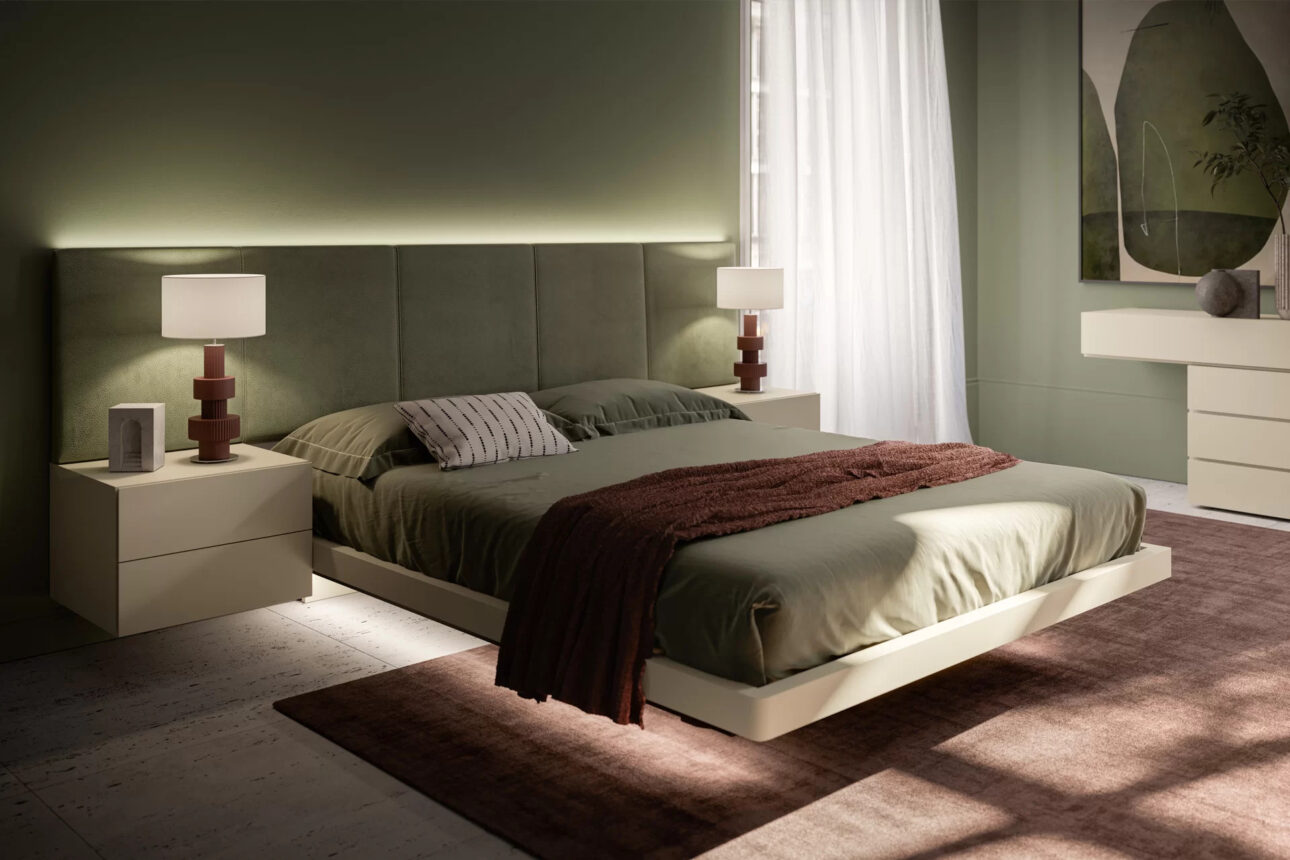
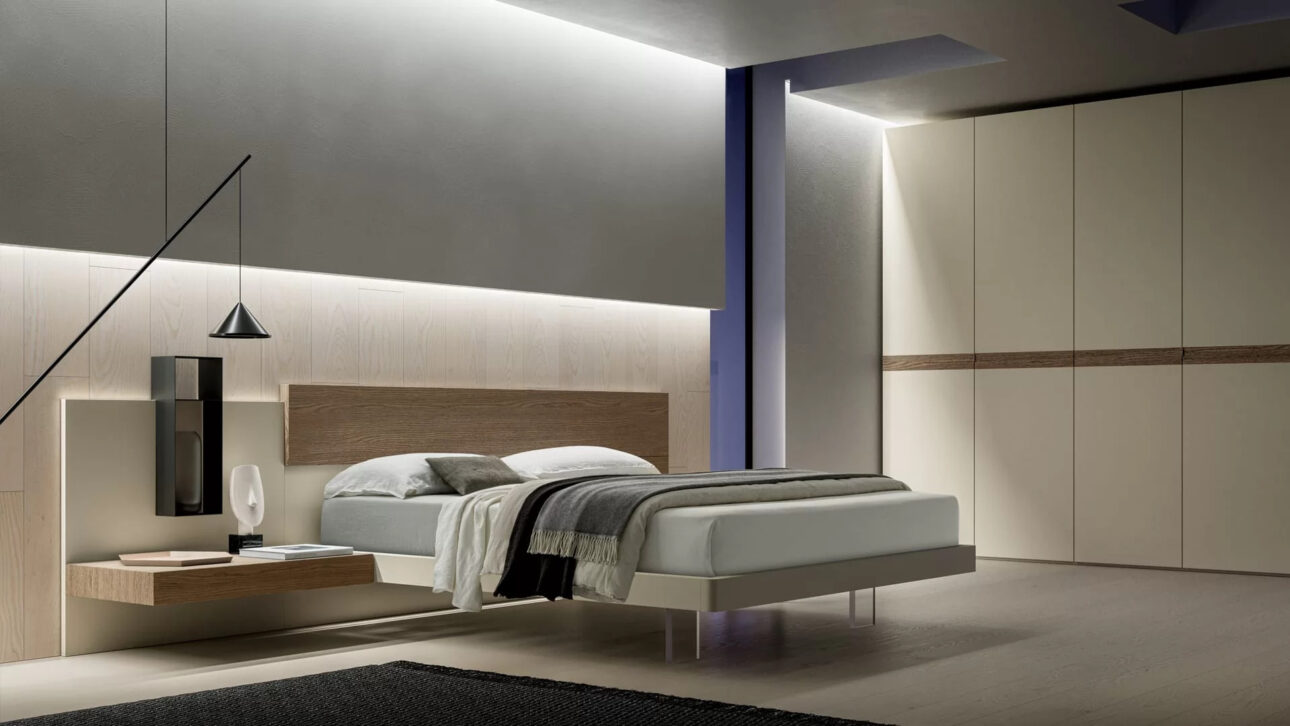
With the Scacco range, as well as the bed and wall-mounted bedside tables, it is also possible to add accessories like shelves, open units and magazine racks.
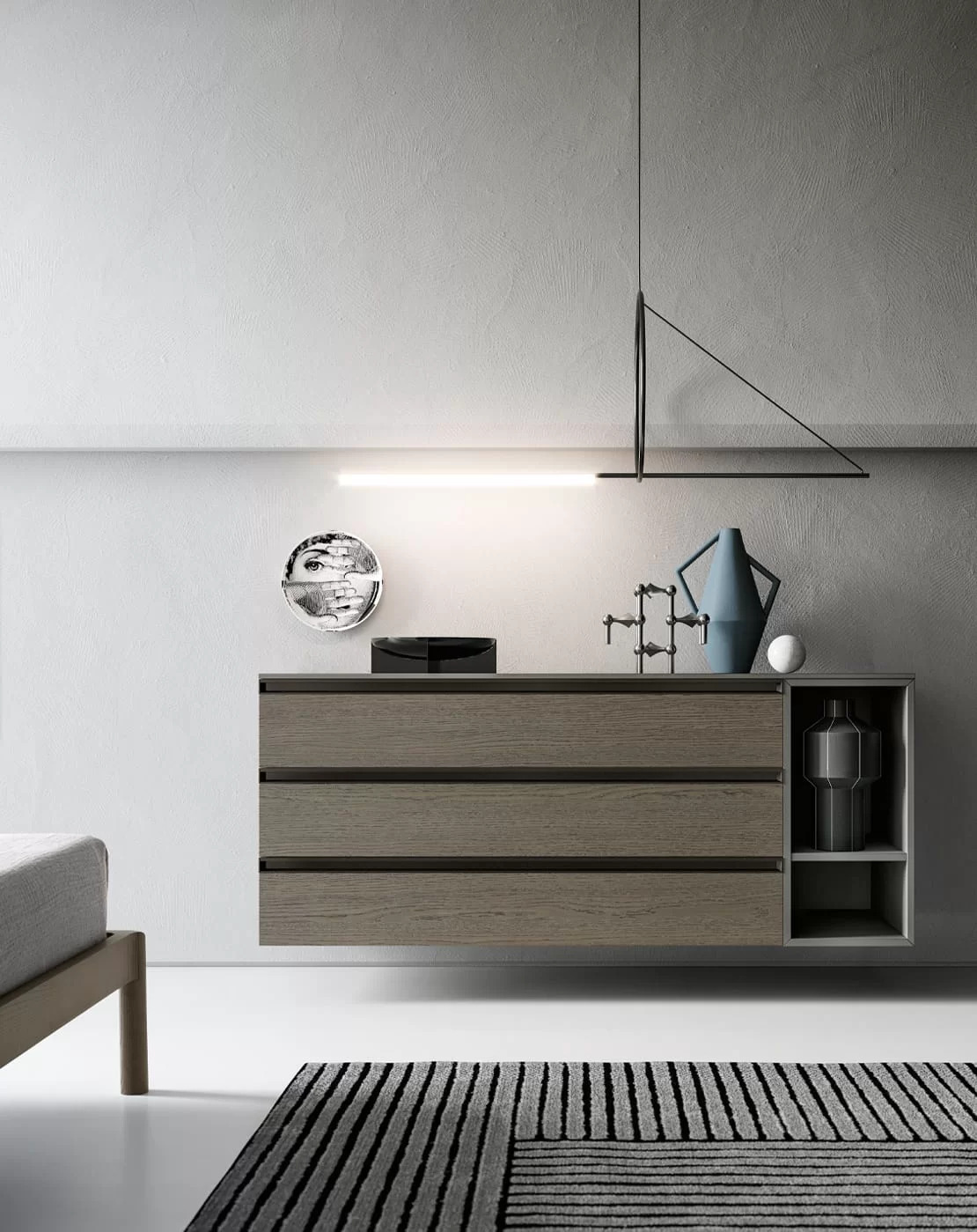
Dressers can also be wall-mounted and, with the Ego range, you can create personalised configurations that include open compartments.
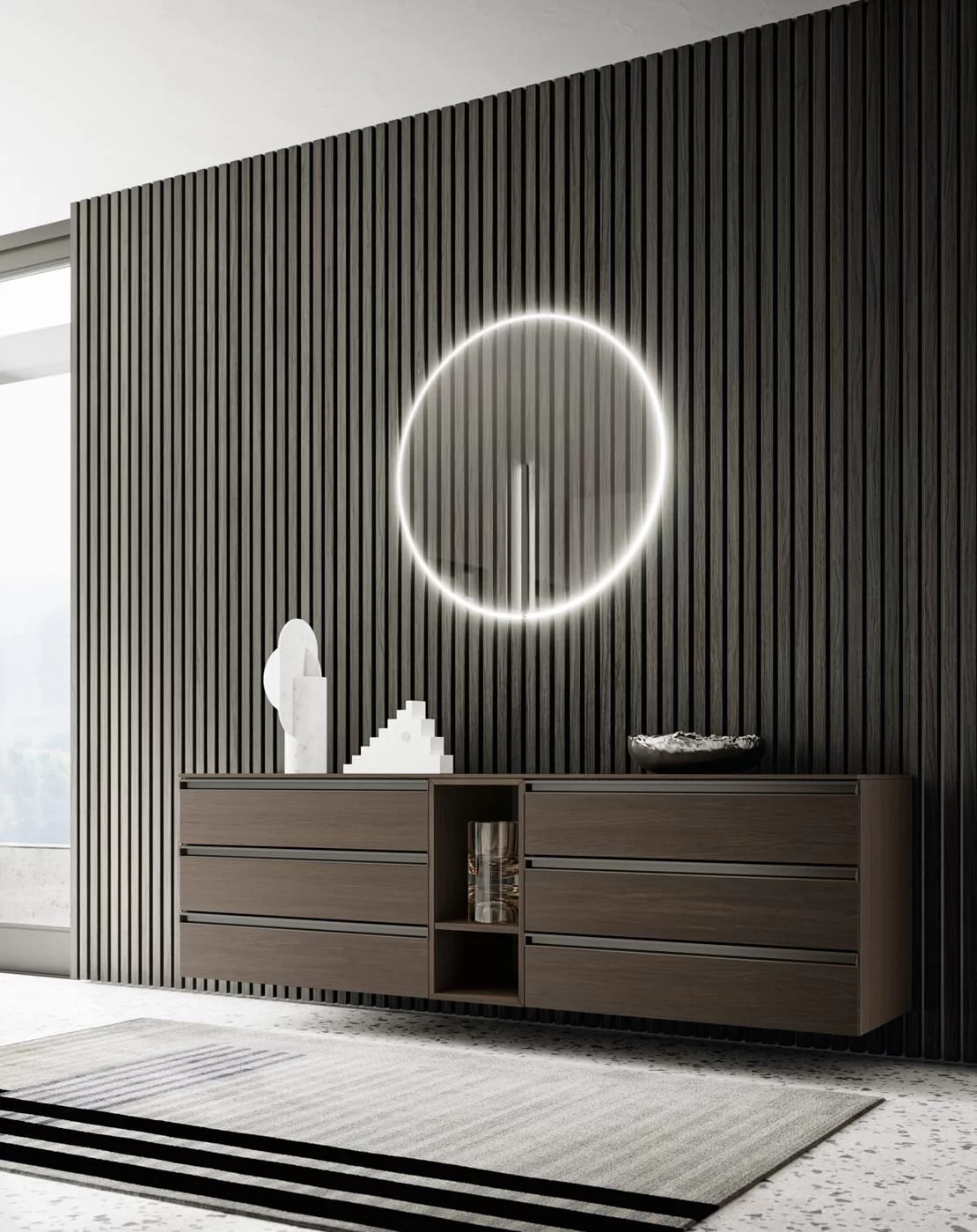
Mix or match? Colours, forms and finishes
Having decided on dimensions and quantities, now comes the interesting bit: figuring out how to put the various elements together. The easiest approach is to choose beds, bedside tables and dressers in matching finishes and similar shapes. This is the ideal solution for those that want an aesthetically uniform bedroom without too many material or colour variations.
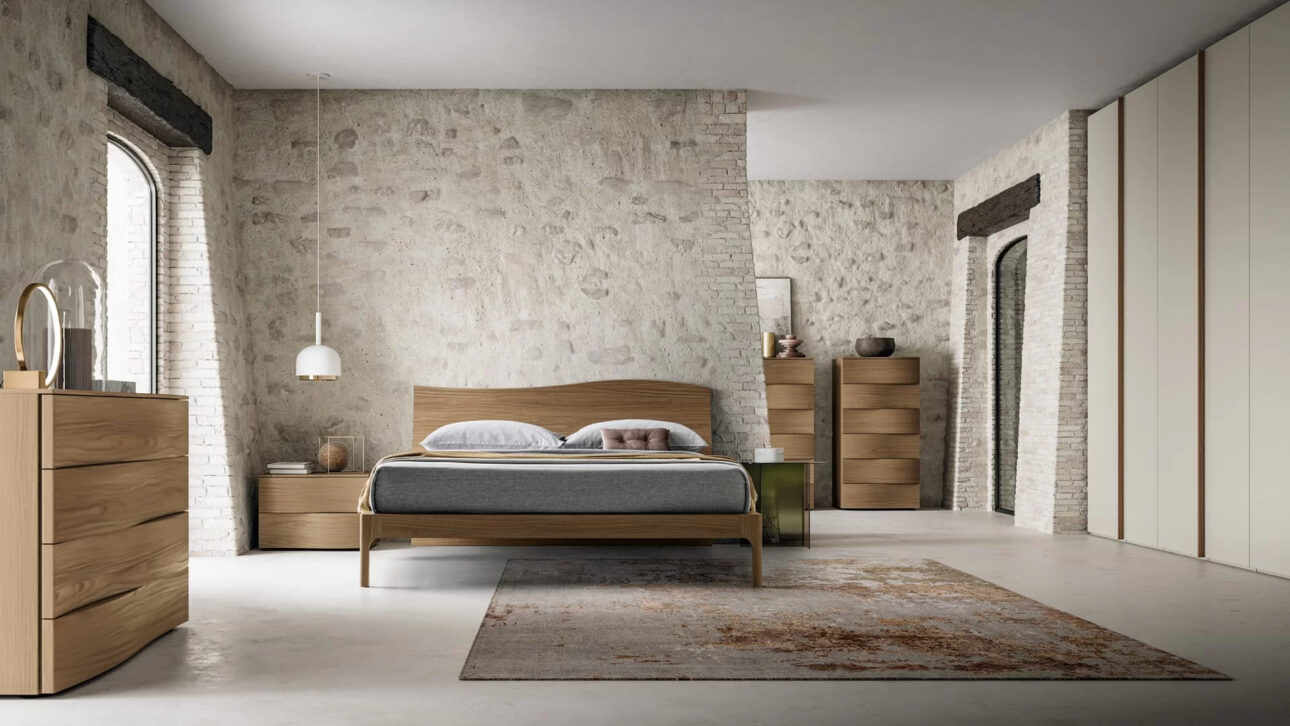
In a traditional bedroom like the one in the photo below, the elements share both the same finishes and the same design, the wave motif characterising the headboard of the Wave bed and the fronts of the bedside tables, the dresser and the tall chests of drawers.
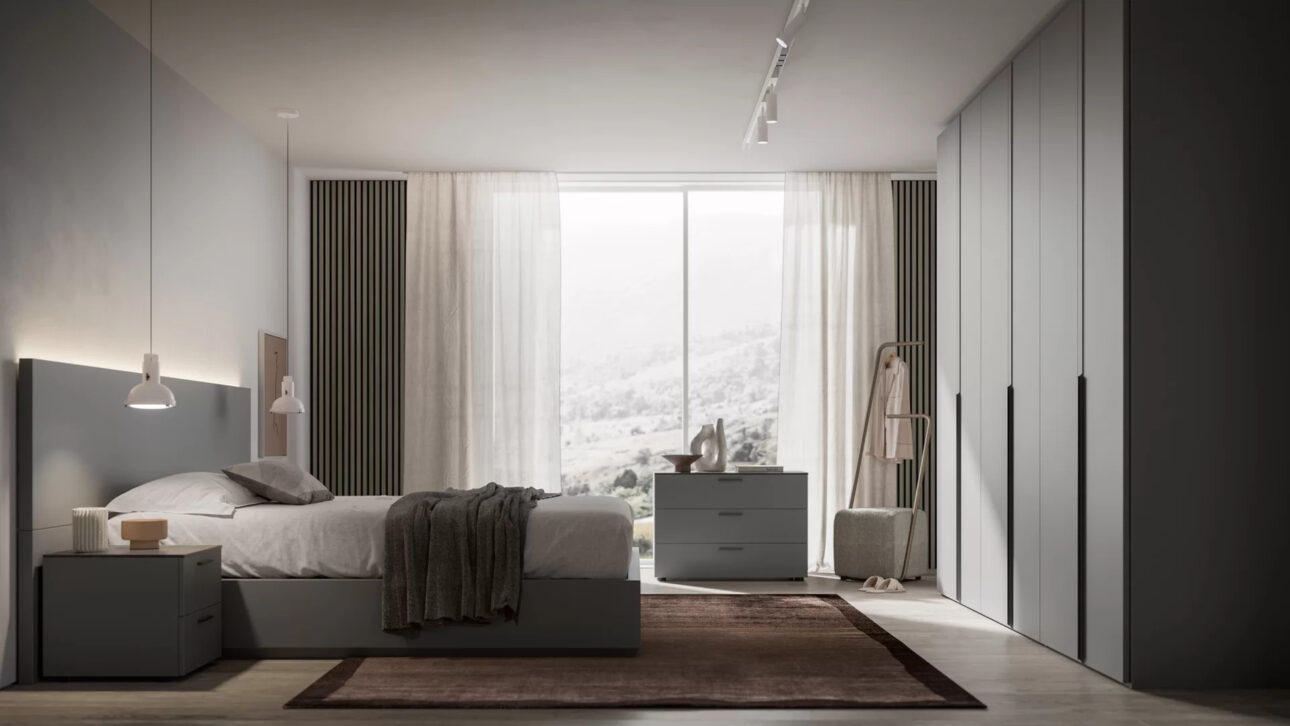
You can also create a matching effect in a modern bedroom. The Solano bed, the bedside tables and dressers in the Ventidue modular range, and the wardrobe with Spira door have the same linear profiles and are all in the same Marna shade.
However, matching doesn’t mean that everything has to look the same. You could make the linearity of the elements the common denominator but add character with contrasts. The rule of thumb for avoiding a haphazard look is to have at least one common element (a material, a shade, a finish or the design of the handles).
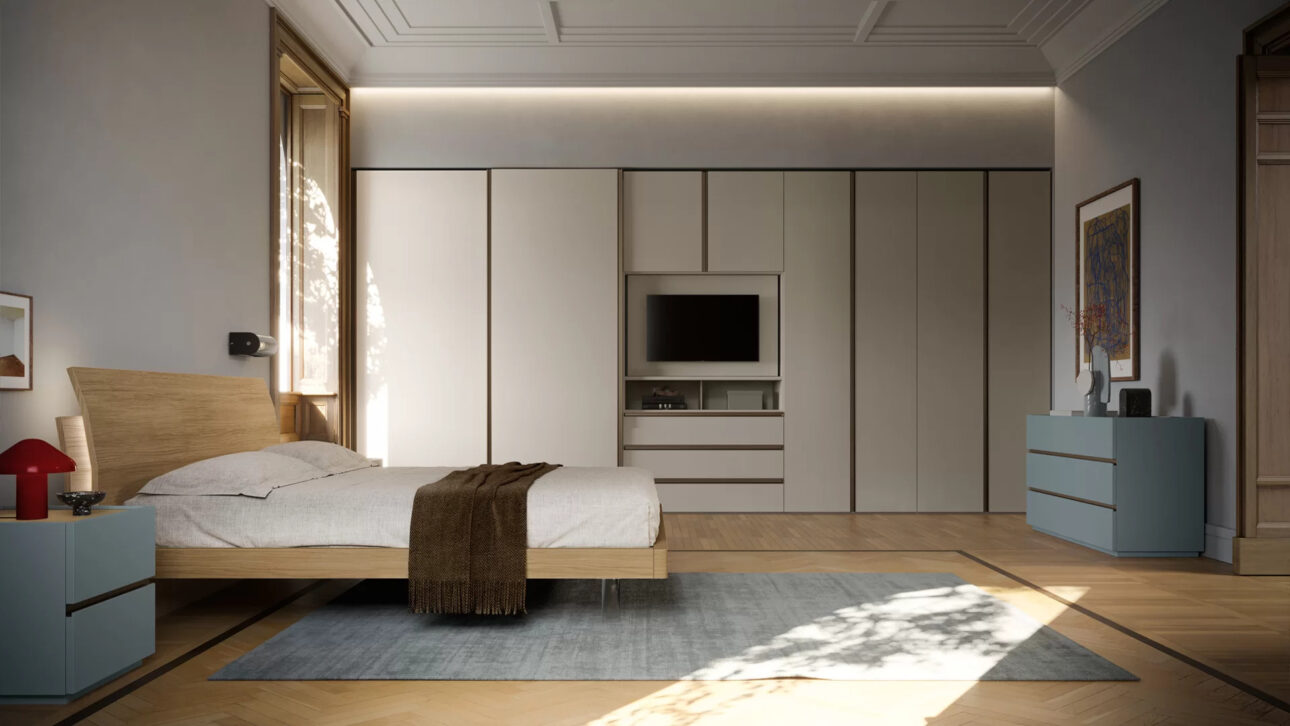
In the bedroom in the photo below, the bedside tables and the dresser in the Giada range in Nebbia matt lacquer are distinctive for the wooden top that matches the finish of the Ora bed; they also dialogue with the wardrobe, thanks to the detail of the Champagne bright metallic lacquer handles.
In this next bedroom, the bedside tables and dresser in the Quadro Grecato range in Foresta matt lacquer stand out from the rest of the decor in terms of their colour but share the same fluted finish as the wardrobe. The neutral shade of the wardrobe, meanwhile, matches that of the Zonda upholstered bed.
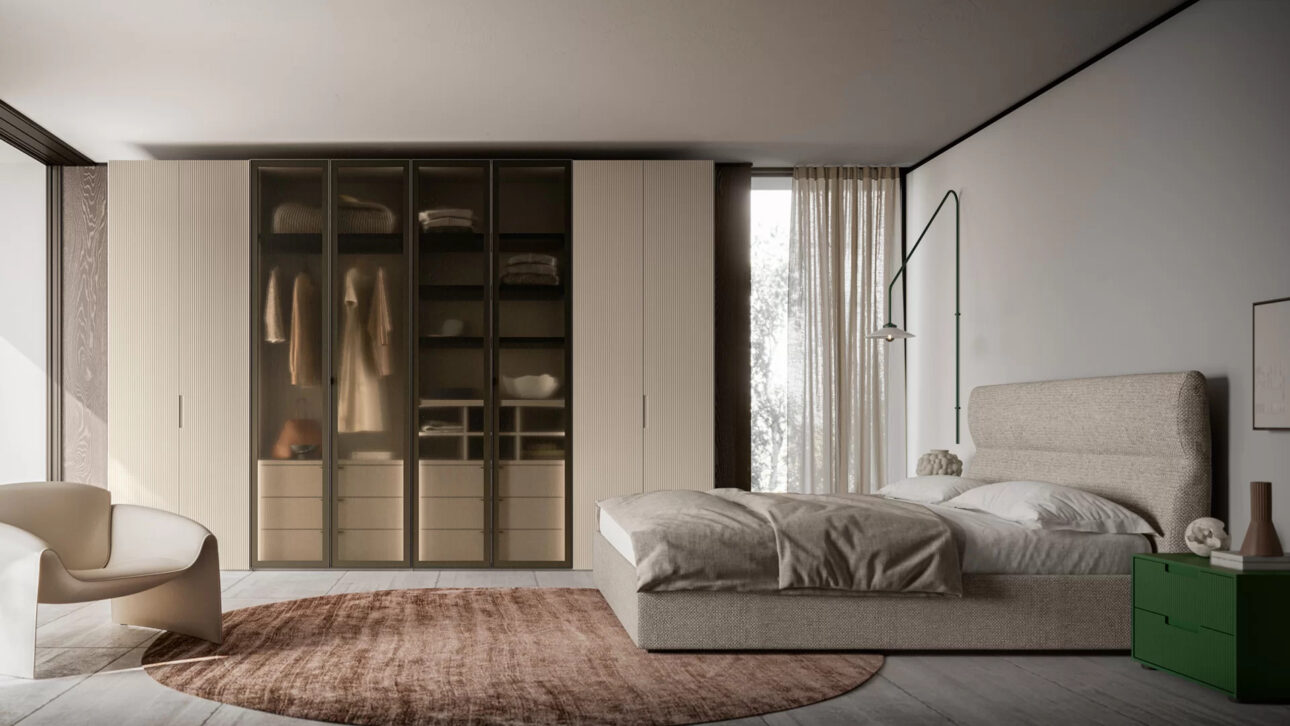
When designing your bedroom, try to get away from the idea that you always have to have a full set of elements. First and foremost, a matching suite must be in proportion with the room. If the bedroom is small, it is better to have fewer elements than a full set that is too big for the space.
The Santalucia Mobili collection was developed precisely to offer this freedom of choice. The variety of finishes, forms and colours available make it possible to design all kinds of bedrooms, whether more understated or bolder in character, whether in neutral tones or more colourful shades such as blues or greens.
There are ranges that stand out for their soft and rounded forms, like Opale.
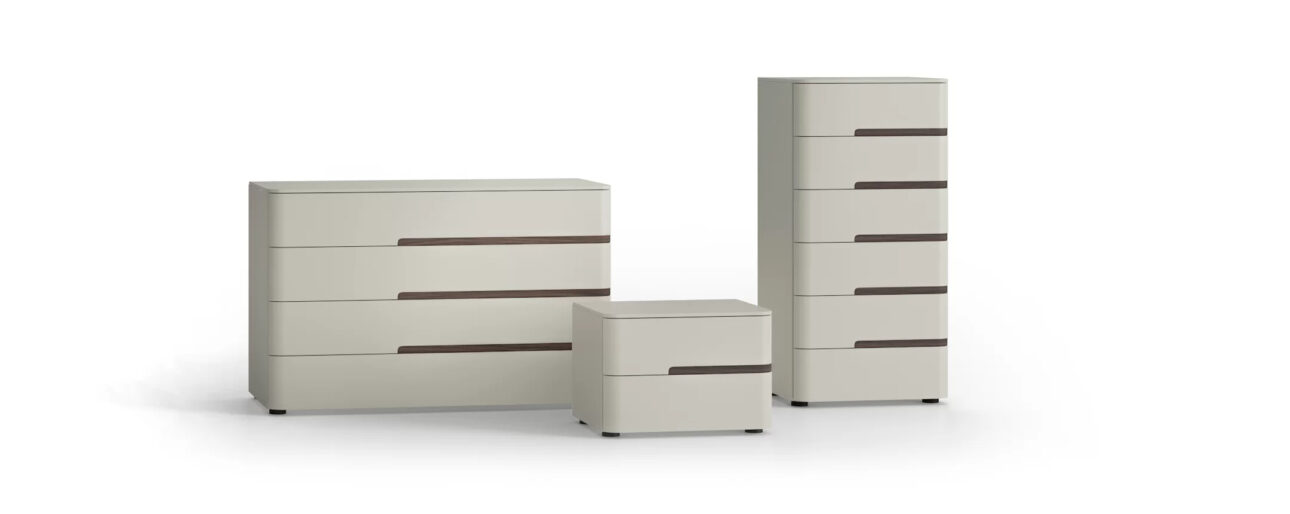
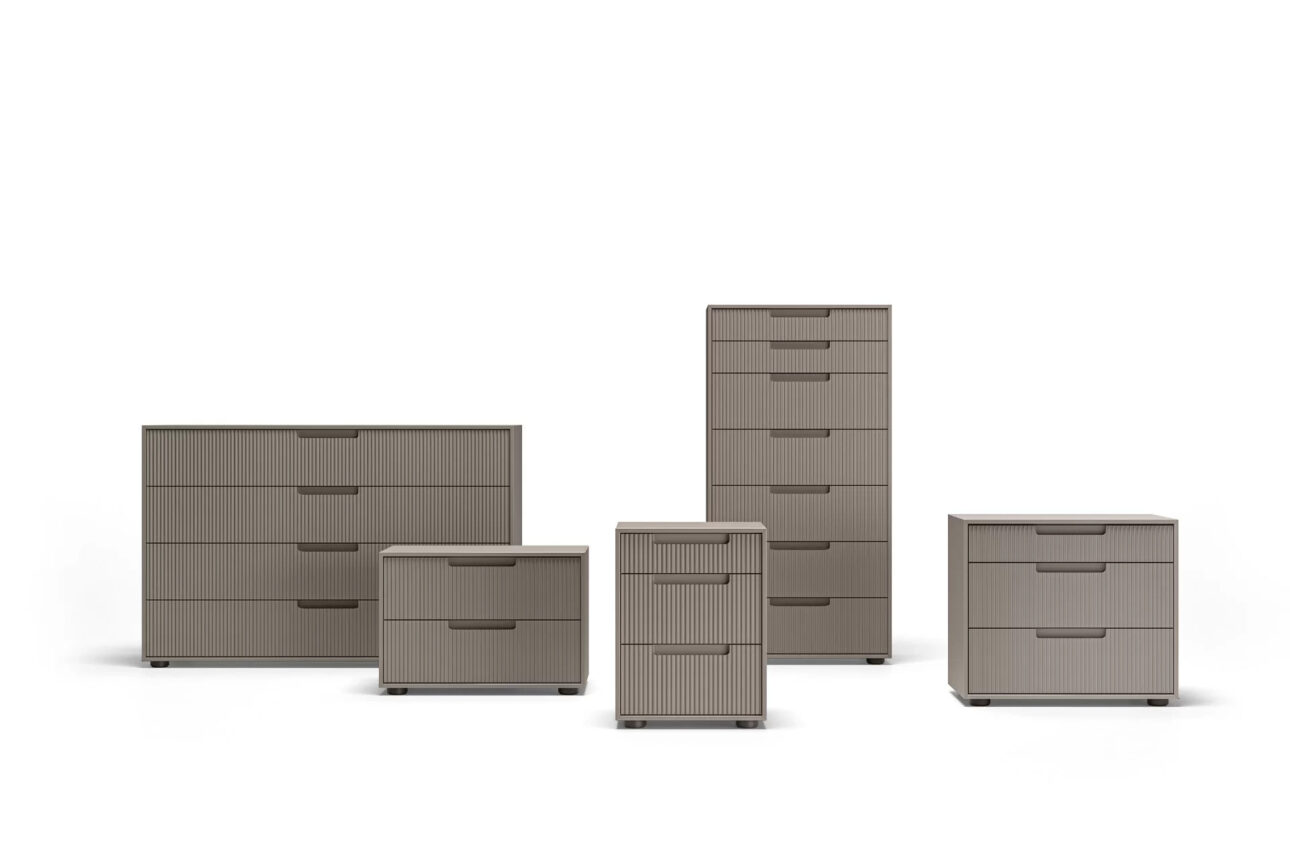
There are solutions with three-dimensional fronts, like Quadro Grecato.
There are more decorative alternatives such as the Quadro 12 range, in which it is possible to customise the colour of the handle.
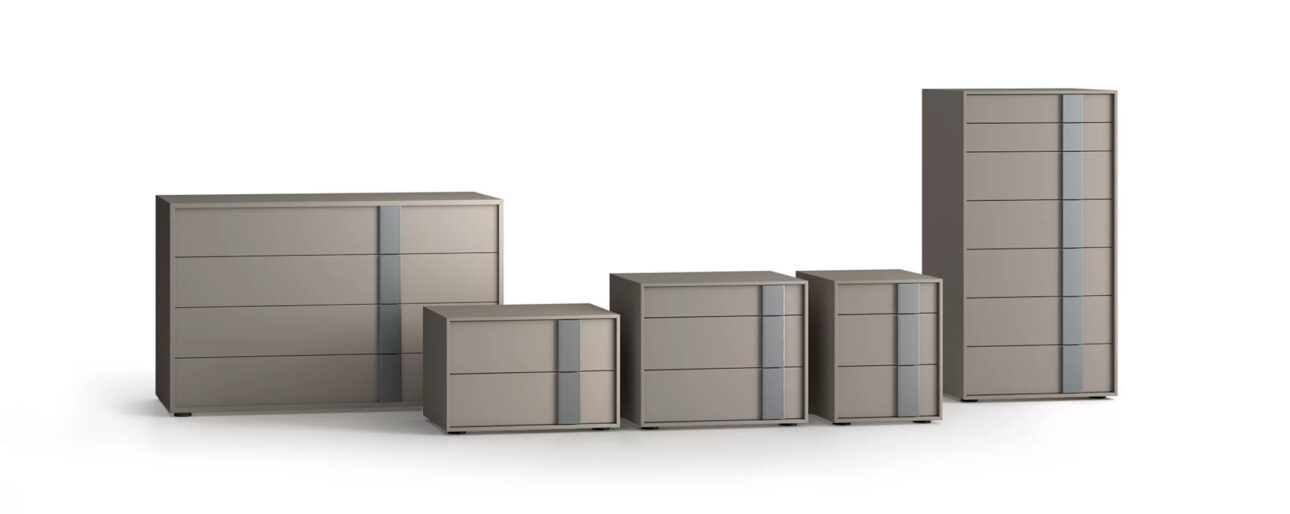
There are modular ranges that allow you to combine various elements such as the Ego range.
Frequently asked questions on dressers and bedside tables
To finish, here’s a summary of some of the concepts we have touched on in this article to give you a better understanding of the world of furniture collections.
What is the difference between a bedside table and a dresser?
A bedside table is a low and compact element that is located by the bed and mainly serves as a surface and small storage unit. Dressers are wider and more spacious, are generally fitted with three or four drawers and are used to store linen and clothes.
What is the difference between a drawer unit and a dresser?
Drawer unit is a generic term for an item of furniture with drawers that can be used anywhere in the house. A dresser is a specific type of storage unit for the bedroom, usually wider and more horizontal in design.
What are the standard dimensions of a dresser?
There are no standard measurements for dressers. Dimensions vary depending on the model and the number of drawers; before making your choice, it is essential to evaluate the width, the depth and the amount of free space in front of the item so the drawers can be opened.
How high should a bedside table be?
The top of a bedside table should be at about the same height as the mattress or slightly below. The measurements should therefore be considered in relation to the bed, but also to the space available to the sides.
In summary, rather than elements to acquire at all costs, dressers and bedside tables should be chosen on the basis of the bed, the free wall space in the room and the real everyday needs of the user. The dimensions of the room come first, then storage needs and finally style. At this point you can decide whether to opt for a matching set, a more personal combination, or wall-mounted and modular solutions.
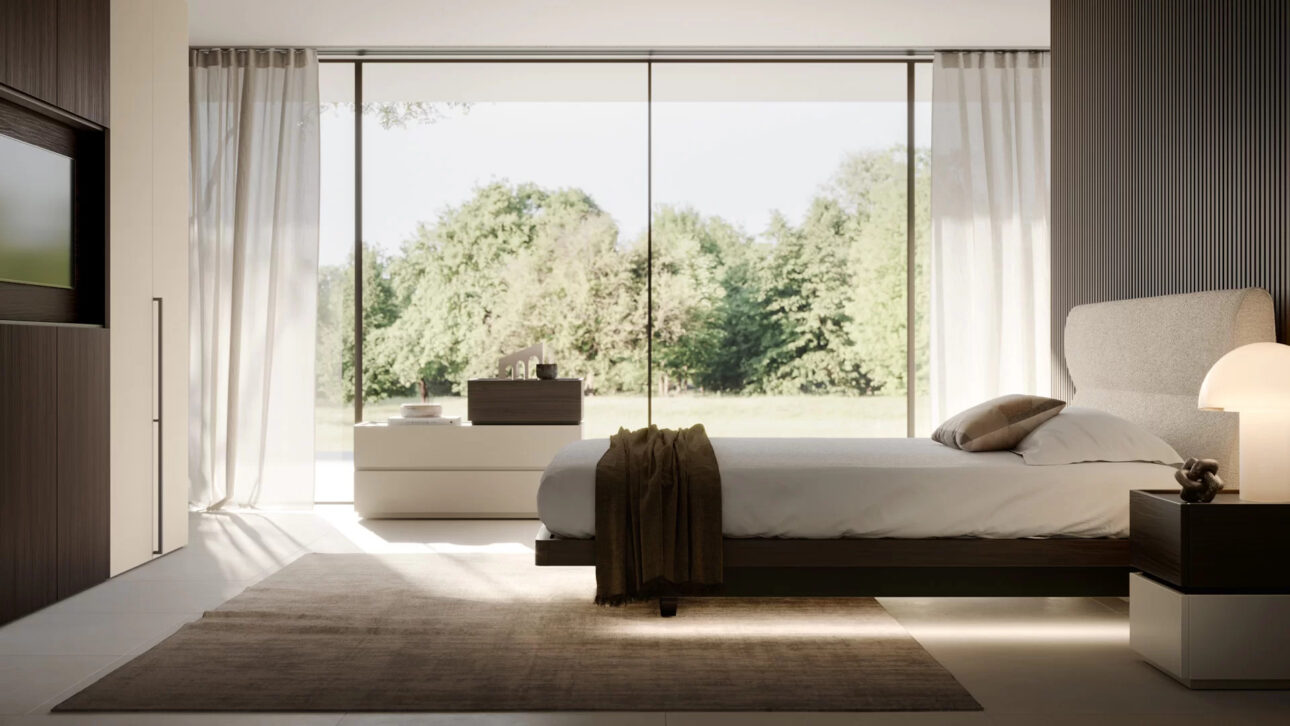
The Santalucia Mobili bedroom collections allow you to play around with these variables, with furniture that adapts to bedrooms of different sizes and styles. Discover our solutions for the bedroom space and start designing the bedroom of your dreams.