Modern open-plan living: interior-design solutions and tips for a unique environment
Modern open-plan spaces are far more than just a trend: they reflect contemporary lifestyles and relationships with the home, where the boundaries between kitchen, living room and dining room are more fluid, creating space for greater freedom, sharing and personalisation. But what makes an open-plan space truly modern?
Unlike a traditional home, where the different areas are divided up by physical walls, open-plan solutions focus on visual continuity and shared spaces. This approach works equally well in small apartments and larger homes, opening spaces up and connecting different areas.
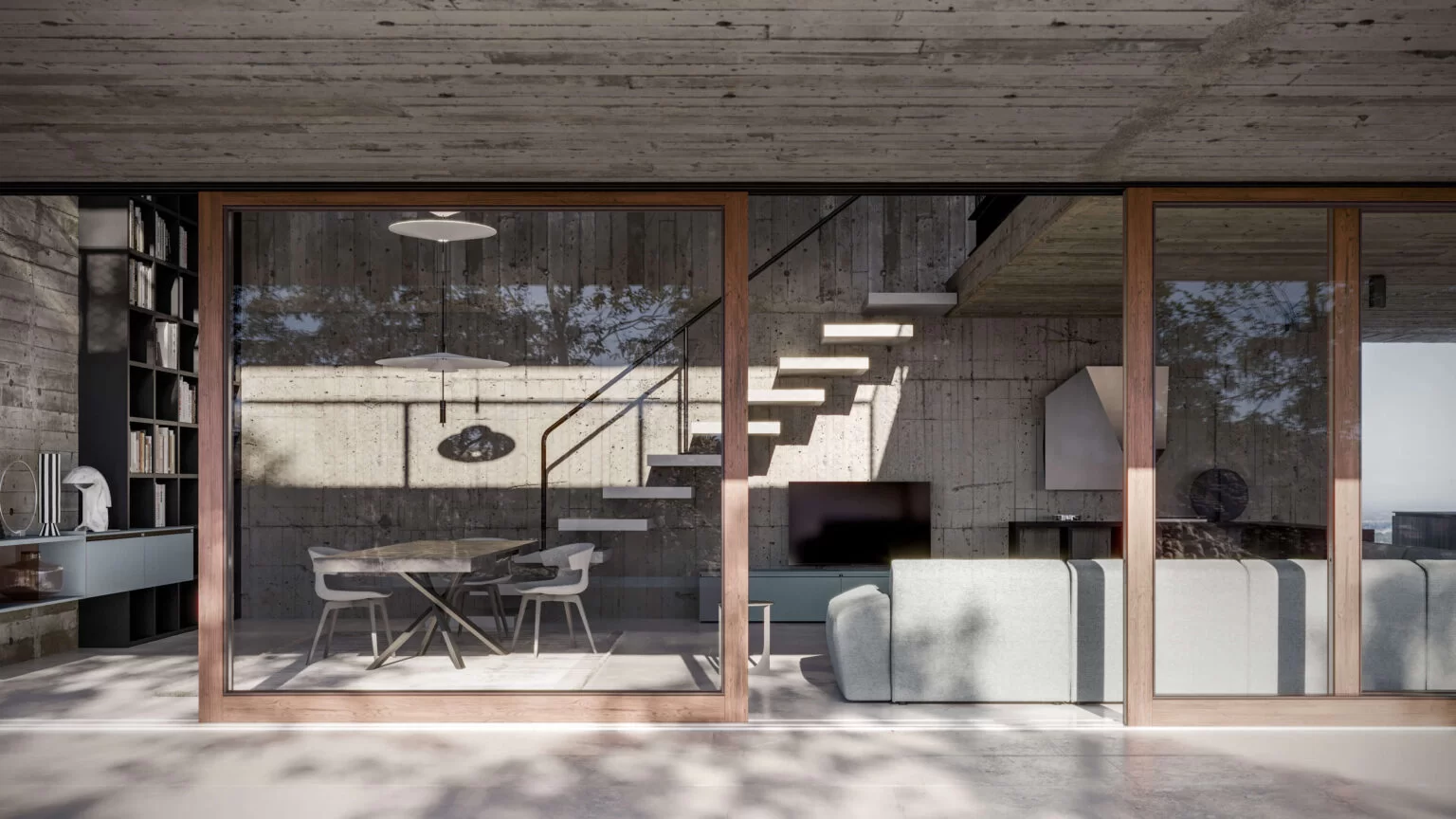
More and more people are choosing open-plan designs for their home, attracted by the possibility of bright and versatile spaces that flow into one another, adapting perfectly to different uses through the day. In this article, we provide you with ideas and advice on how to create your own unique, welcoming and integrated environment.
Designing a modern open-plan space: 3 golden rules
Designing a modern open-plan space doesn’t just mean removing partition walls; it requires careful arrangement of spaces and consideration of the practical requirements of daily life. Let’s begin with three golden rules:
#1 Make the most of natural lights
Light is one of the most important considerations for an open-plan design. Different areas must be arranged to make optimal use of natural light, positioning social spaces and those for relaxing in the most well-lit parts of the home.
#2 Partition without division
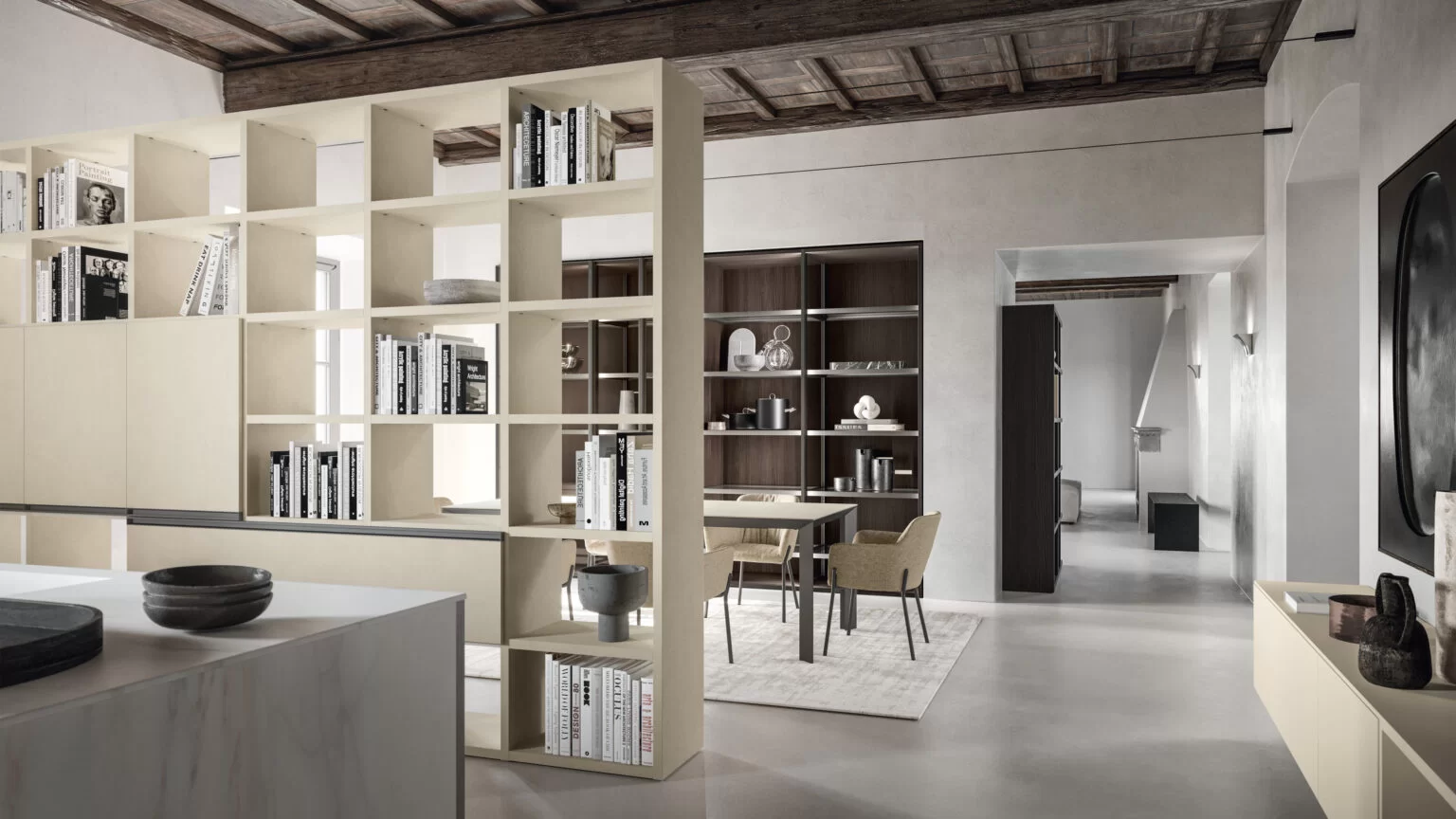
In a modern open-plan space, the different areas — kitchen, dining room and living room — must be distinguishable. This can be achieved through the choice of furnishings and accessories or using architectural elements, which mark out the areas without compromising the unity of the whole.
#3 Be consistent with style
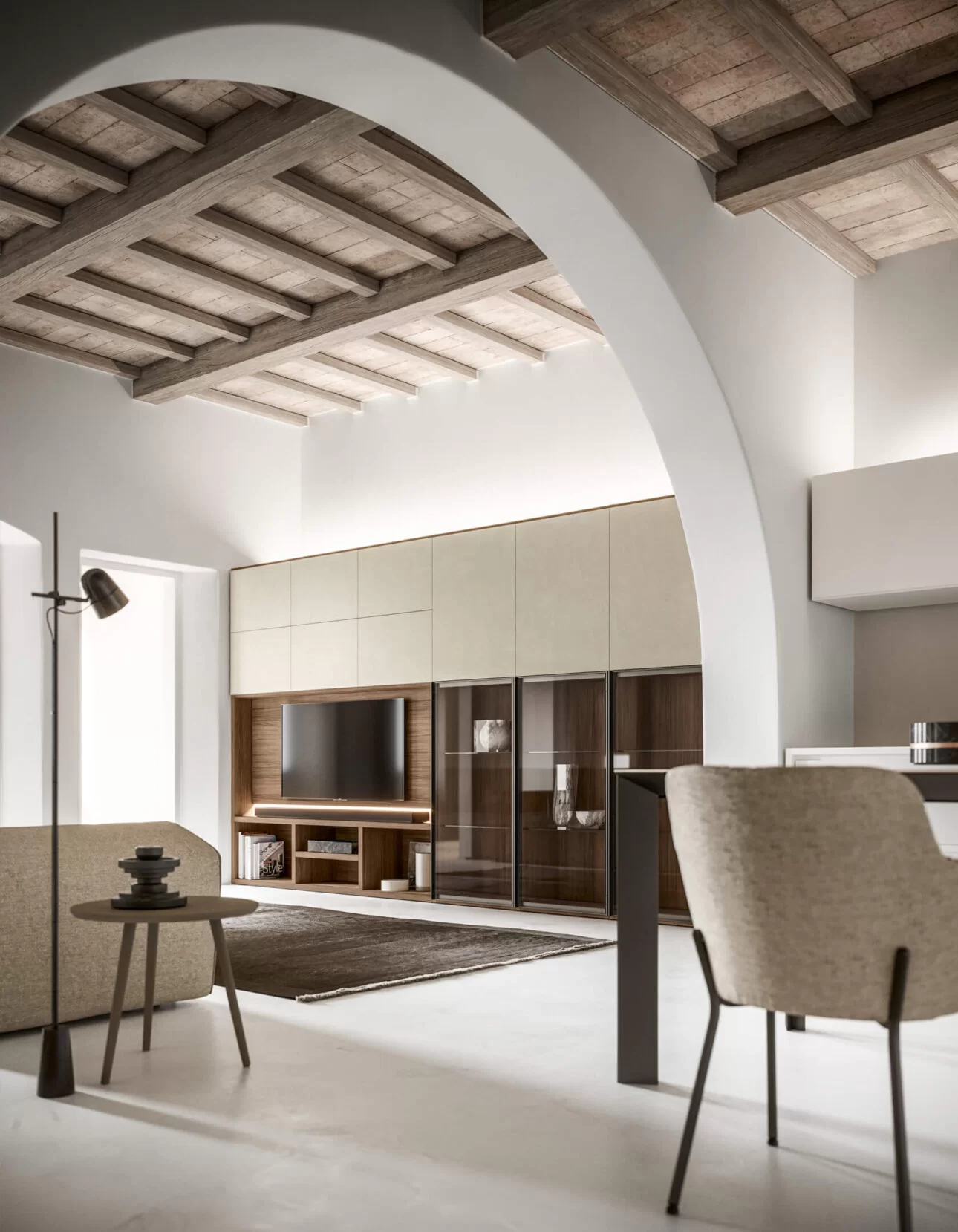
Aesthetic consistency is essential for a modern open-plan space: the choice of colours and materials must follow a theme, connecting the different areas of the home harmoniously.
The perfect furniture for a modern open-plan space
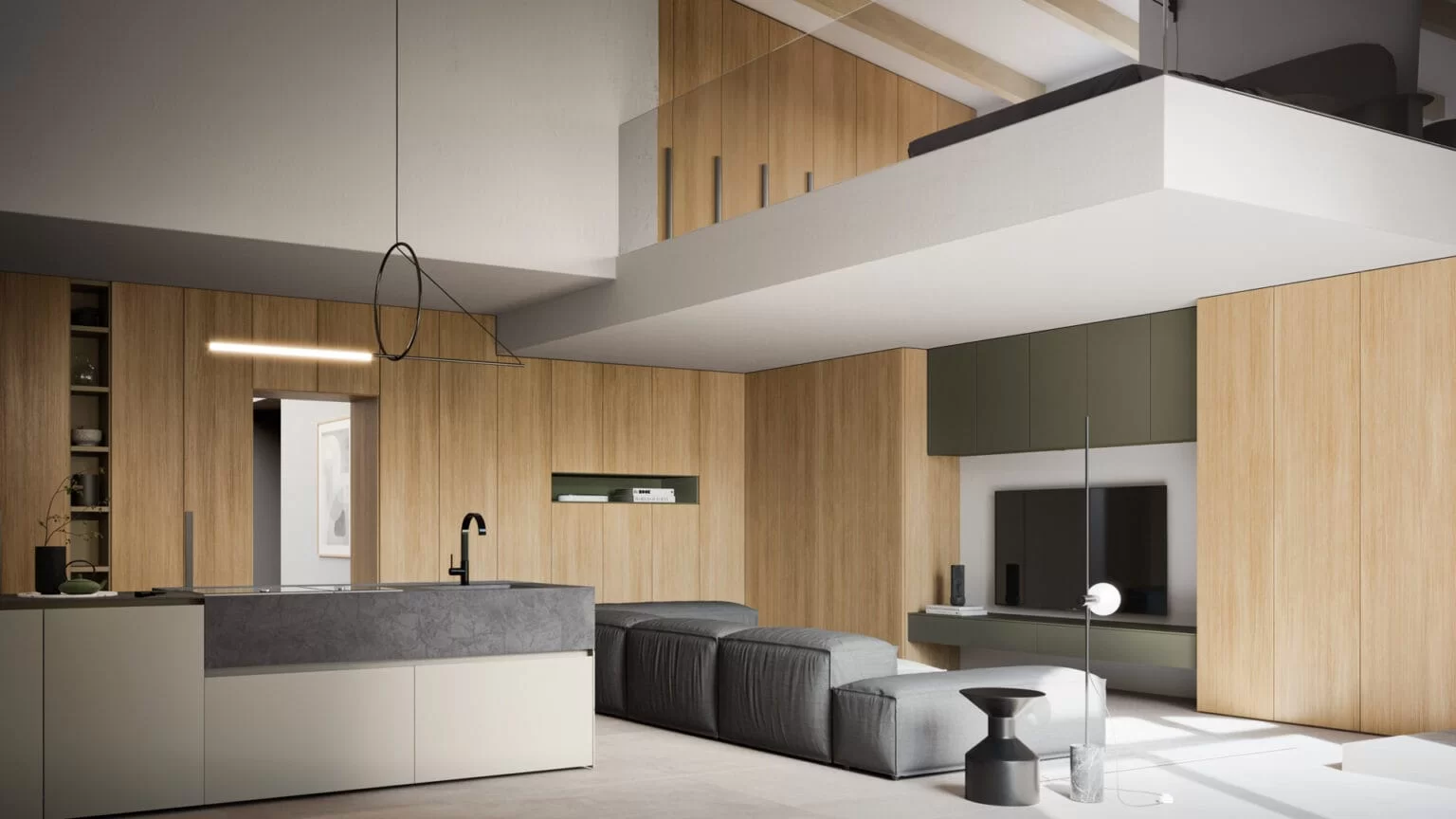
Choosing the right furniture is key here. Modular solutions are therefore ideal, being adaptable to the layout of the space and capable of meeting constantly changing requirements. Here are some pieces from the Santalucia Mobili catalogue that are ideal for a unique, open-plan approach.
A modular sofa can serve a central role as a partition: positioned facing the wall units, it naturally establishes the living-room space. If it has a finished back, there is no need for additional elements behind it, but it can be combined, for example, with a modular sideboard that sits below the height of the backrest.
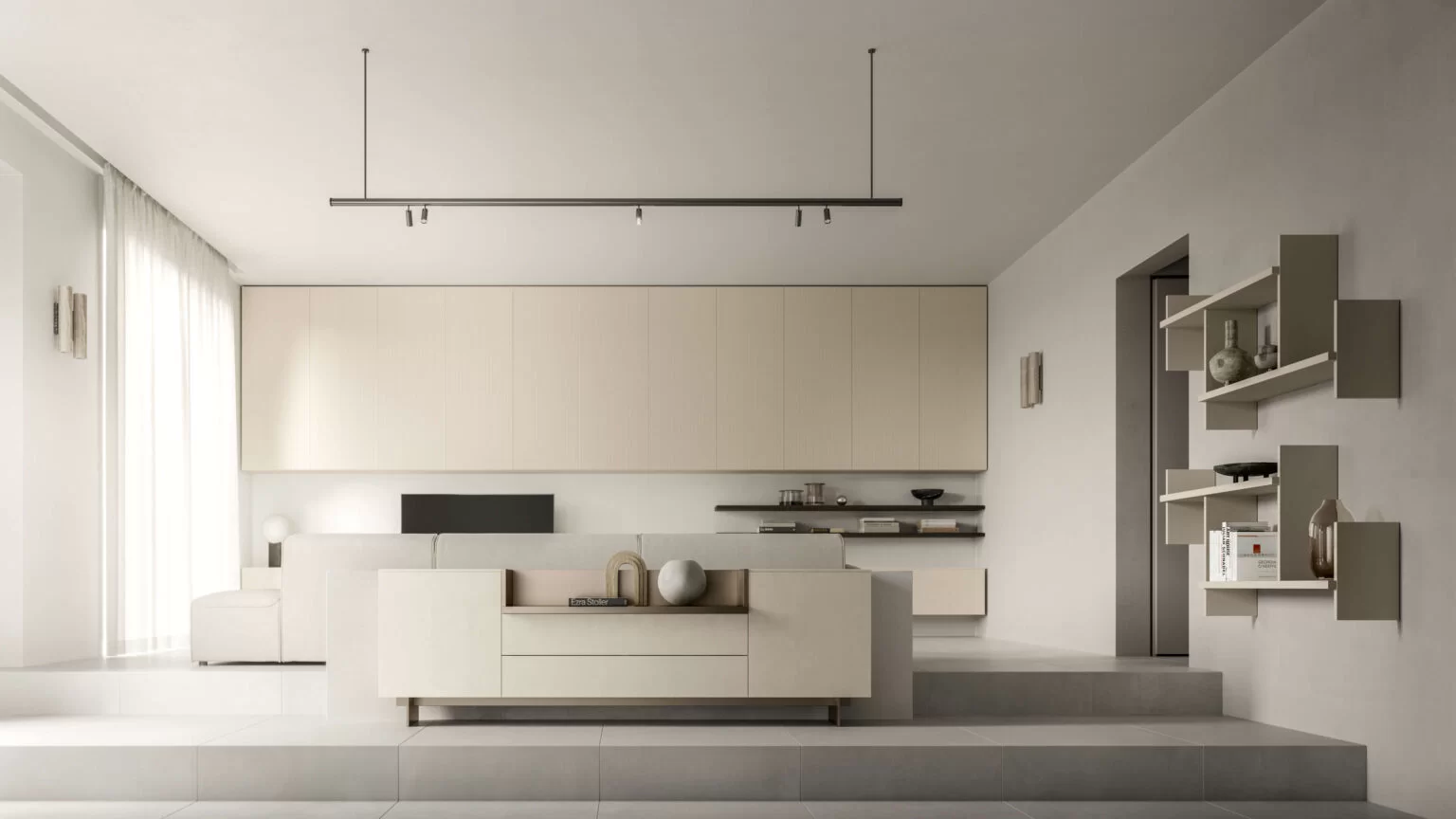
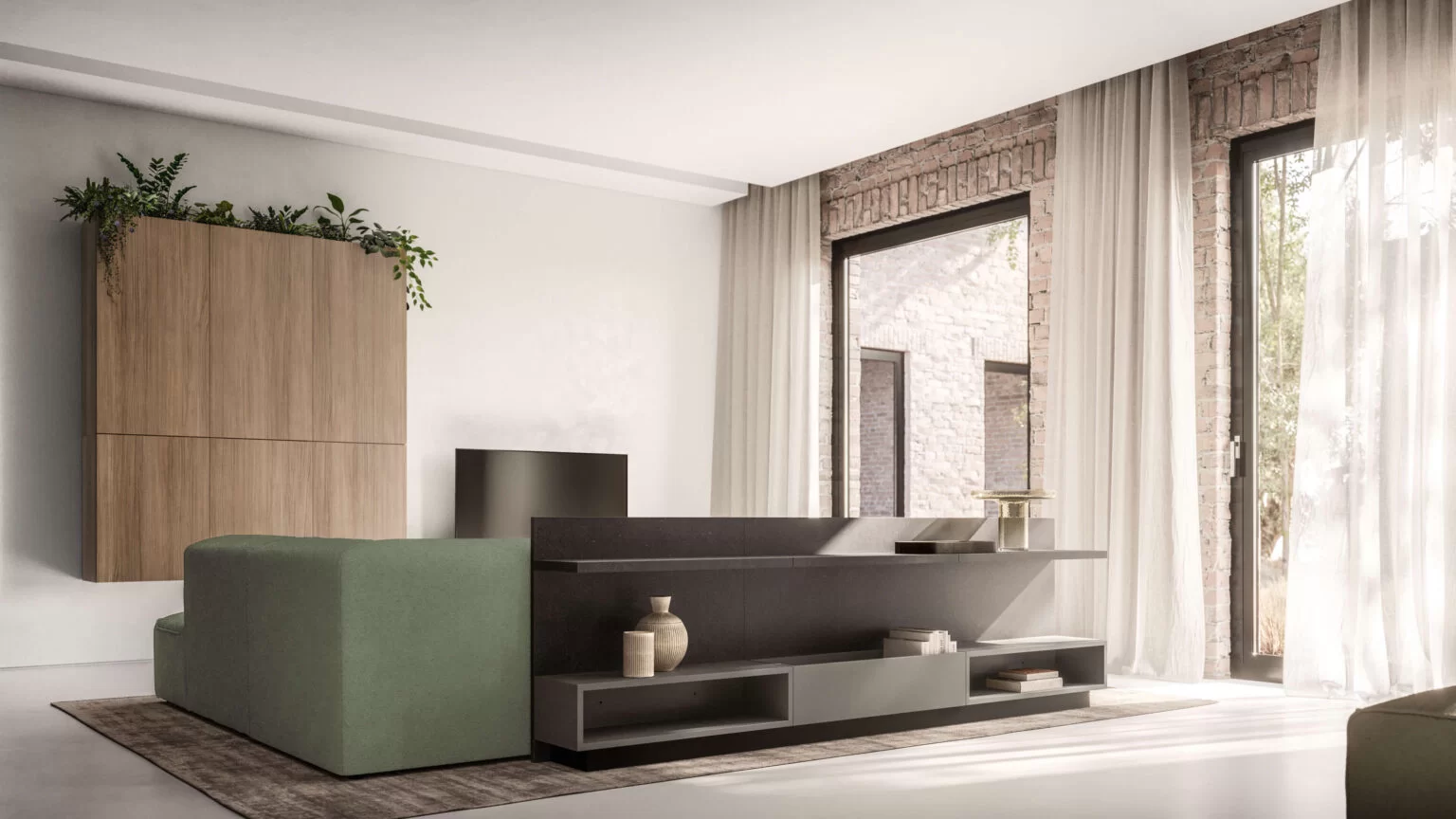
The Evan sofa system further broadens design horizons with the addition of rear wood panelling equipped with modules and shelves. With this solution, the rear of the sofa is transformed into a functional element: a practical surface for objects, a desk for a home office or a purely decorative presence.
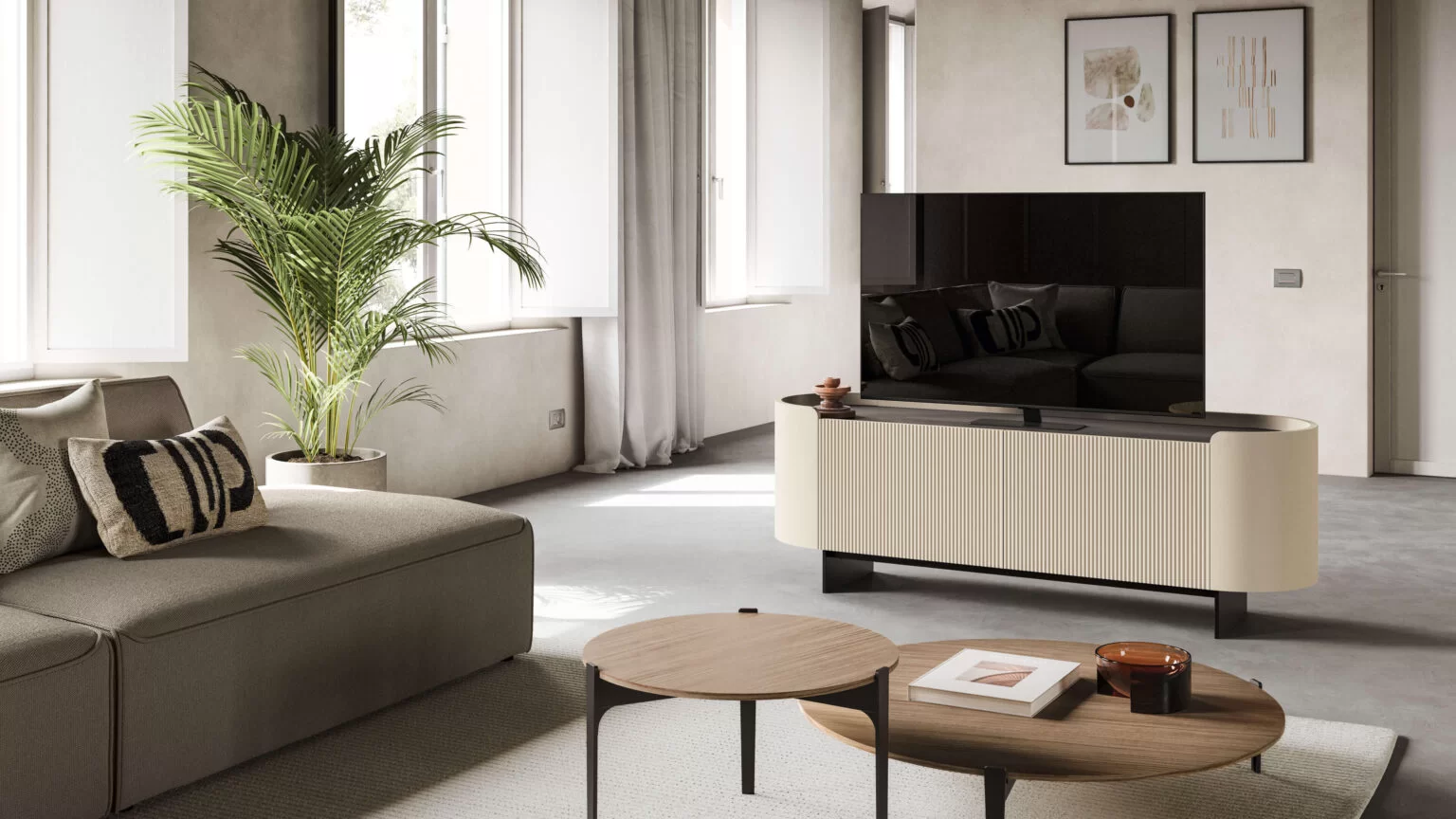
The Tulipa sideboard can also be placed in the centre of the room. Its rounded lines and compact size make it ideal to create continuity between two areas without it becoming an obstacle.
Another strategic choice is a table that creates a visual distinction between the kitchen and living area, or between the dining room and a space to relax.
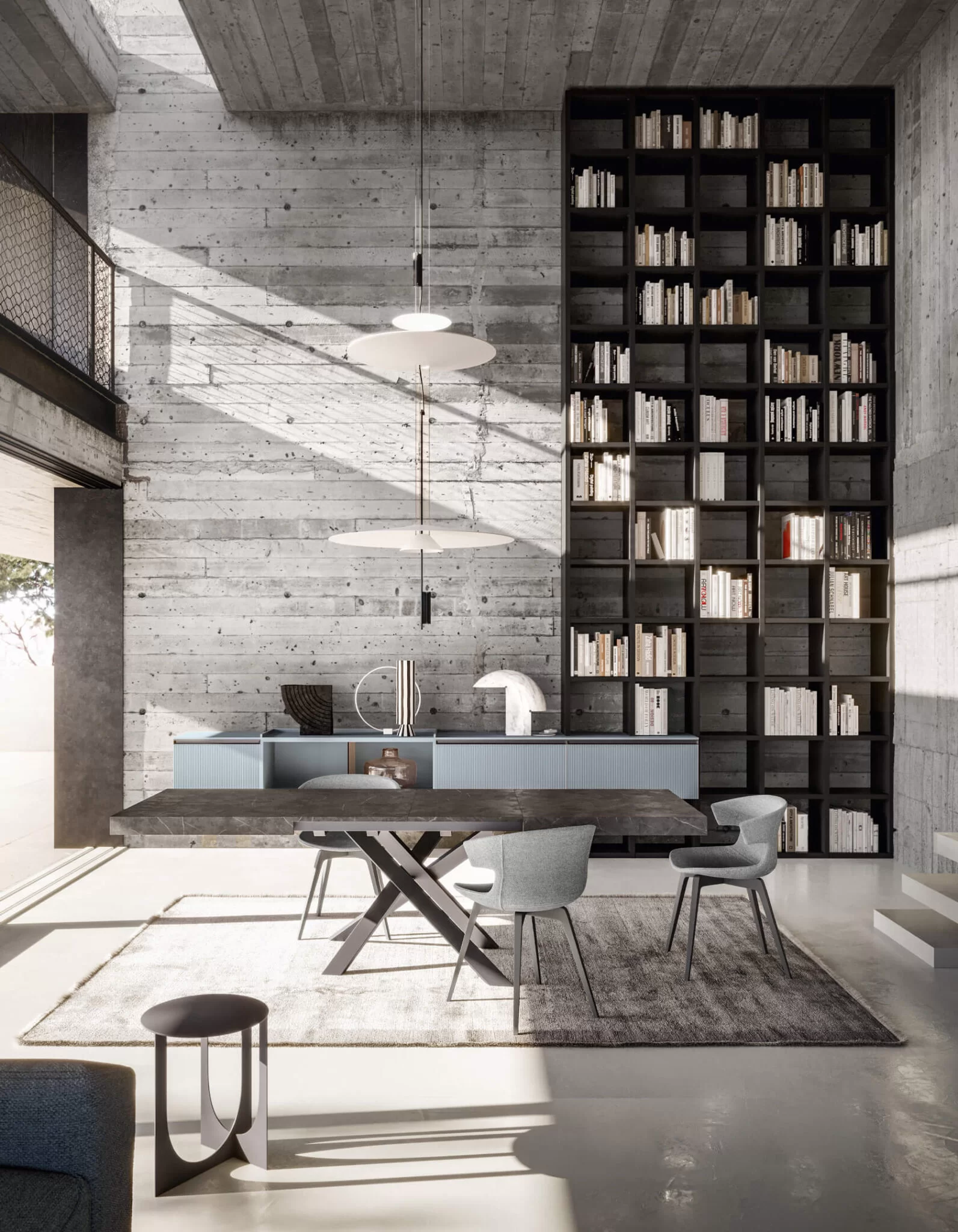
Finally, bookcase partitions are perfect to separate different areas whilst maintaining an open-plan feel. They provide storage without blocking out light or creating a visual barrier, maintaining the fluid and dynamic nature typical of modern open-plan spaces.
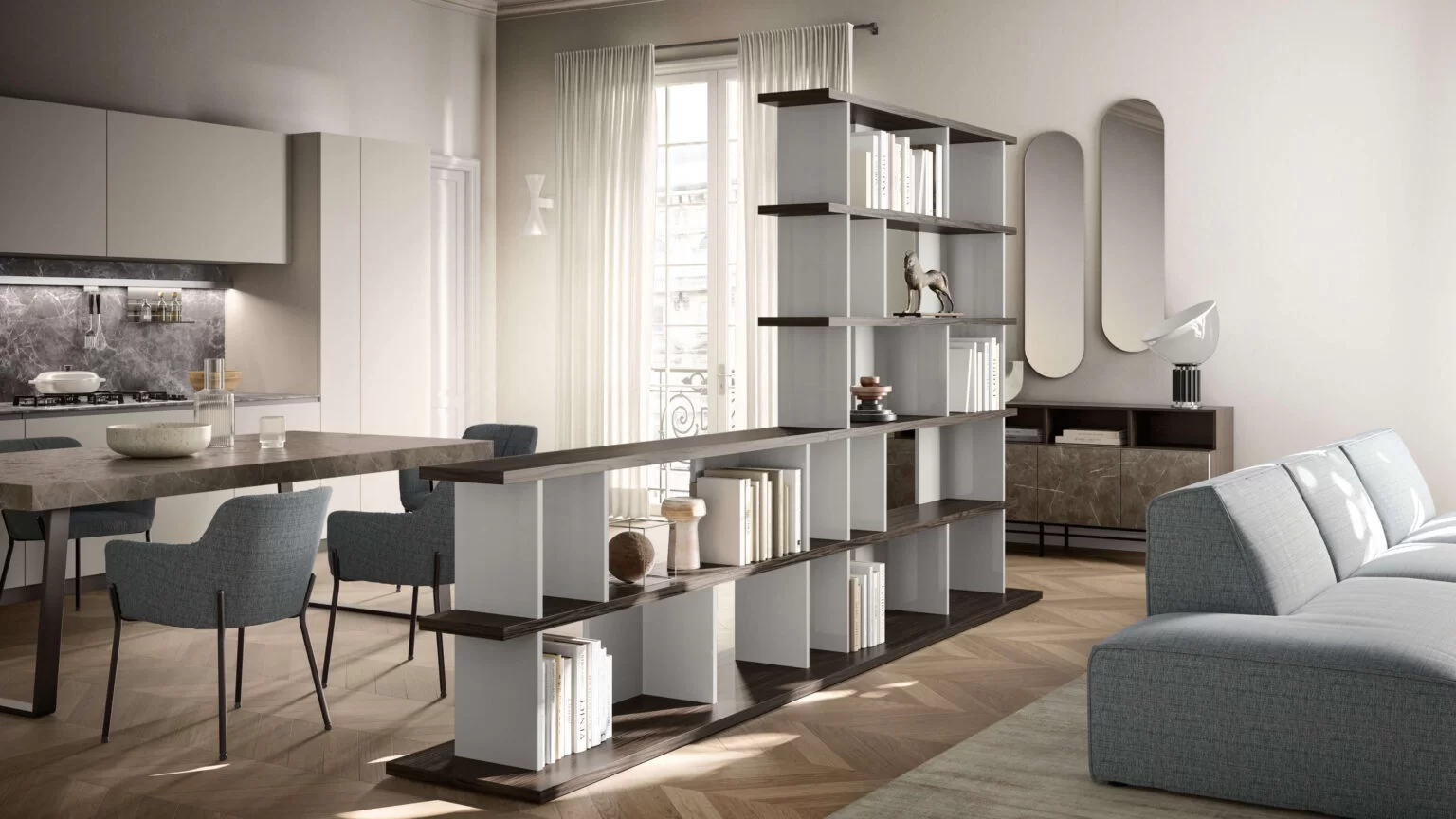
Lighting in modern open-plan interiors
The right lighting changes everything. In a modern open-plan space, lighting is a powerful tool to optimise design choices in every corner of the space.
It is essential to make the most of natural light, perhaps opting for fine curtains and lighter tones. Artificial lighting, on the other hand, enables the creation of truly eye-catching effects.
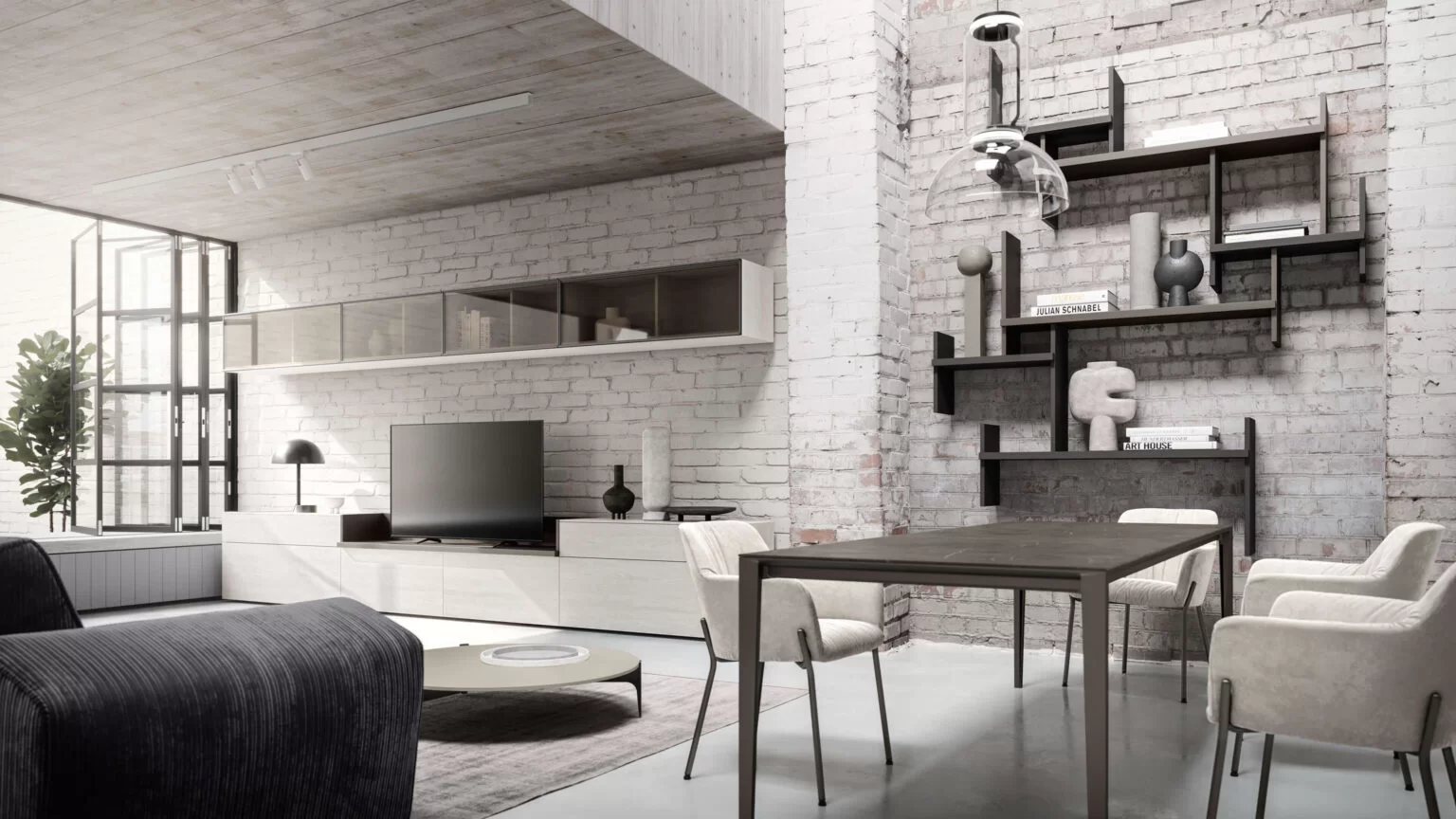
LED kitchen lights, hanging lamps for the dining table, integrated lighting on furniture and adjustable floor lamps in the living room: each area needs its own character, with dedicated lighting selected to suit different daily activities and offer comfort in the home.
An open-plan design, from entrance to kitchen
This Santalucia Mobili composition features an open-plan design including entrance, living room and kitchen in a single space. The different areas are arranged according to the available natural light: the living area is immediately after the entrance, in the most well-lit part of the home, which has two large windows for a welcoming, airy feel. The kitchen and dining area are positioned next to the final glass-panelled door, which also provides good lighting during the middle of the day.
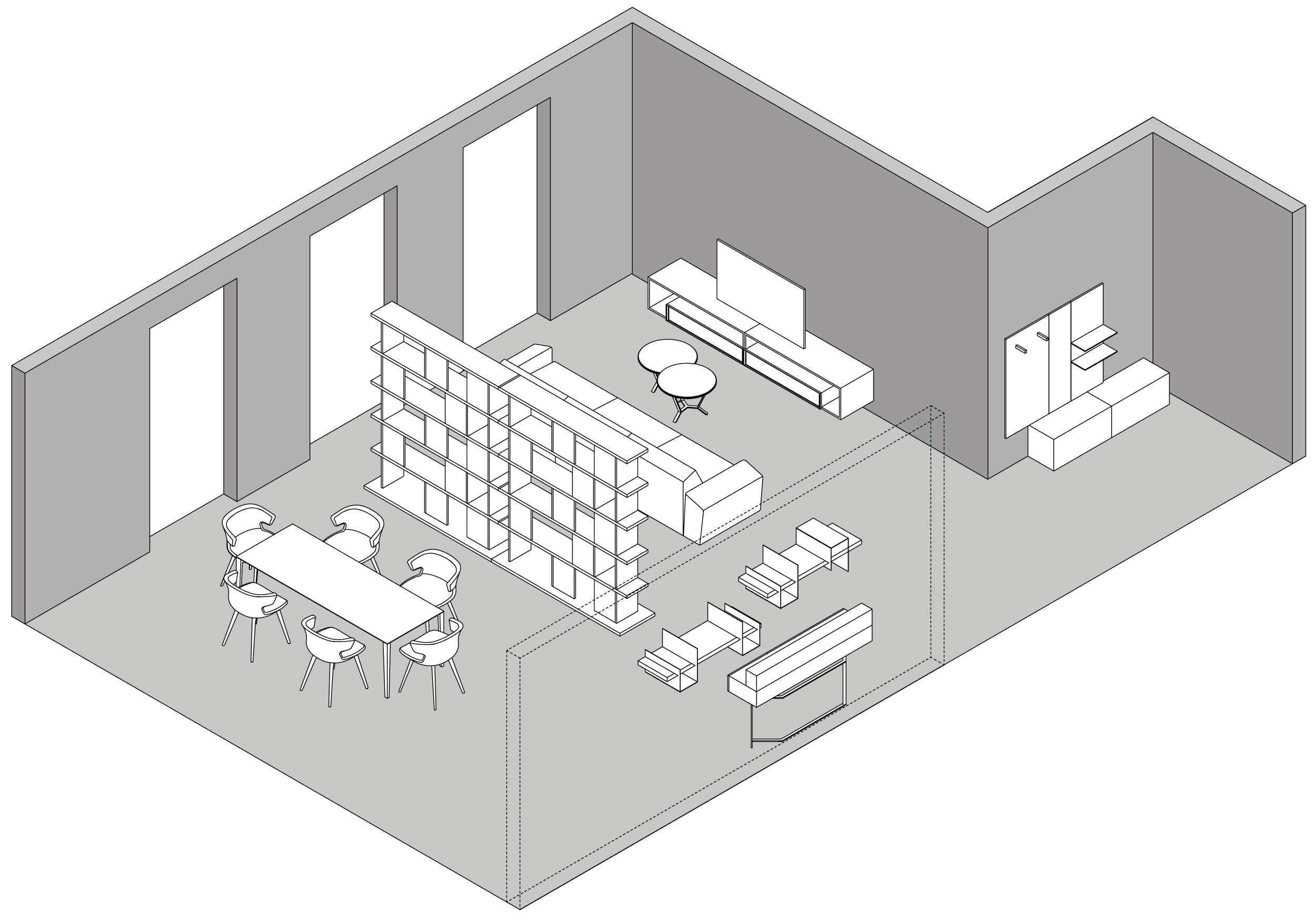
Let’s take a more detailed look at the furnishings and solutions selected to maintain stylistic and chromatic harmony.
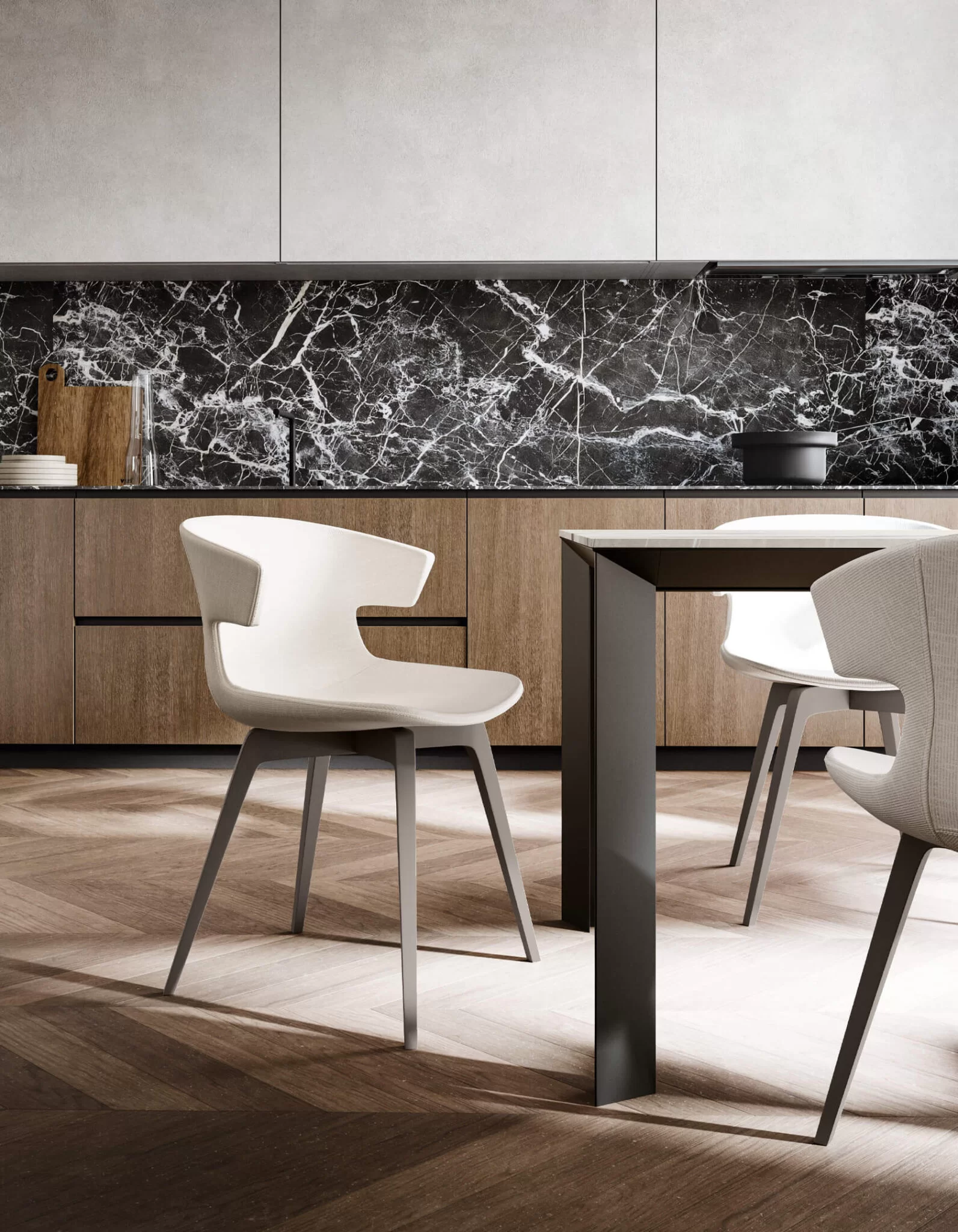
The apartment has an elegant style featuring mouldings and decorative details. This guided the design towards a neutral palette paired with natural wood and marble-effect finishes.
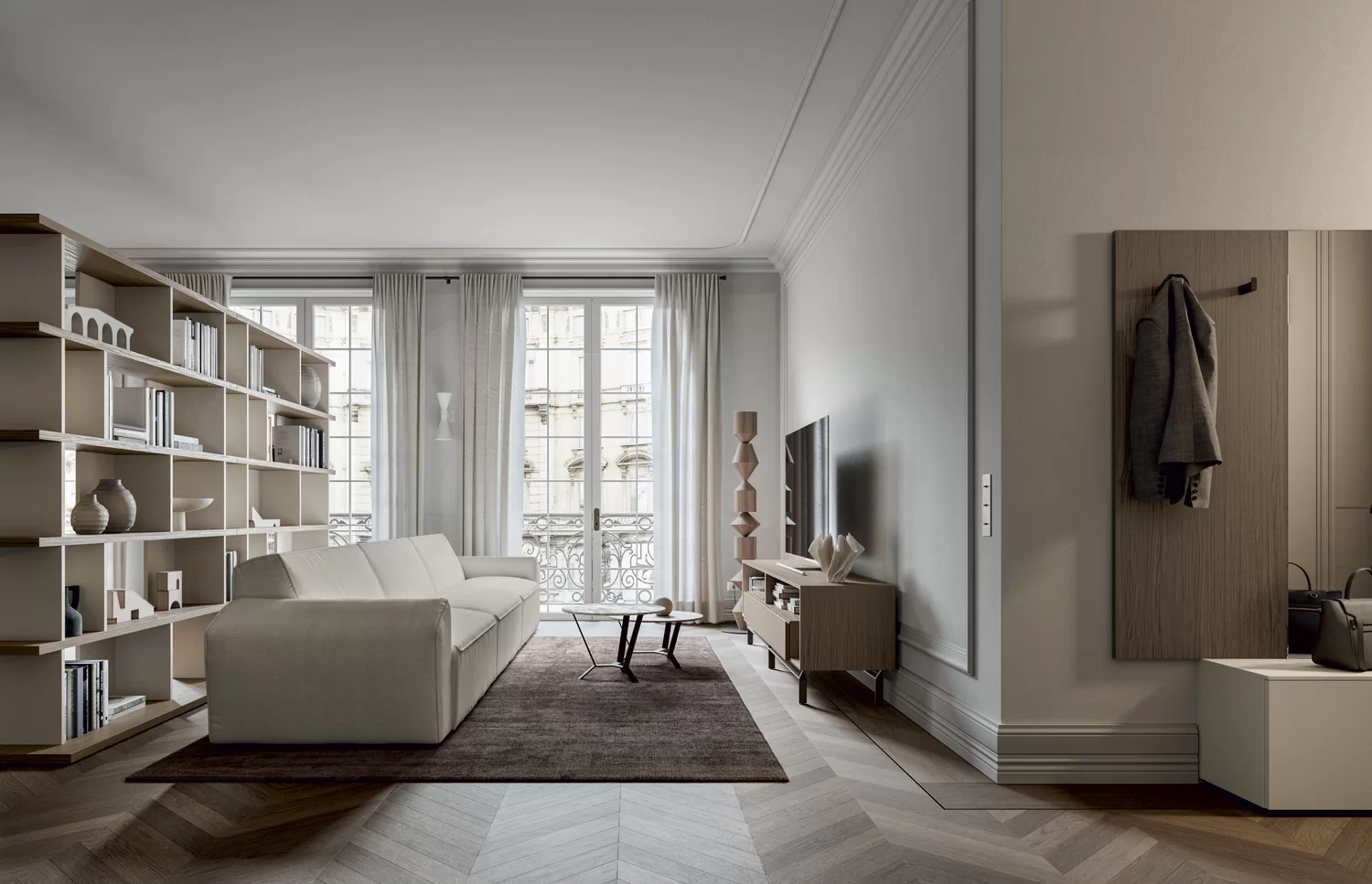
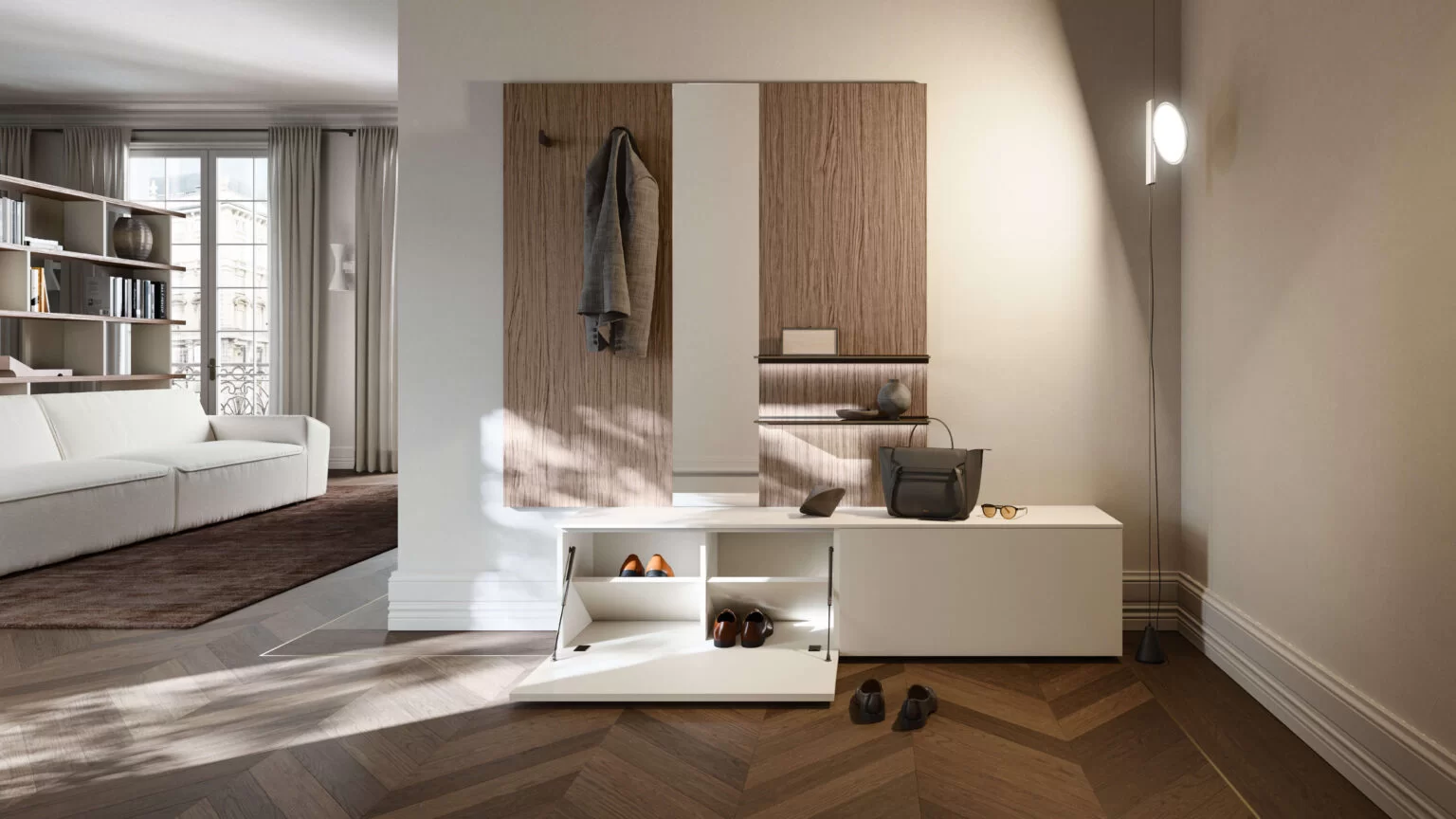
The entrance features a multipurpose coat-hanging unit with white closed storage modules, wooden panels and a mirror. This is paired with a floor lamp providing mood lighting that enhances this area.
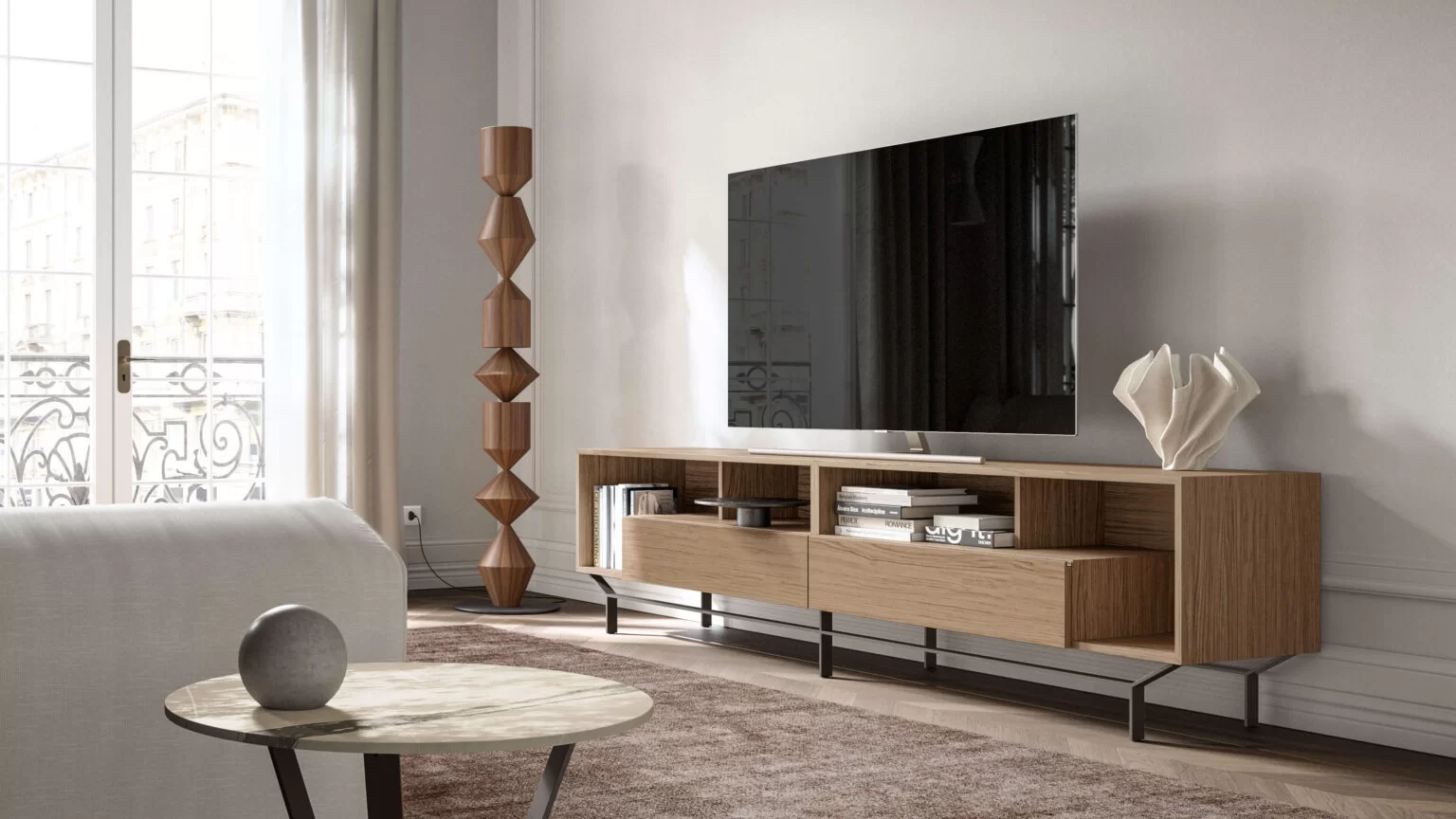
The same flooring continues throughout the space, and a rug marks out the living area. The Inside sideboard, used here as a TV stand, matches the wooden finish and clean lines of the overall design. Next to the sofa stands the Triade coffee table, featuring a marble-effect top and metal base that establishes continuity with the sideboard.
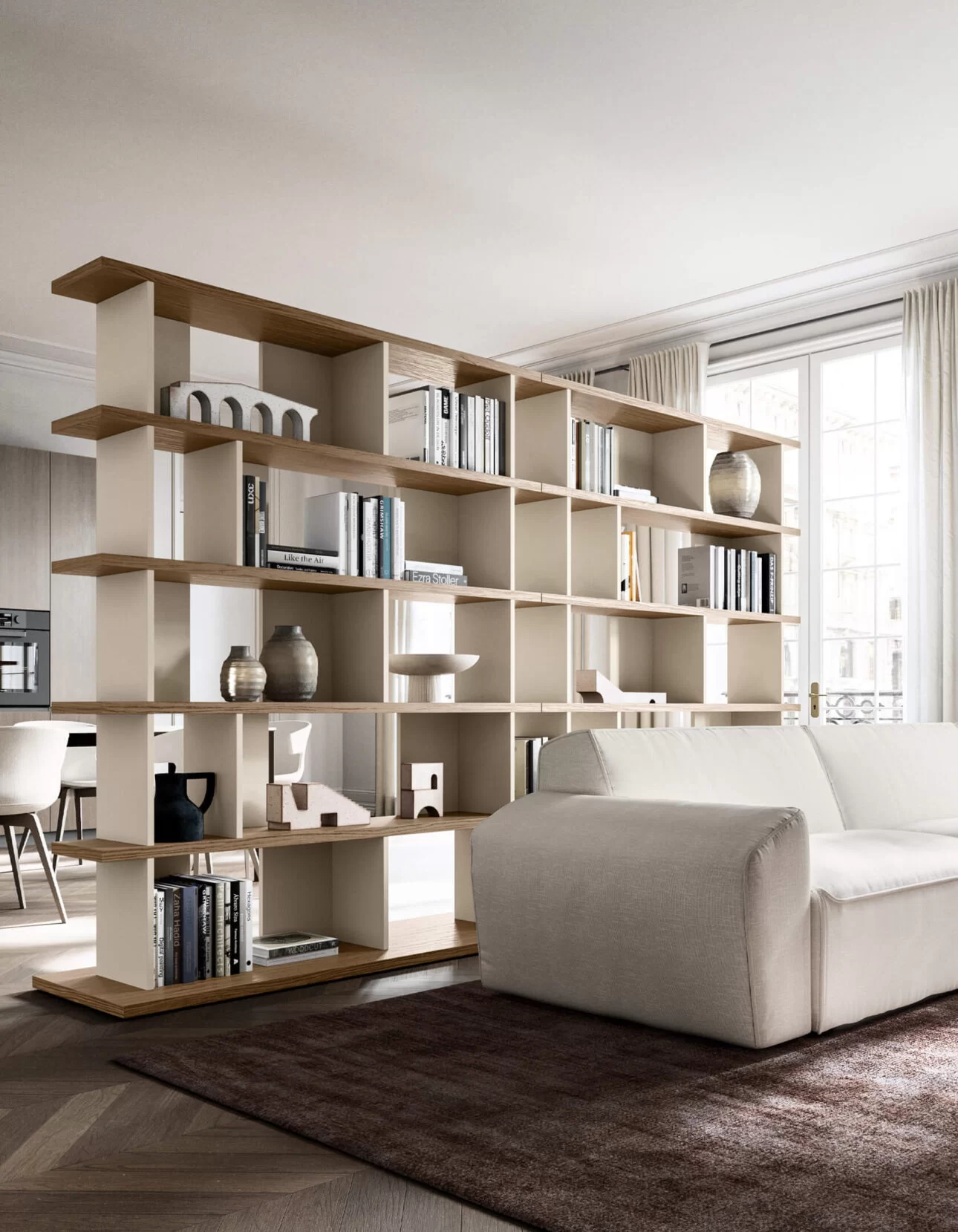
Behind the Evan sofa in a light-coloured fabric is the Bend double-sided bookcase. This separates the living area from the dining area, and the main structure, with alternating white modules and wooden shelves, maintains the open-plan feel of the space.
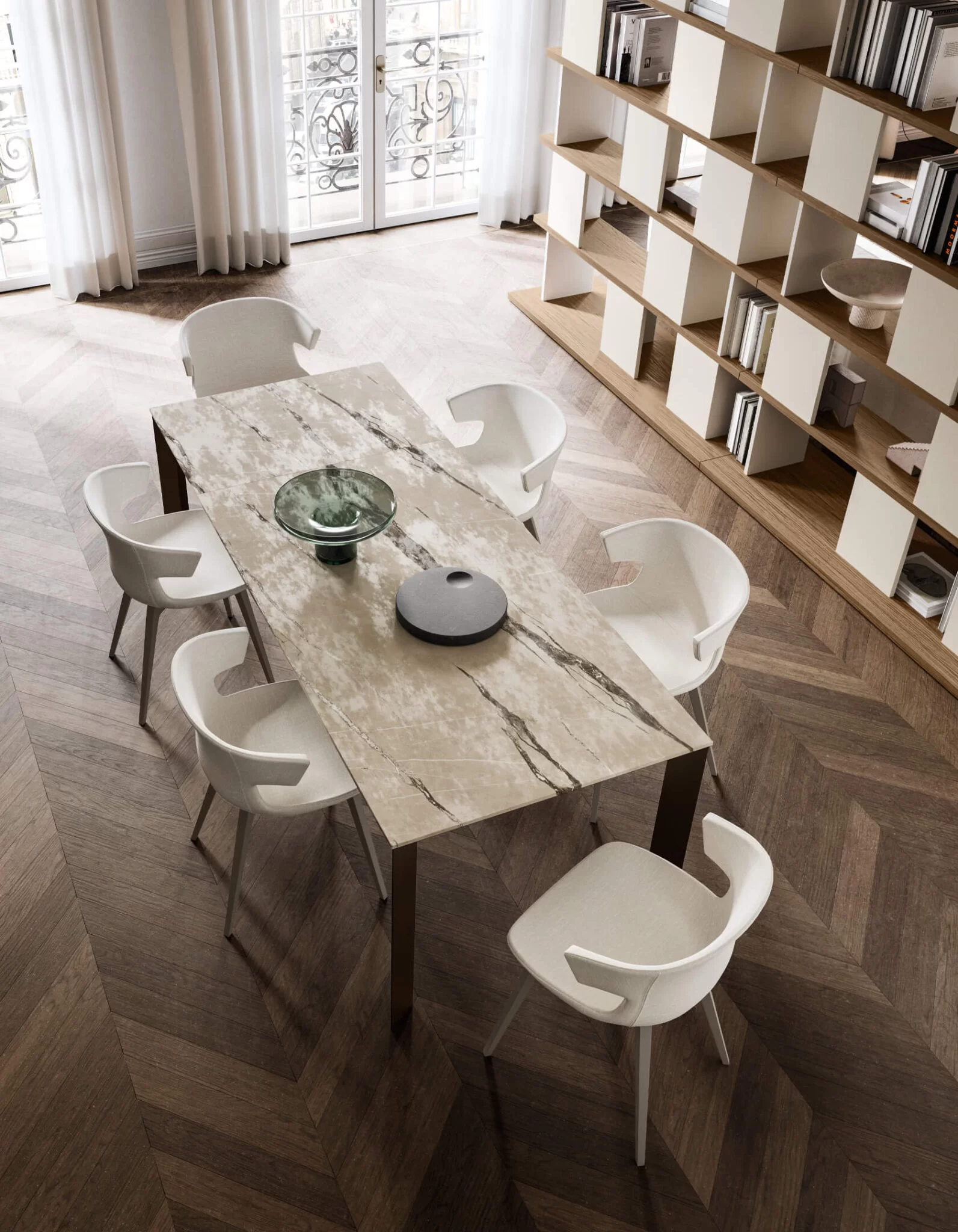
Moving behind the bookcase, we enter the dining area, home to the Gunter extendable table, which features a light-marble-effect top and metal legs. This is complemented by Nabucco designer chairs upholstered in the same fabric as the sofa.
Finally, the open kitchen uses the same materials as other furnishings: wood, marble-effect finish and light tones, for a coordinated and refined feel that establishes a unified and welcoming open-plan space.
Practical tips to ensure order and harmony
Order and harmony are essential to maintain visual continuity in a modern open-plan design. The absence of internal walls makes every detail more evident, so it is important to carefully balance aesthetic and functional choices.
Visual order can be achieved by using a consistent colour palette, choosing furniture and accessories with coordinated tones, similar materials and finishes that work together. Deciding which objects are left on view also contributes to the overall balance: a few well-selected items positioned tidily on shelves or surfaces are enough to personalise the space without weighing things down.
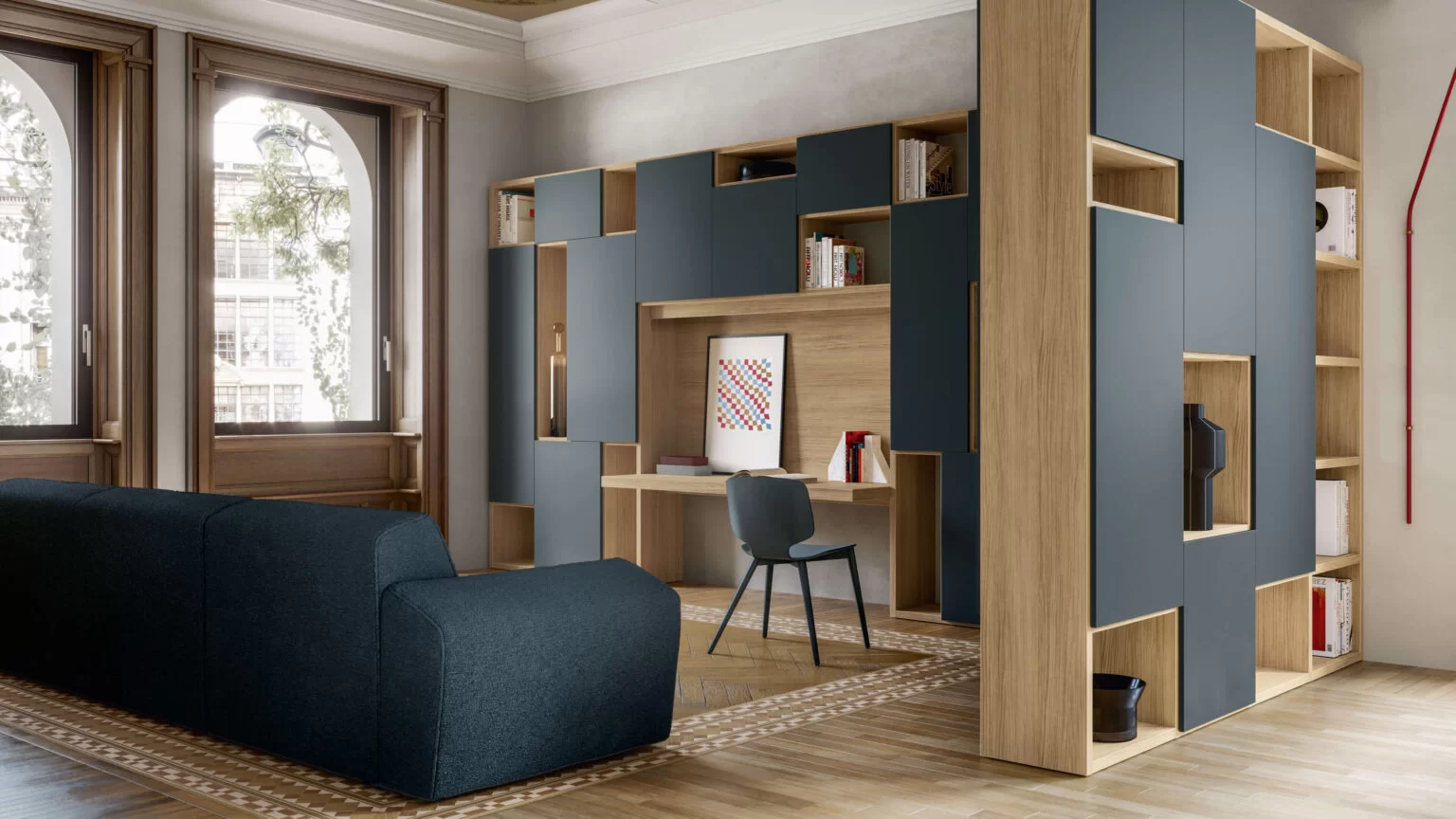
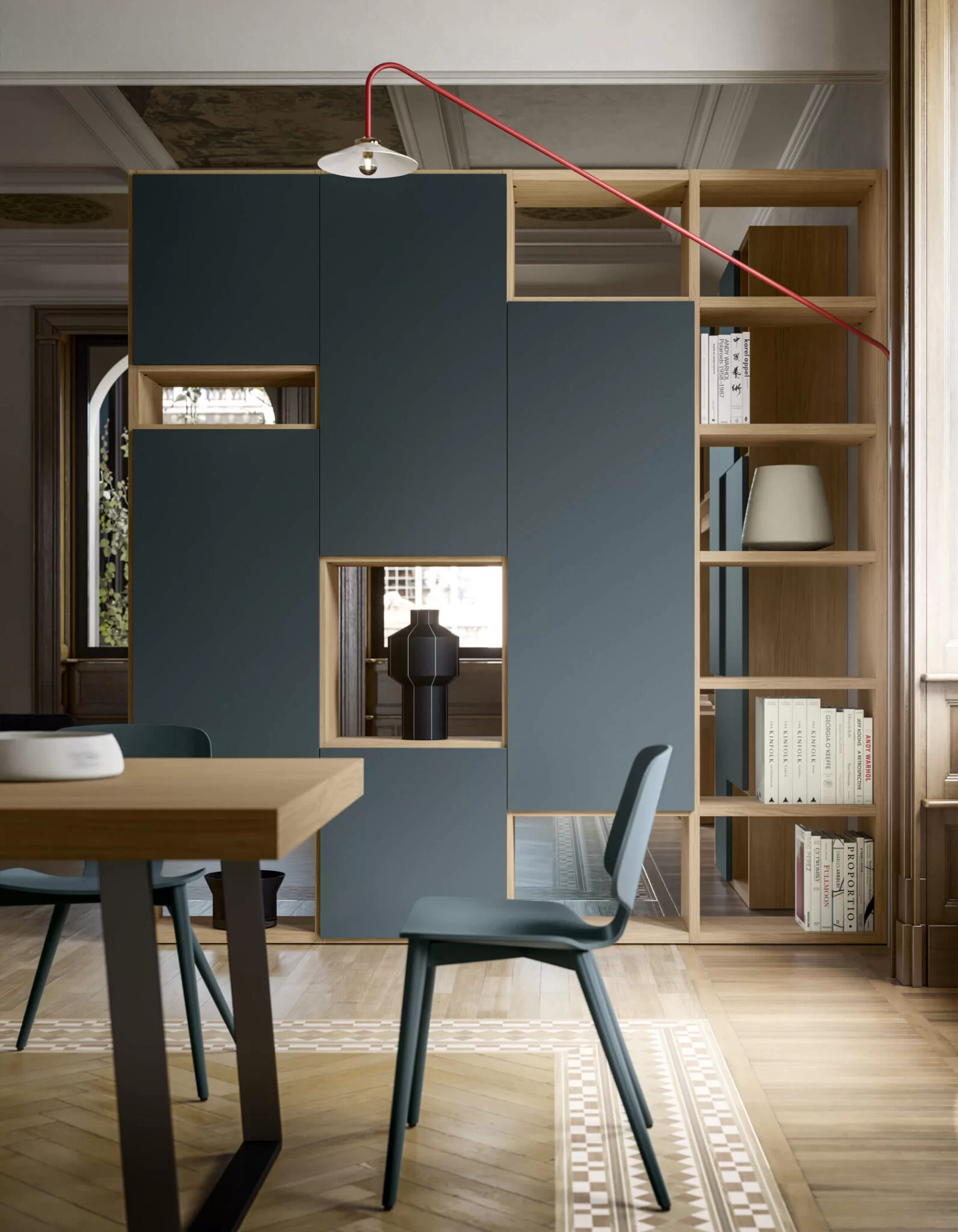
Functional order, on the other hand, is established through smart furnishing solutions, such as sofas with wood panelling at the rear, bookcase partitions, and designer sideboards with closed modules, open spaces and handy surfaces.
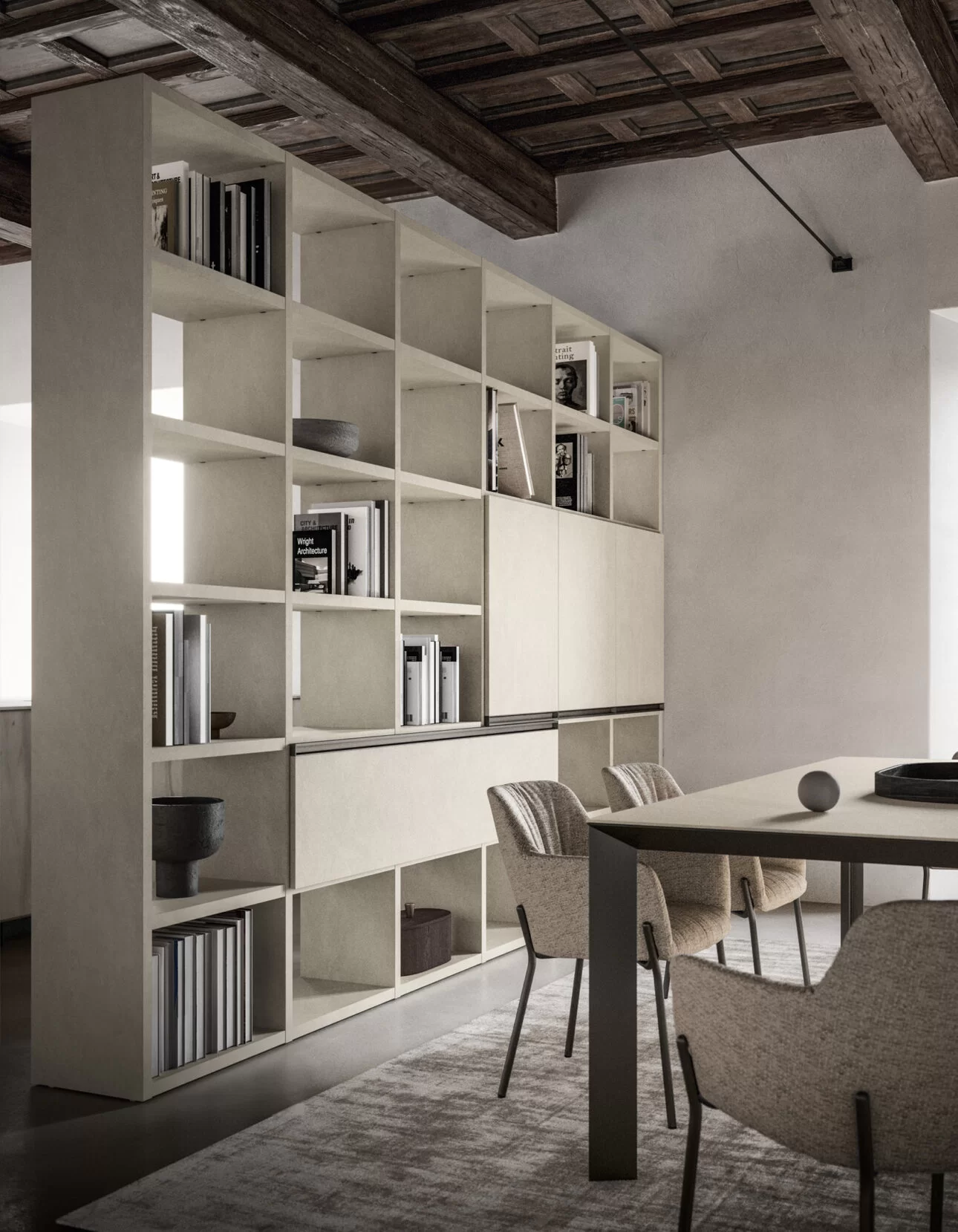
By following a few simple rules, where the layout allows it, it’s possible to design and furnish an open-plan space in which each area has a distinct function and every element is in perfect balance with the whole.
Choosing this type of solution means embracing a more fluid and social lifestyle, with shared spaces becoming part of the everyday. Afterall, opening up spaces means opening up the home to social interaction and new ways of experiencing the domestic environment.
Browse our Homy Side Panels, Homy Modules and Homy Details catalogues to draw inspiration and discover how to shape your own open-plan solution.