Interior design trends 2026: what we brought to Milan Design Week
Milan Design Week 2026, comprising the Salone del Mobile and the Fuorisalone, once again proved to be a privileged vantage point for observing the evolution of contemporary living at close quarters. Rather than just viewing the latest products and trends, the goal was to identify a more profound change, examining what people want from their homes and interior design today.
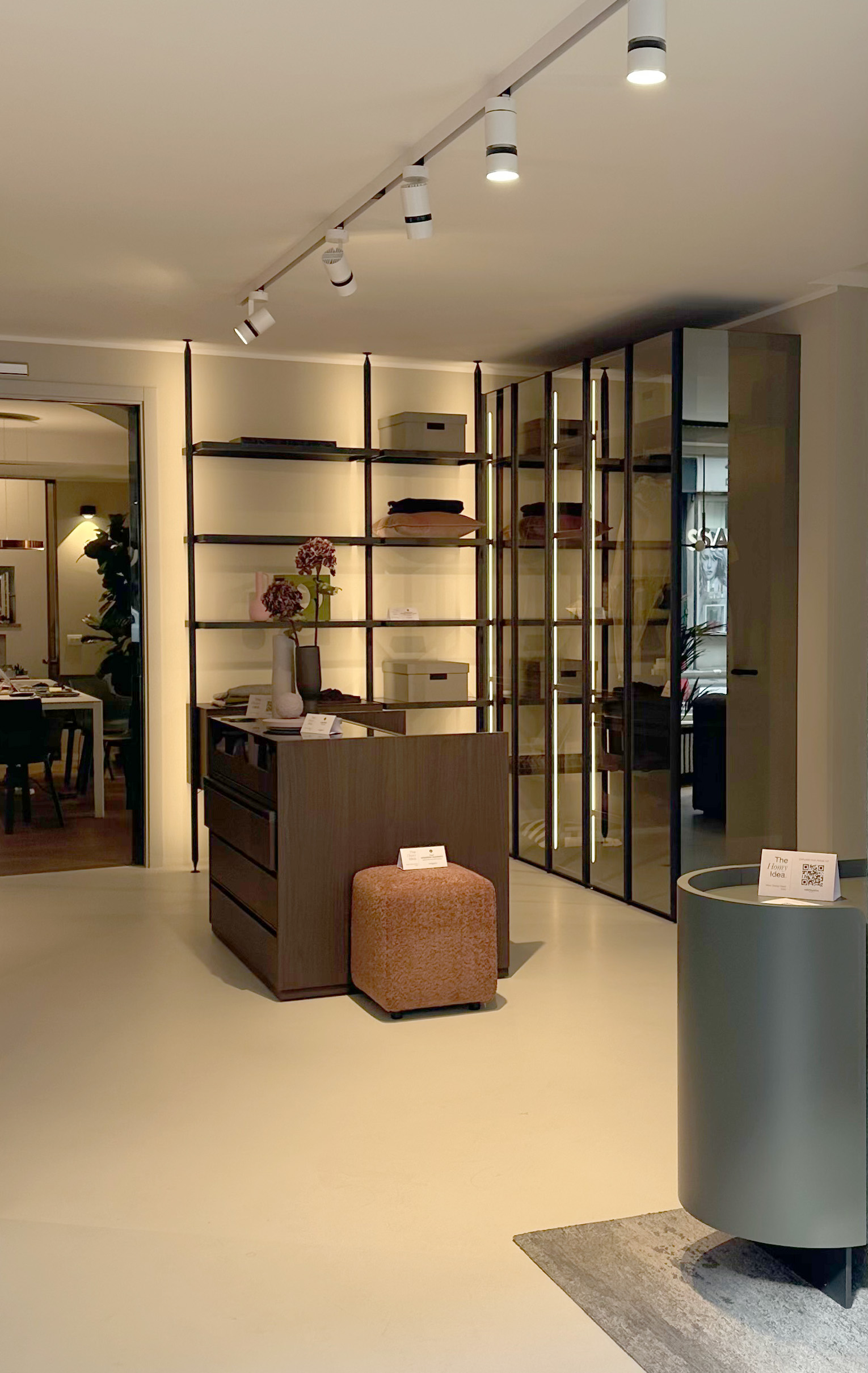
We have interpreted these trends at our Milan Design Store with a selection of products designed for real homes: increasingly compact and dynamic spaces where every design choice must be flexible and multifunctional.
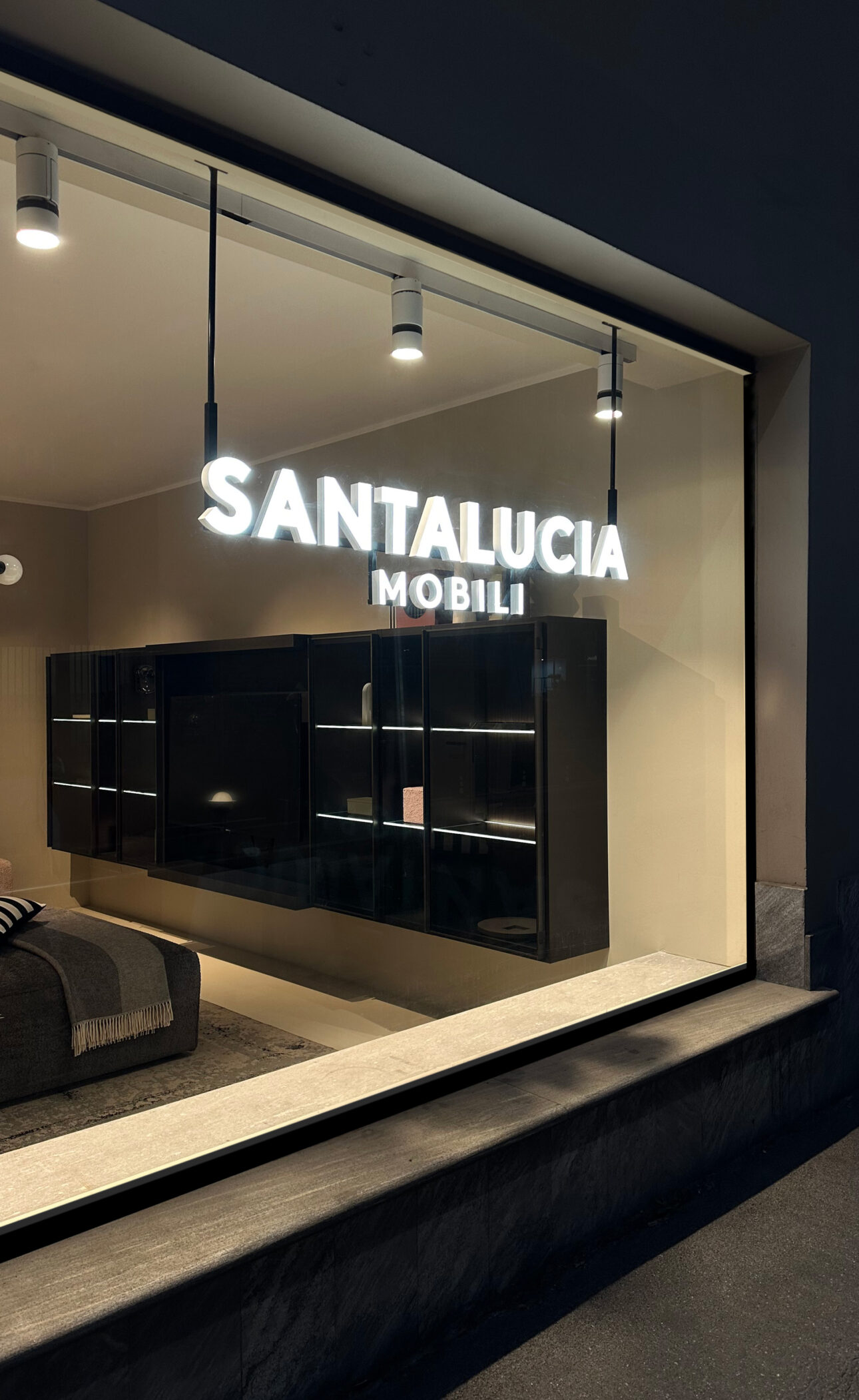
In this article, we take a look at the latest trends and describe how we have translated them into Homy solutions:
- Ideas for real homes with real spatial limitations
- The bedroom as an integrated system
- Furniture for niches and difficult-to-furnish spaces
- On-trend colours and materials
- Glass for lightening furnishings and spaces
- Maximum comfort also in small bedrooms
- Lighting integrated in furniture
- Sustainability and made-in-Italy design
Ideas for real homes with real spatial limitations
One of the clearest trends to emerge in 2026 is the definitive replacement of the concept of the “ideal home” with a more tangible “idea of home” based on real habitations where space is often restricted. In this context, modularity emerges as the key guiding principle. Furnishings aren’t rigid configurations but open systems that can be combined, transformed and adapted over time.
This approach is adopted in both the living area and the bedroom: elements are combined, functions are inbuilt and designs always take account of the amount of space available. The result is an interior design tailored to everyday life and capable of evolving together with the inhabitants.
The bedroom as an integrated system
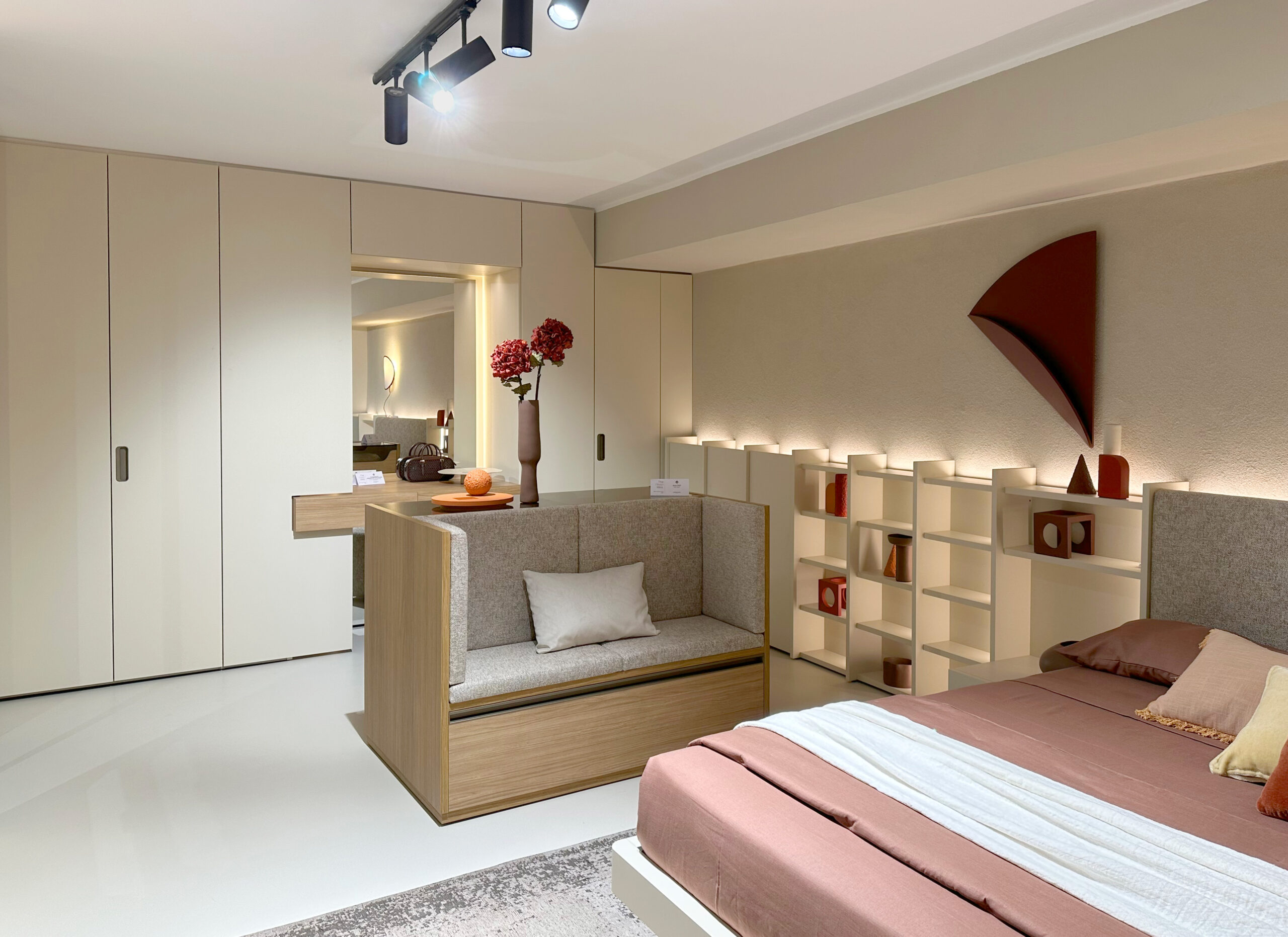
One of the most interesting applications of this vision can be seen in the bedroom, which, in 2026, increasingly takes the form of a single modular system.
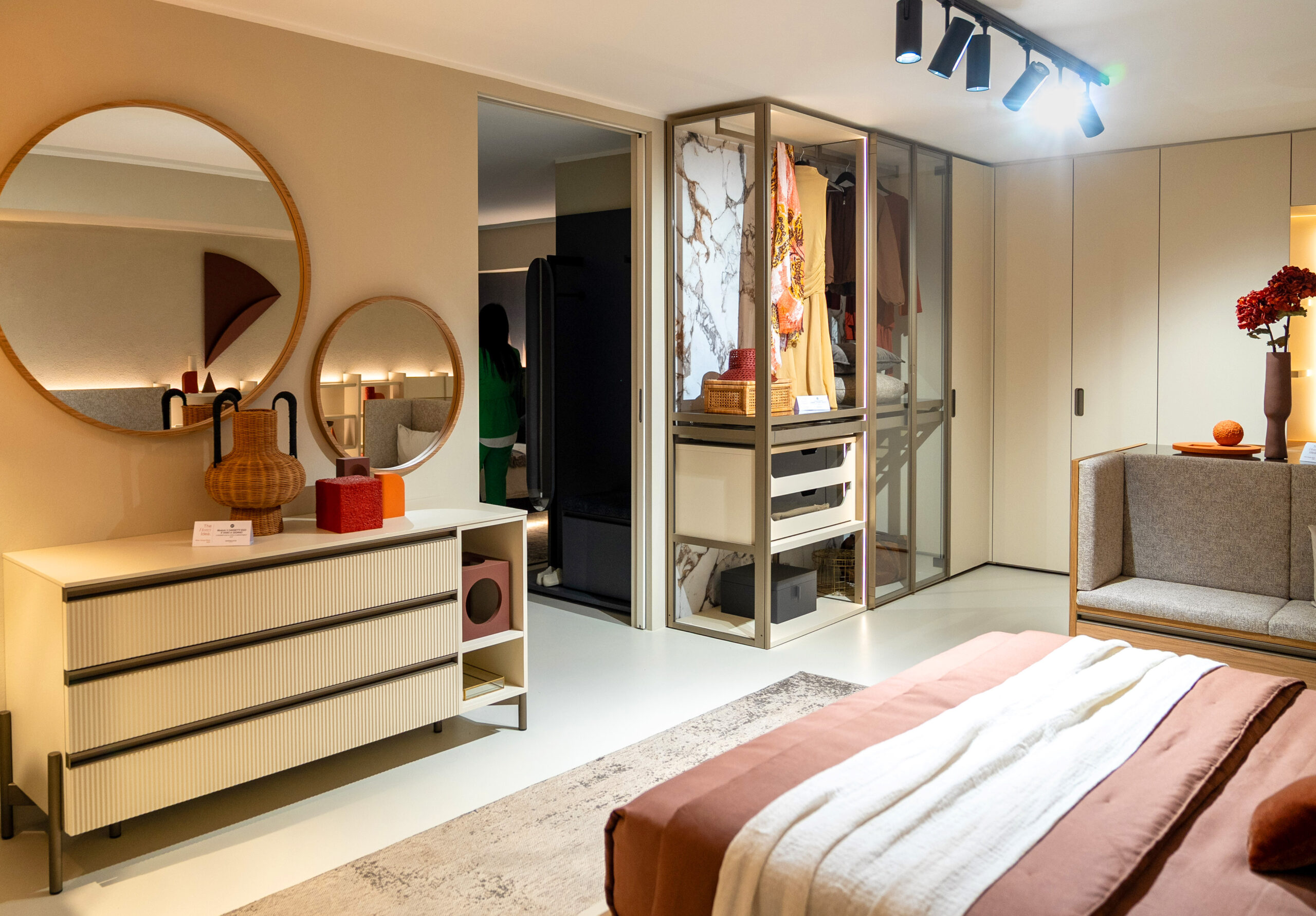
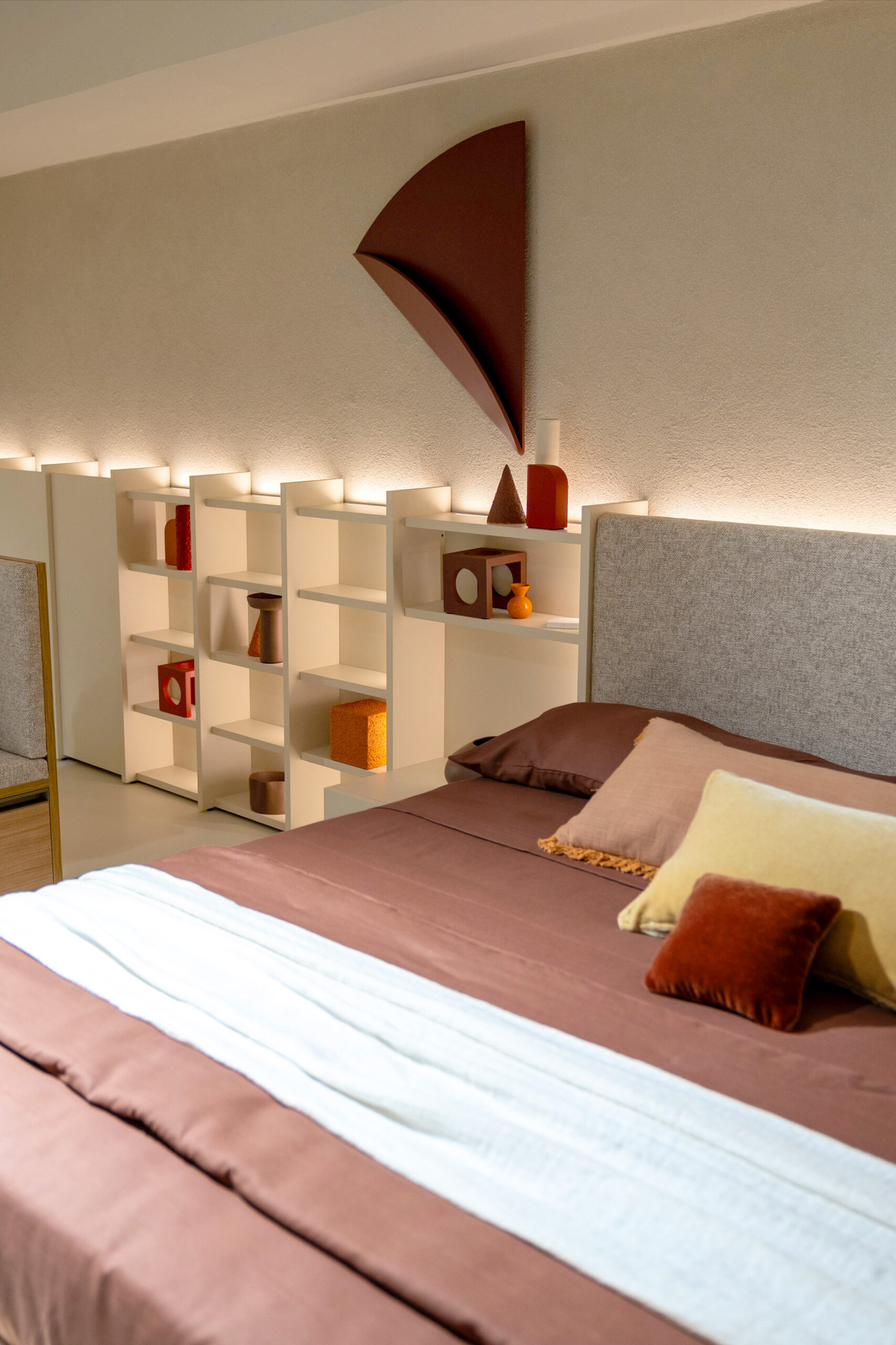
The bed acts as the visual focal point of the room but, more importantly, also organises the space around it. In the P22 system, the bed plays a central and active role, an architectural element that integrates storage, usable surfaces, bookcases and lighting. This furnishing system allows you to concentrate multiple functions on the same wall, optimise the space and reduce visual fragmentation. A real-life solution for contemporary living needs.
Furniture for niches and difficult-to-furnish spaces
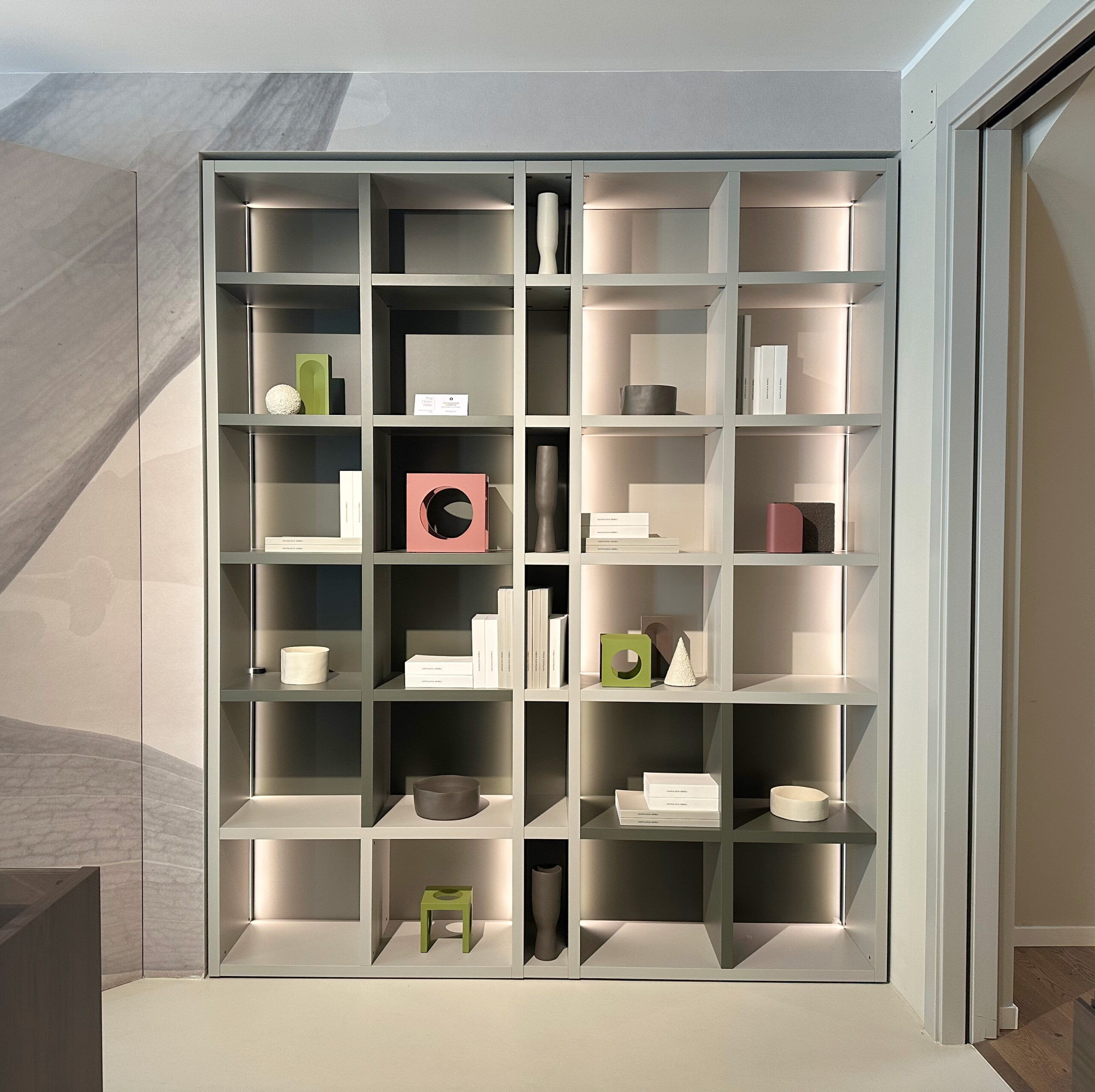
Another key theme in 2026 is making good use of tricky spaces: often neglected in the past, nowadays niches, recesses, corridors and passageways are an integral part of the project. The interior design adapts to the architecture, not the other way round. This means that solutions have to be tailored to the space, making smart use of every centimetre.
The entrance, for example, has an increasingly strategic role: from simple passageway, it is transformed into a fully furnished space that combines storage, usable surfaces and organisation in a couple of cleverly chosen elements.
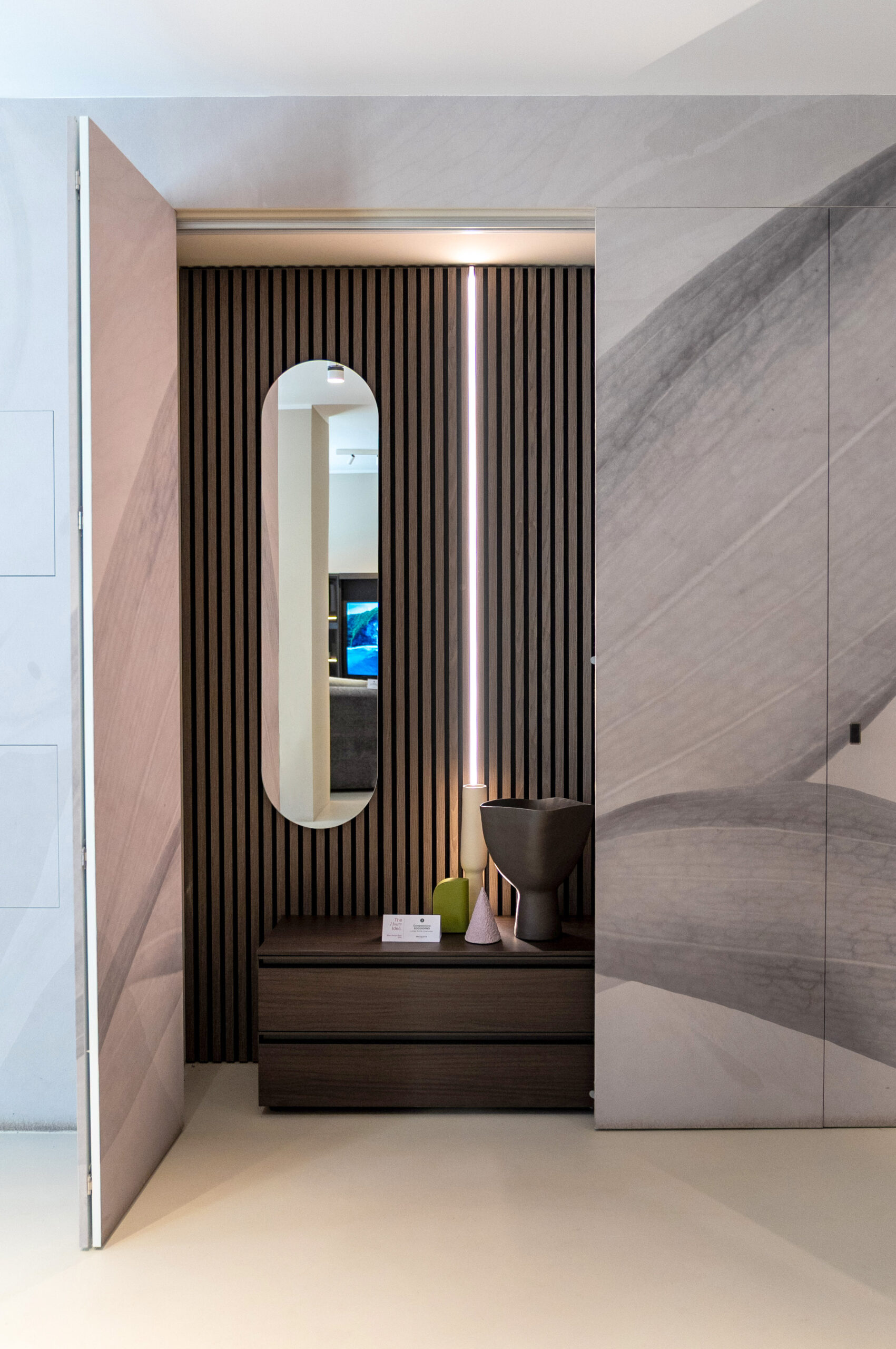
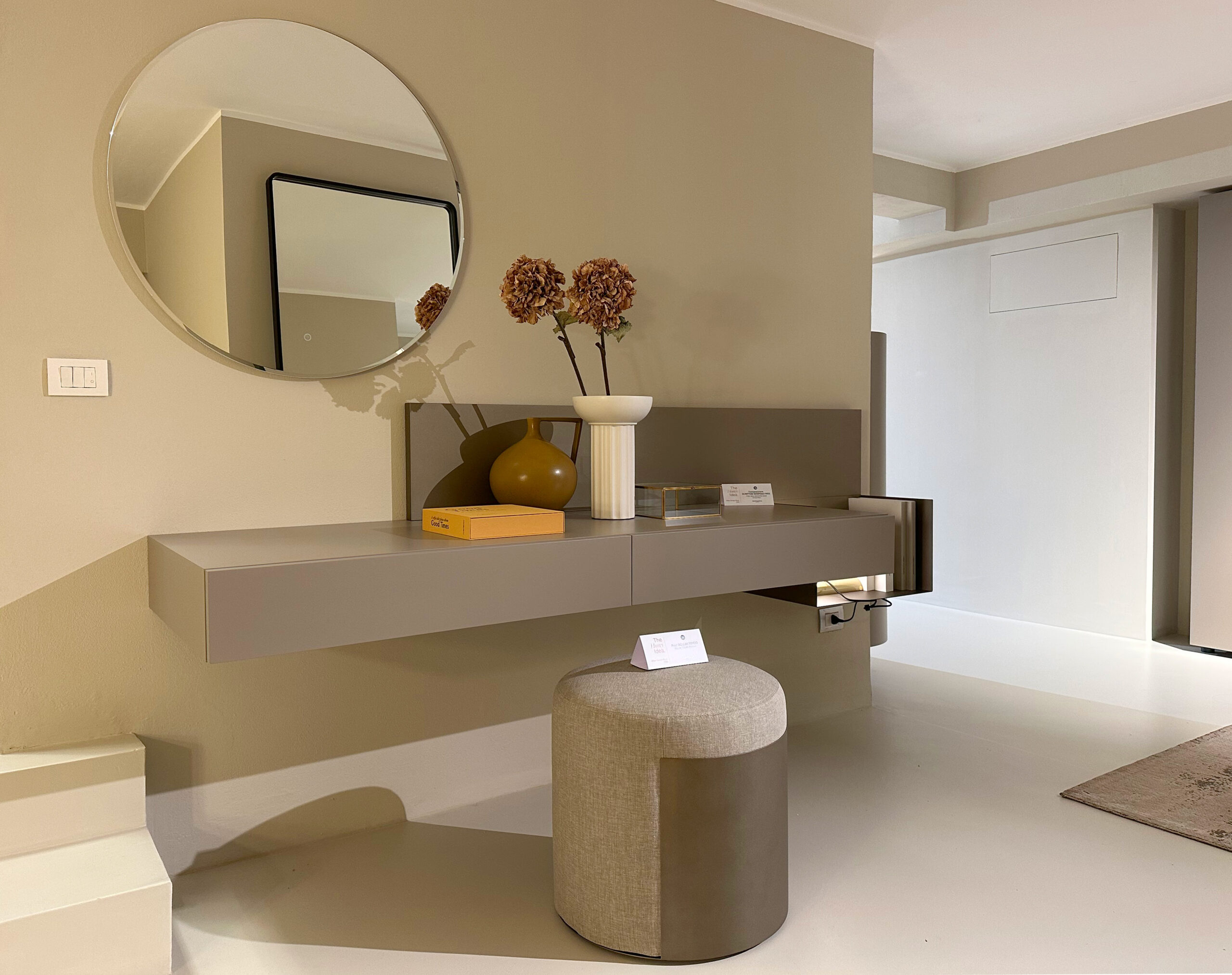
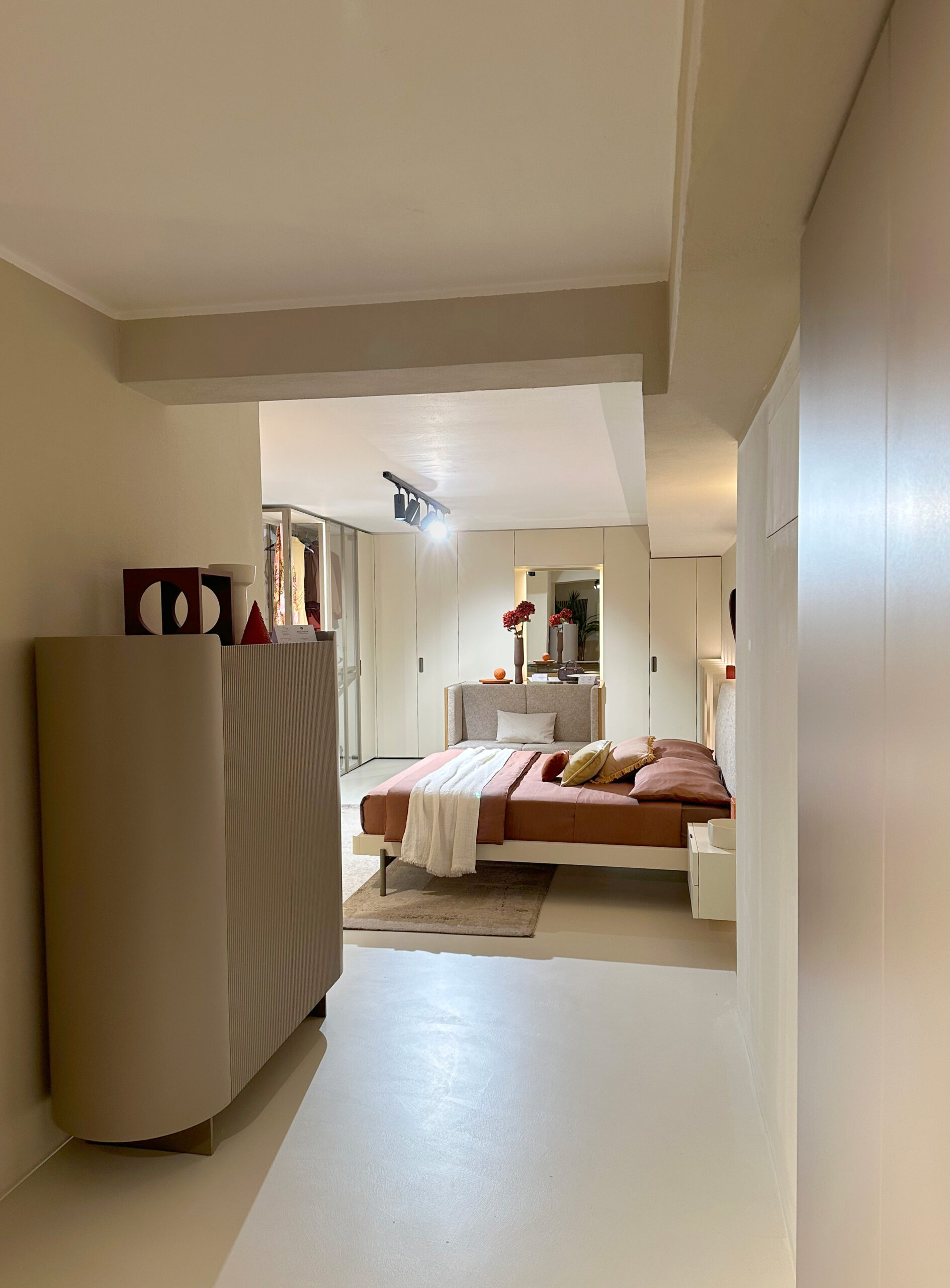
In the same way, niches become functional spaces with bespoke bookcases and modular systems that allow you to make the most of every last available centimetre.
On-trend colours and textures in 2026 interior design
In terms of colour, in 2026 minimalism becomes warmer and more welcoming, as exemplified by the Pantone colour of the year, Cloud Dancer. The neutral palette – ivory, beige and sand – continues to dominate but has a slightly less cool edge to it, both in the living room and the bedroom.
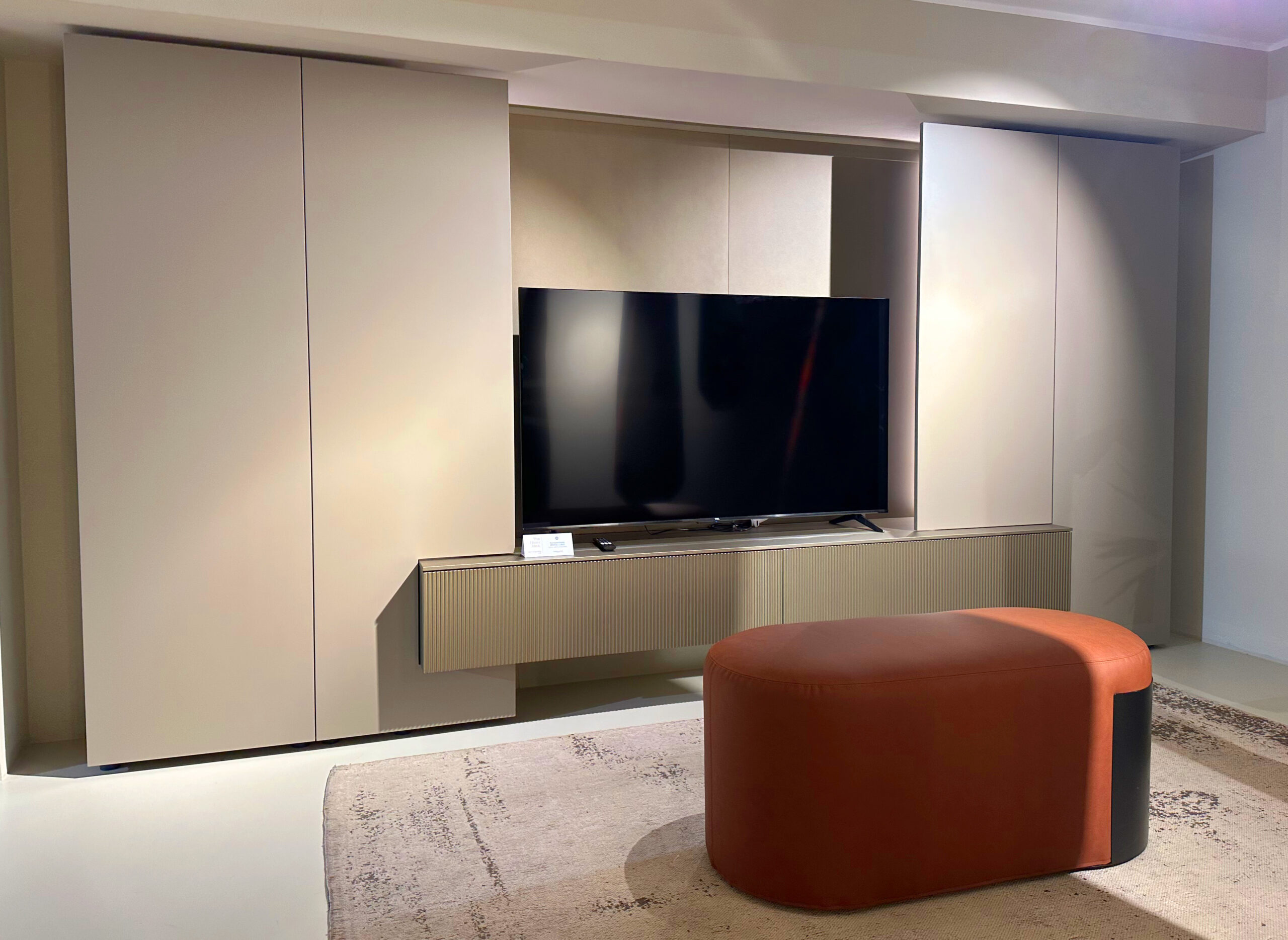
This neutral base is embellished with deep and sophisticated hues like Verde Ombra and Petrolio, shades of green and blue, which add warmth to spaces.
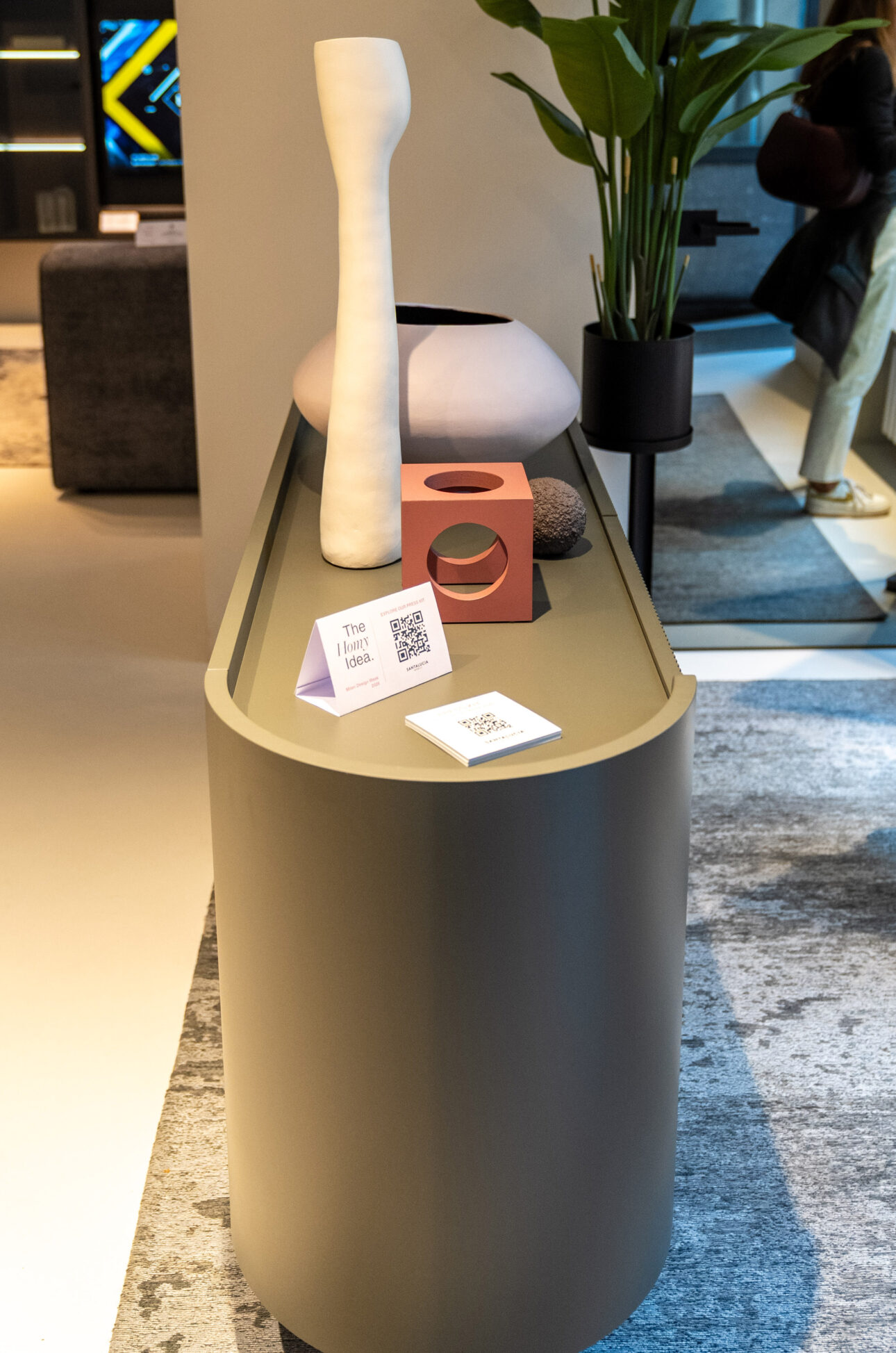
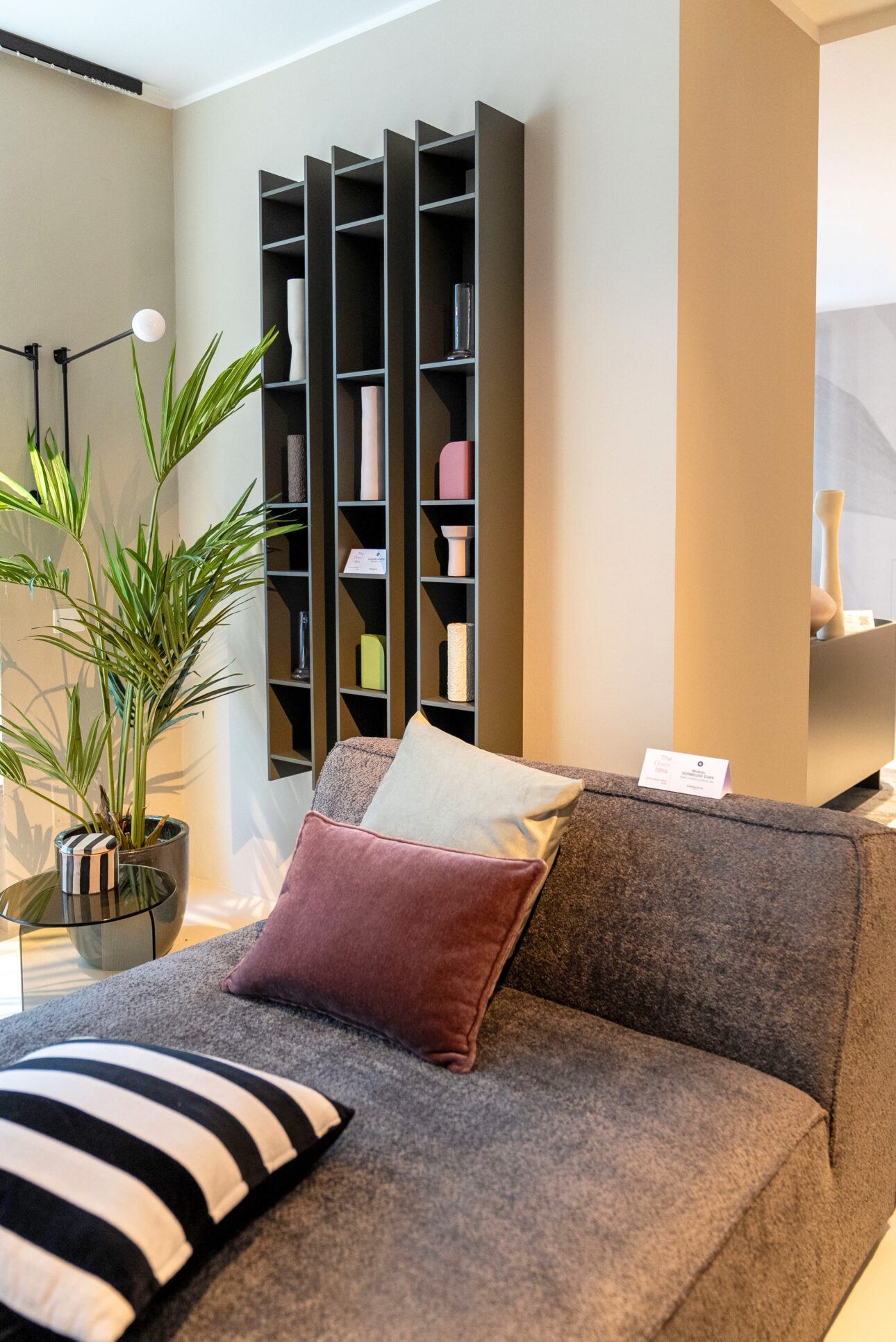
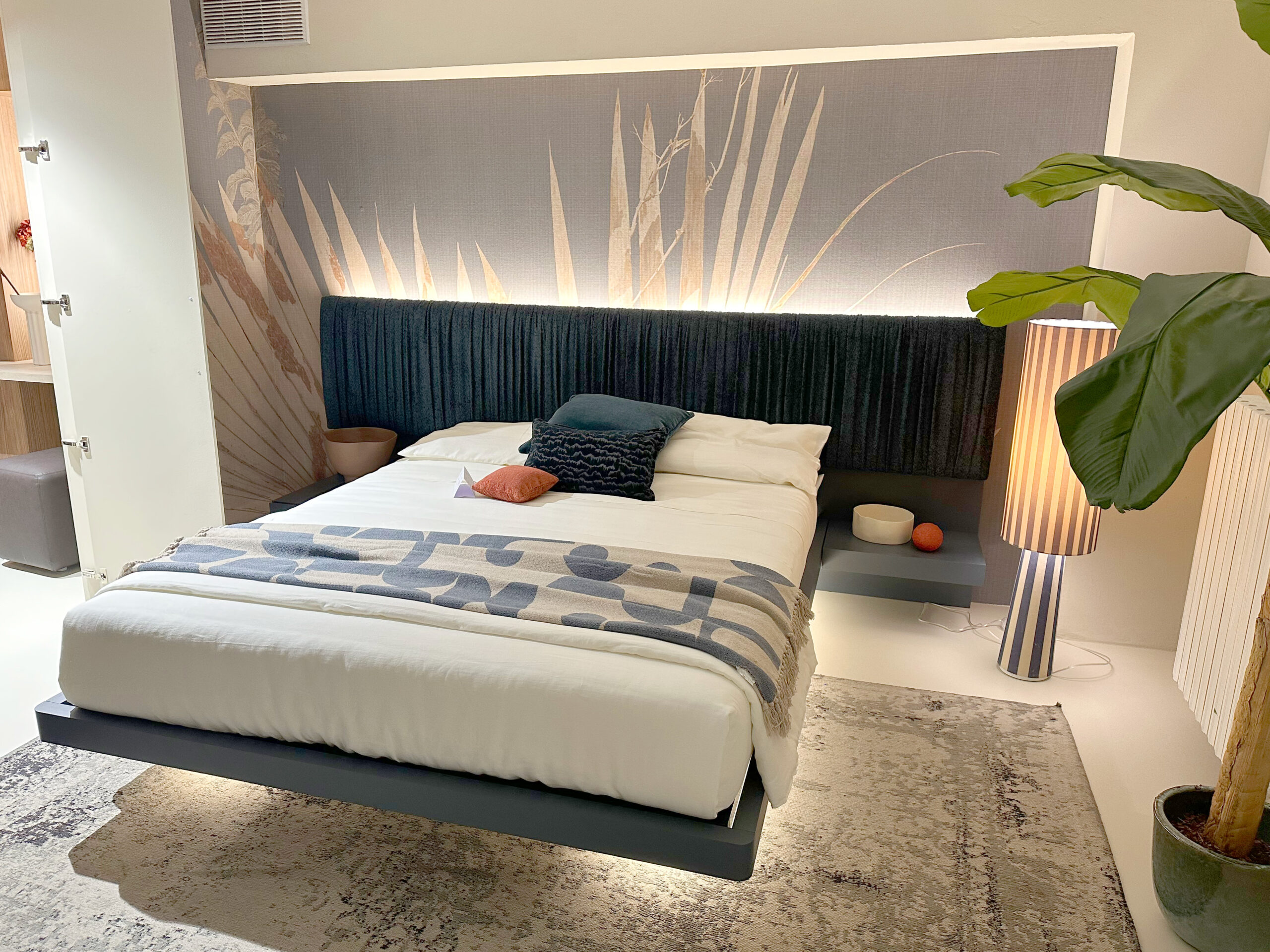
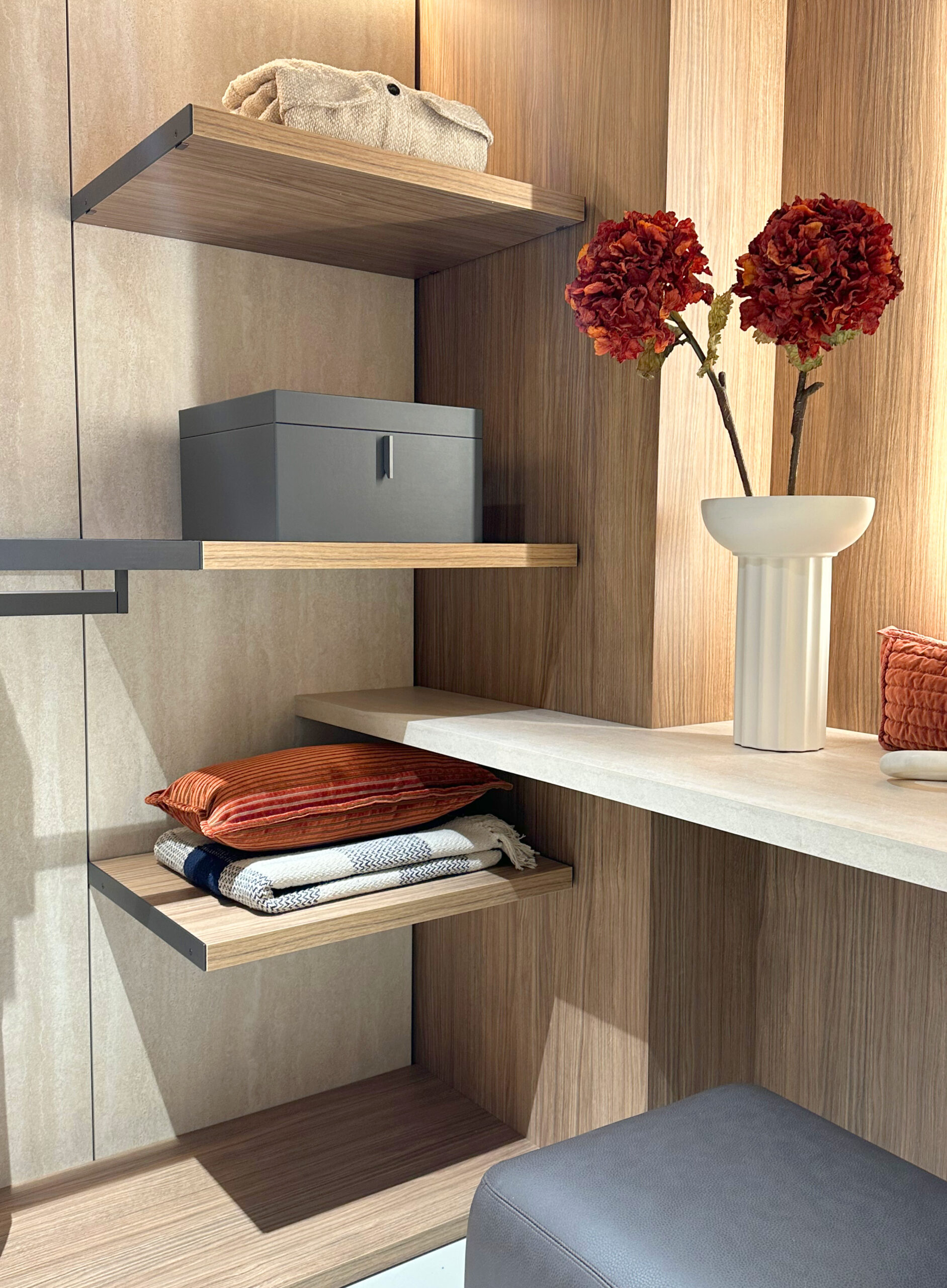
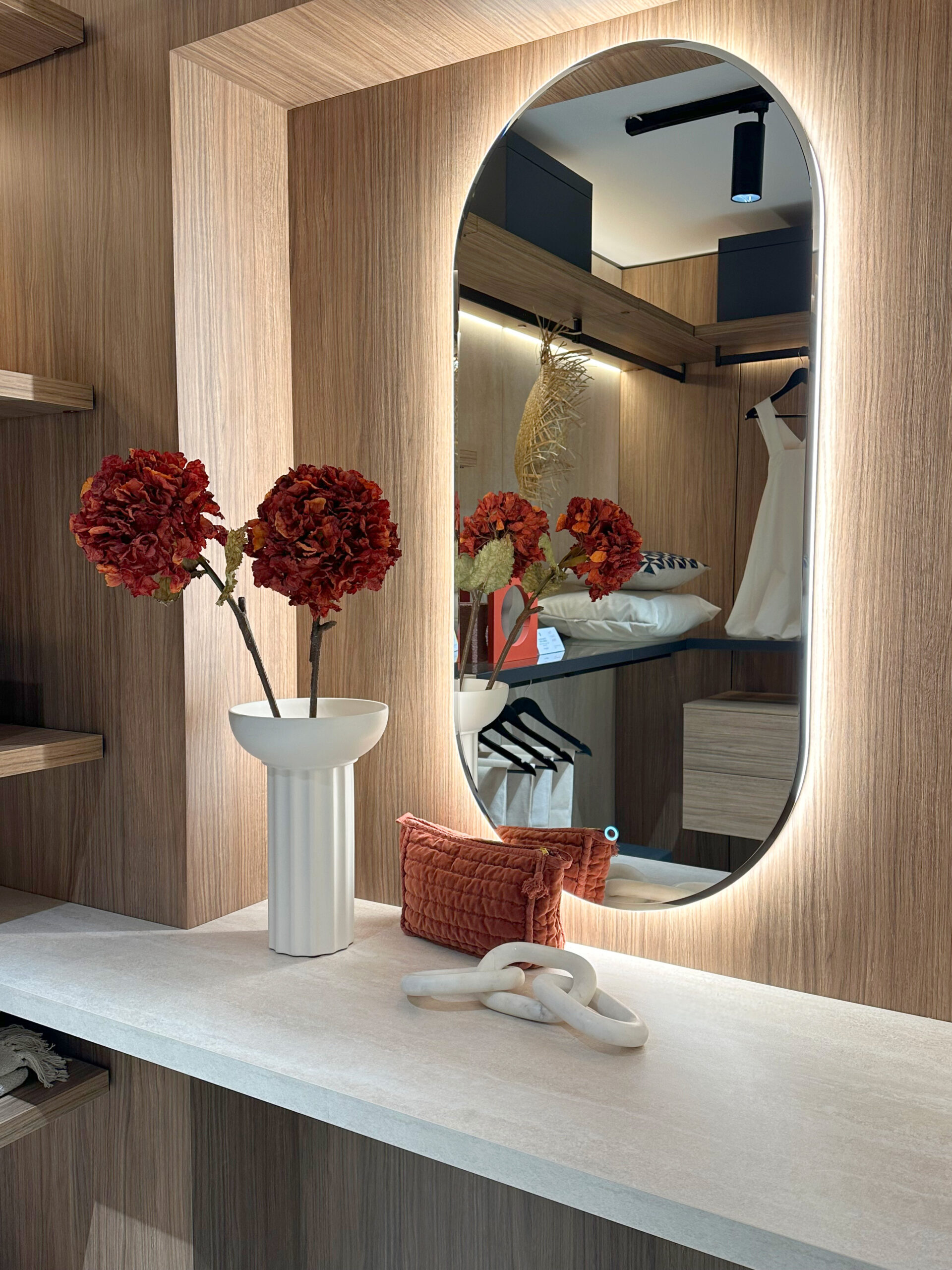
At the same time, the tactile aspect of the materials has also grown in importance. Surfaces aren’t just for looking at anymore; they must also be felt. The wood-look continues to convey warmth and authenticity, while marble-effect finishes add a more refined touch.
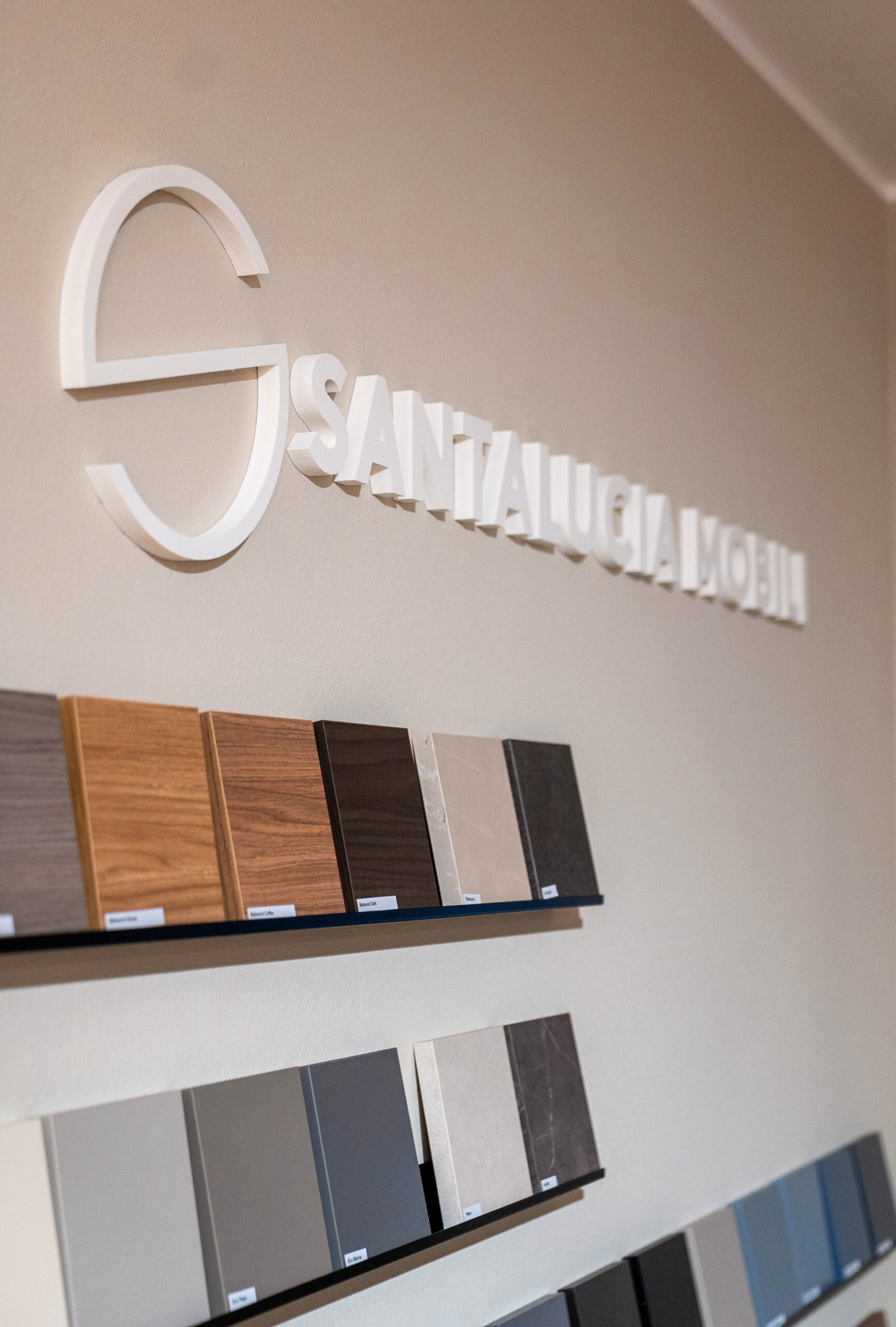
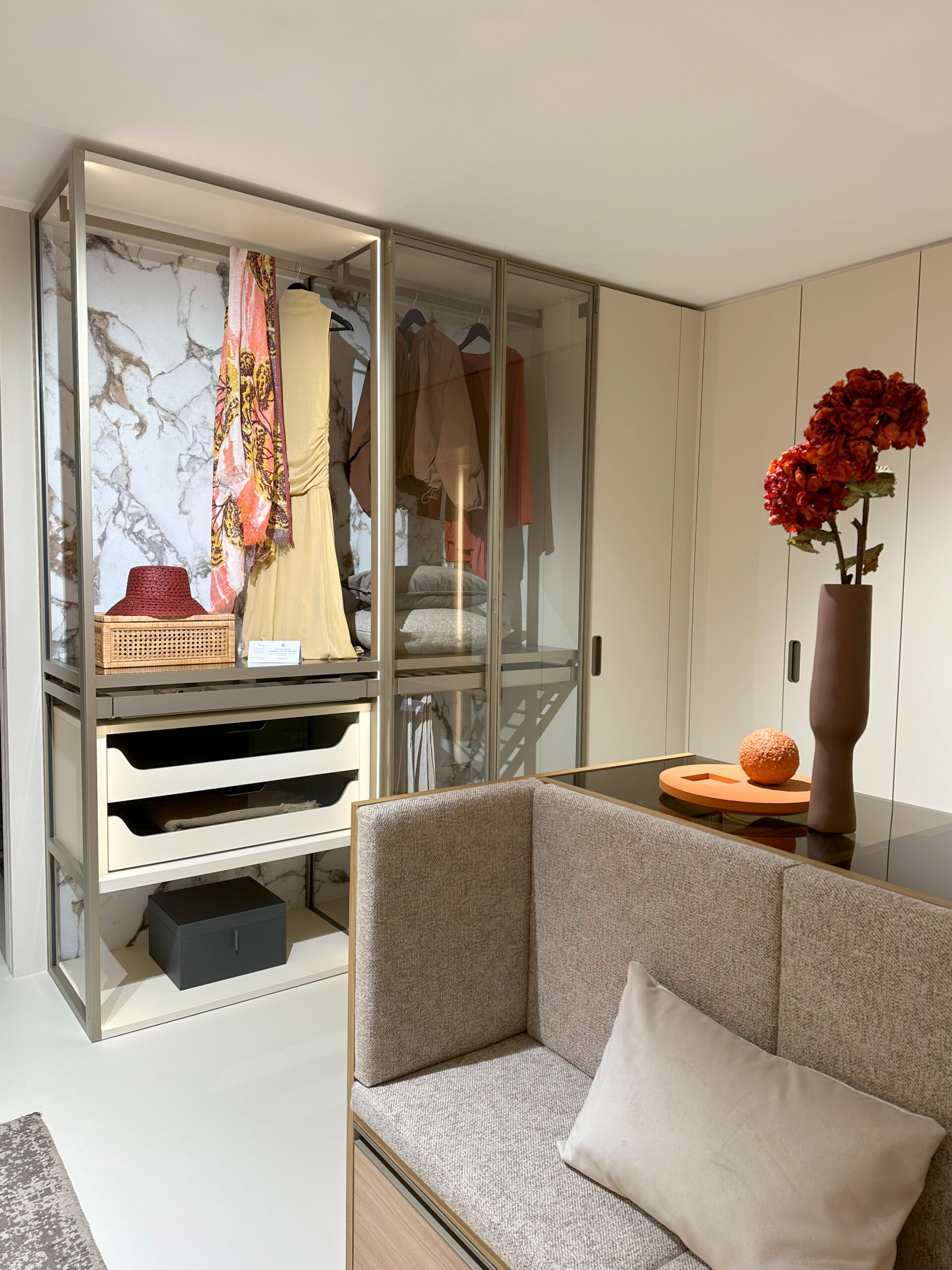
Santalucia Mobili’s new marble-effect looks, Travertino and Arabescato, stand out for their grain, which, evident to differing degrees, elevates modern spaces and furniture but also embellishes details like back panels of walk-in wardrobes on view.
Glass for lightening furnishings and spaces
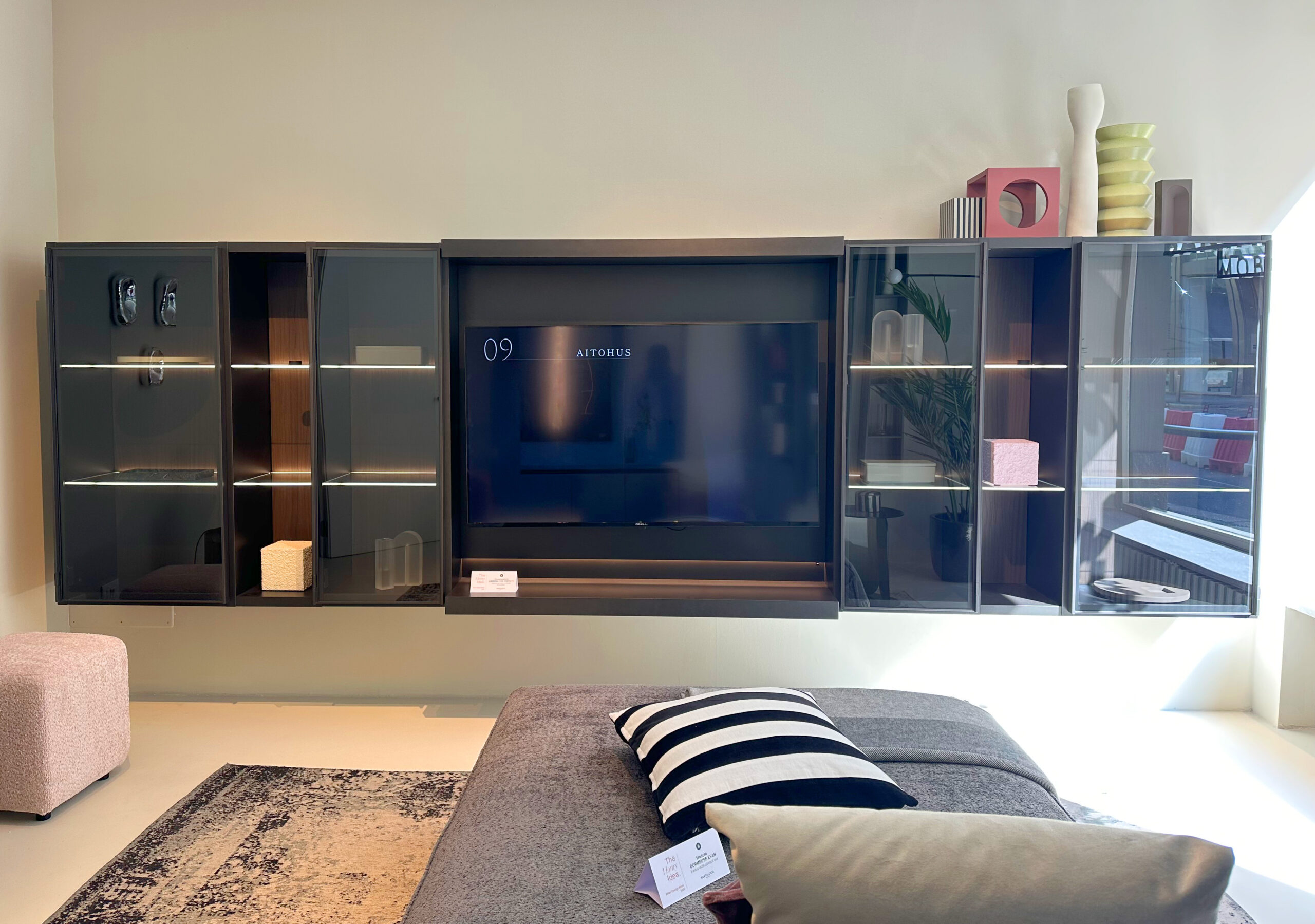
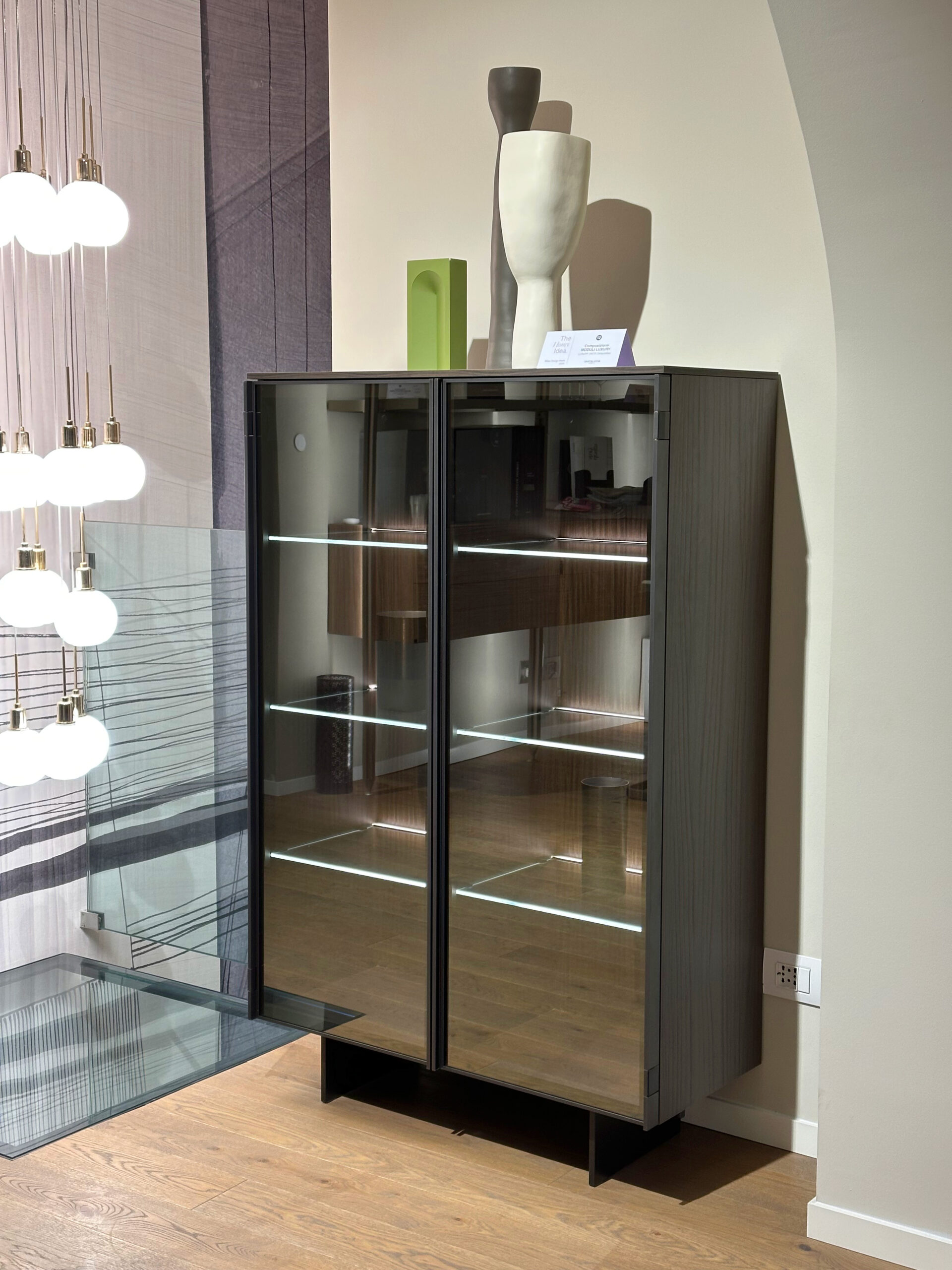
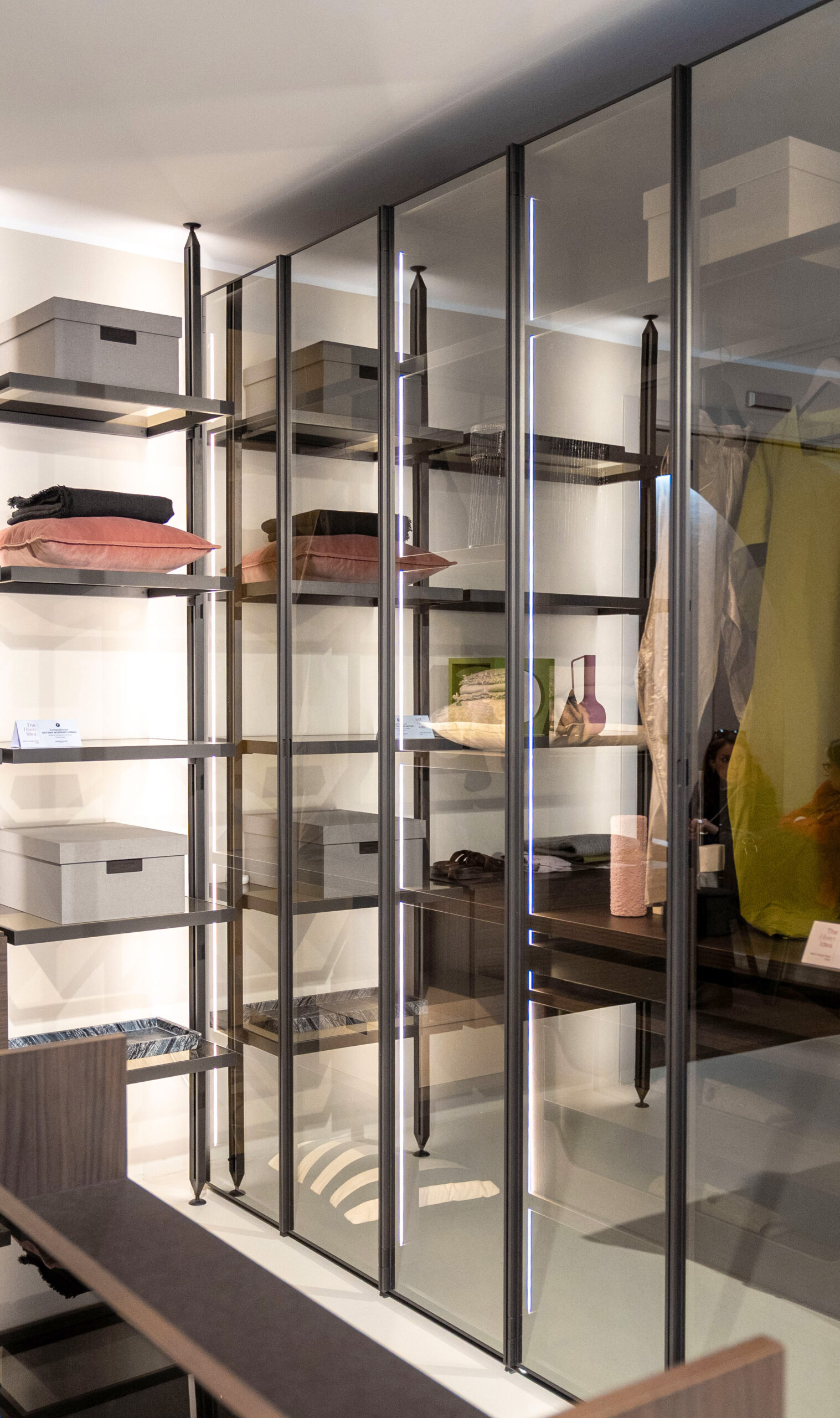
Glass remains a widely used and very popular material, a design tool that works on the perception of space, making rooms brighter and more open.
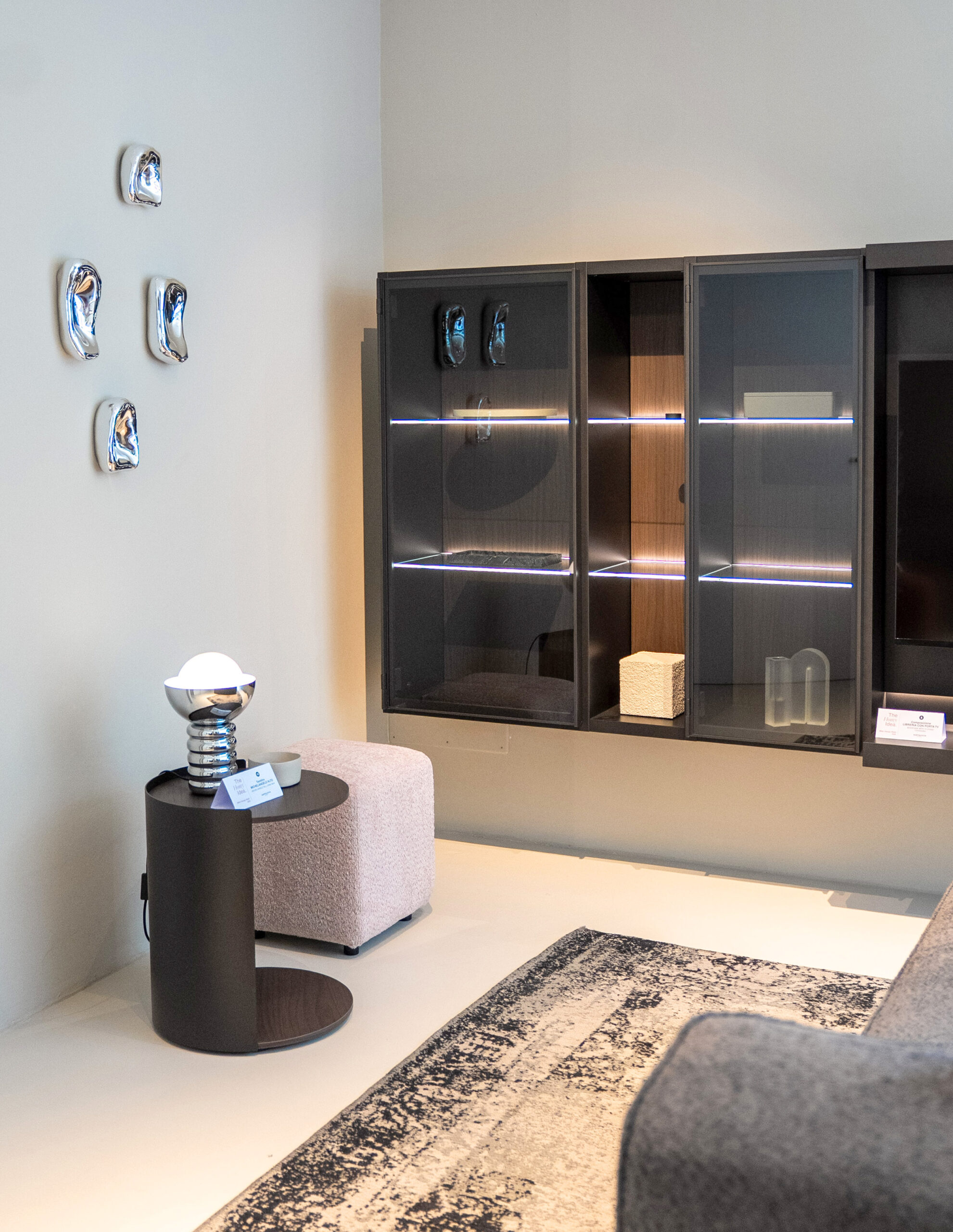
In the living room, glass doors allow you to lighten compositions, forming a relationship between content and container.
In the bedroom and in walk-in wardrobes, meanwhile, transparency adds depth and visual continuity. Glass helps to avoid that cramped feeling also in more confined spaces, maintaining a perception of openness and organisation.
Upholstered beds and pouffes, maximum comfort also in small bedrooms
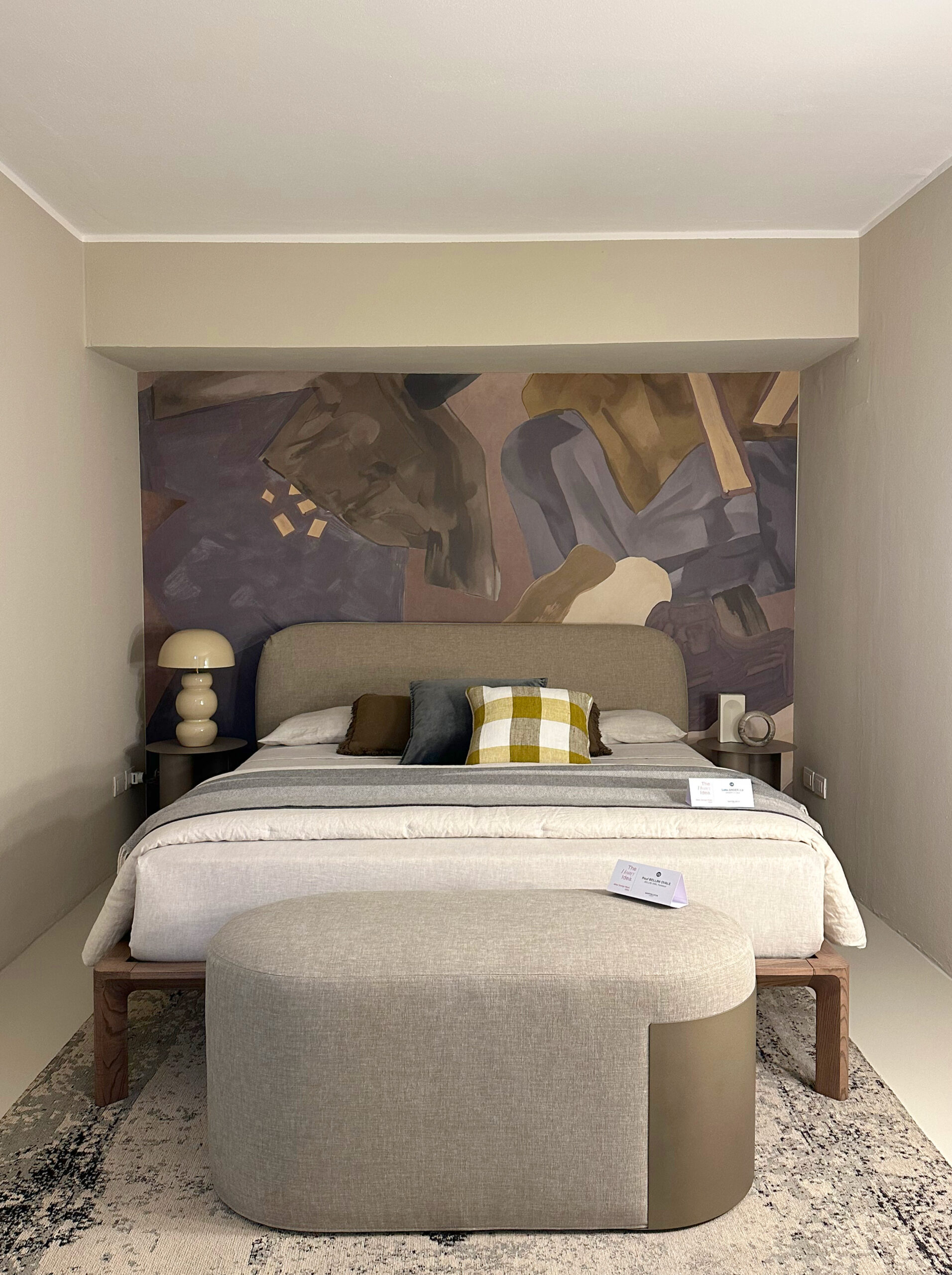
Another trend is the way interior design integrates comfort in reduced spaces. In real homes, which are often restricted in size, every element must contribute to the quality and intimacy of the environment without being overly invasive.
Soft, rounded profiles fit perfectly with a cosy style, even when space is at a premium: upholstered beds and accessories are both welcoming but also easy on the eye. In fact, their curvy and enveloping shapes add fluidity to the space, making the designs less rigid and improving the overall perception of the room.
Lighting integrated in furniture
In 2026, light is an increasingly integral part of interior-design projects. LED lighting integrated in furniture, cabinets, shelving and headboards helps create sophisticated atmospheres. More than just illuminating, it is about elevating materials, volumes and depths with soft lighting. Unlike decorative lamps, these solutions are almost invisible yet extremely effective from both a functional and aesthetic perspective.
Sustainability and made-in-Italy design
In 2026, sustainability is no longer an emerging trend but an established requirement. For Santalucia Mobili, which has adopted the “To do Future” strategic plan, sustainability also means designing furniture using select materials and attentive production processes to ensure that it stands the test of time.
As part of an approach rooted in over sixty years of Italian manufacturing experience, durability therefore becomes a form of sustainability, with products designed to be an integral part of the home for years to come.
The Santalucia Mobili Milan Design Store
Milan Design Week 2026 highlighted a clear trend: interior design is increasingly focused on real life needs with flexible and transversal solutions for tangible spaces.
This evolution is embodied by the furniture ideas on display in our Design Store, not just a showroom but a place where trends become concrete projects that can be applied to different homes and lifestyles.
And while we’re looking ahead and starting work on the trends for 2027, why not join us in our showroom, where you can discover our materials, compositions and solutions for modern everyday living for yourself?
Milan Design Store
Via Molino delle Armi, 2A
20123, Milan
T.+39 02 8397 6993