How to furnish a small flat with style and functionality
Small flats are an increasingly common residential solution also in Italian cities: the rising cost of property, one-person households (or households consisting of 2-3 people) and the spread of more dynamic lifestyles have resulted in many families choosing to live in small – sometimes very small – homes.
But it is just when these reduced spaces become restrictive that interior design offers you the opportunity to create functional environments that guarantee all the living comfort and wellbeing we associate with home.
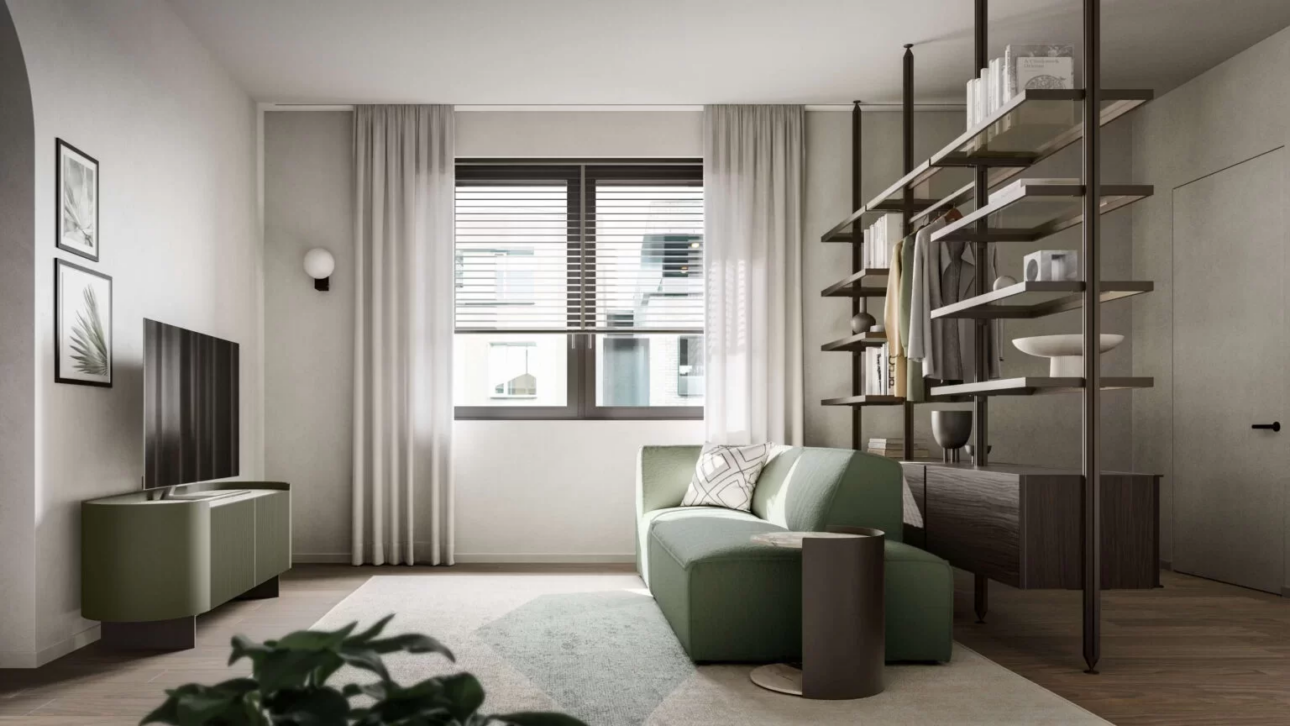
In this article we gather together a series of simple ideas and tangible solutions for furnishing a studio flat, a one-bedroom flat or a small open space and making the most of every centimetre: from space-saving furniture to colour palettes, from lighting to “tricks” for lightening the atmosphere, also looking at an example of a small flat furnished with Santalucia Mobili solutions.
The 5 golden rules
When designing a small flat you need adopt a specific philosophy that is completely different to the approach normally taken with larger spaces. Every choice counts here and that is why it is important to consider a number of key principles.
#1 Measure the space
It may seem obvious but correctly measuring the amount of space available is your starting point. Calculating the overall surface area is not sufficient: you have to take account of encumbrances, door and window openings, heights, and any recesses or reduced ceiling heights; in the case of lofts or irregular ceilings, these measurements are even more important.
Only with an accurate plan of the space can you design effective customised solutions and this is why it is always a good idea to seek advice from professional interior designers.
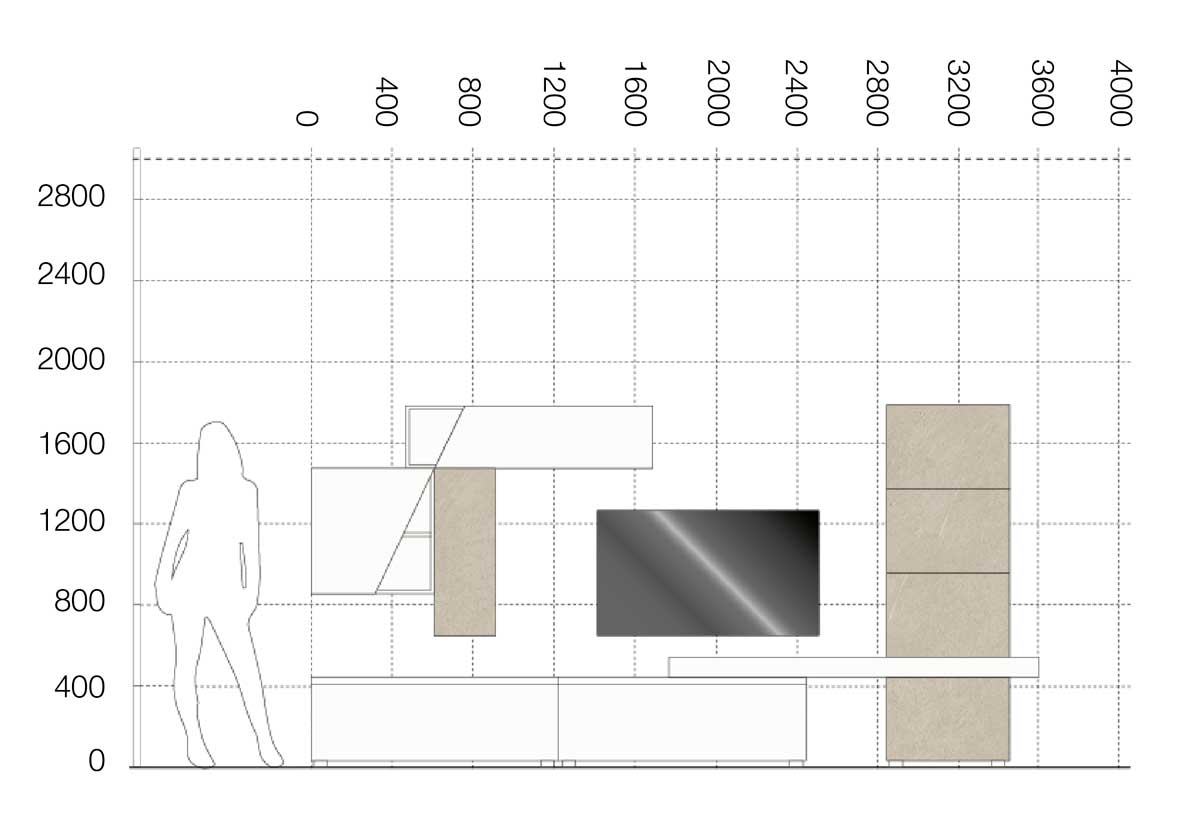
#2 Plan before you buy
Improvising in a small home is never a good idea. It is important to come up with an accurate interior design plan and a careful study of your everyday activities: how you move about, where surfaces are needed, what your real storage requirements are, where to position lights.
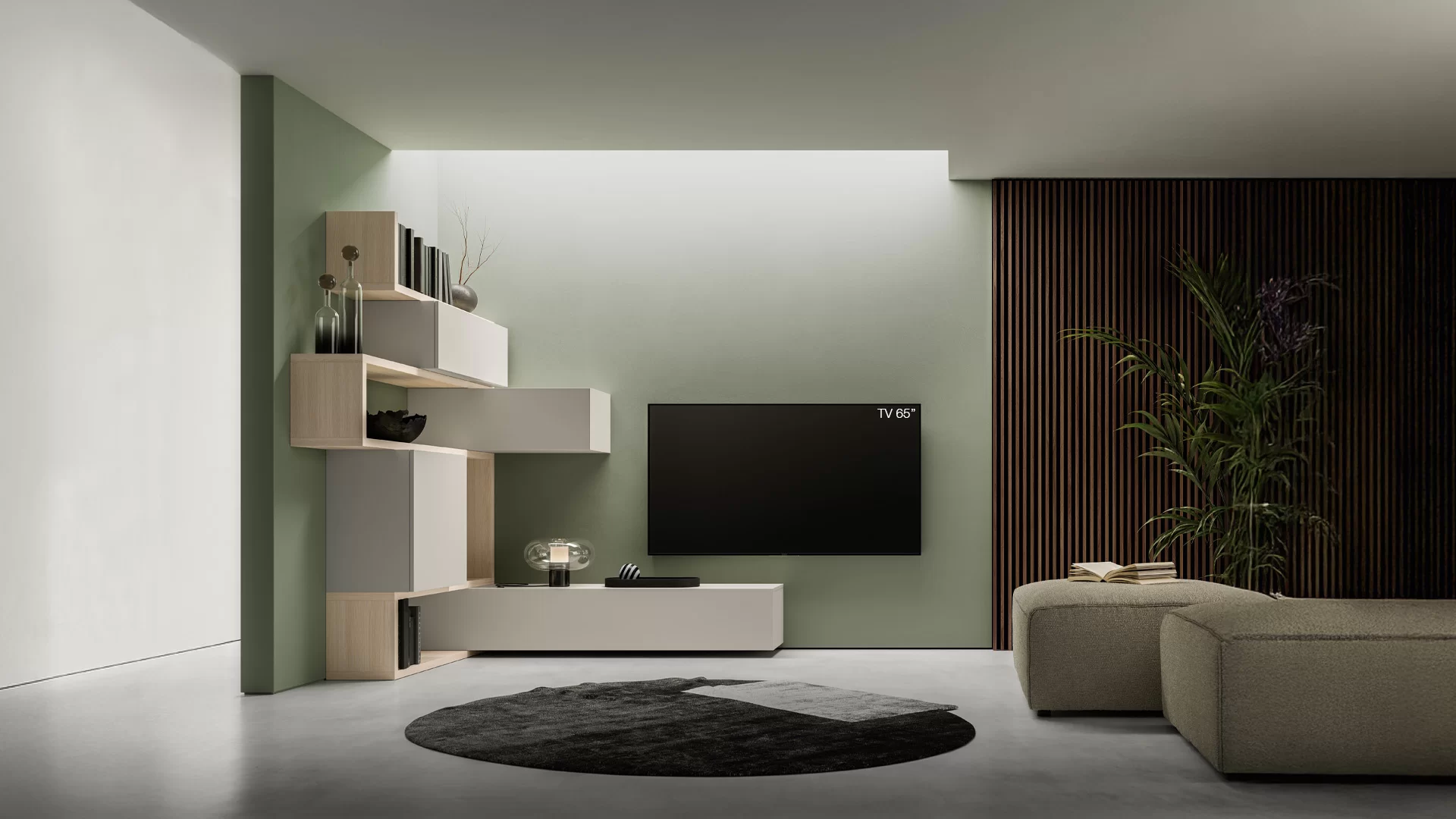
In designing this living room, for example, corner furniture freed up two walls for storage units, bookcase elements and functional surfaces, without cluttering the space.
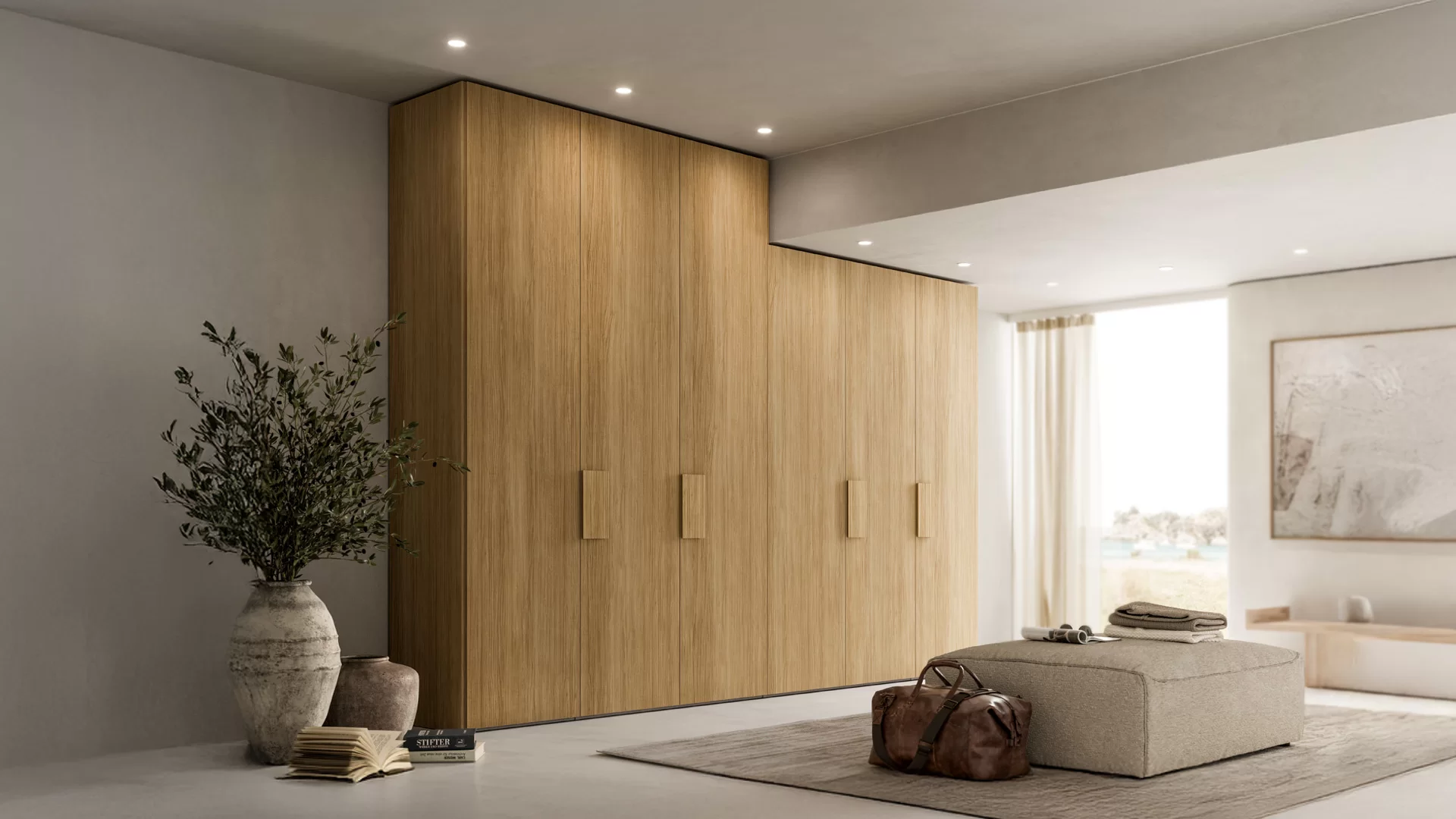
In this bedroom, the wardrobe was designed with doors of different heights to adapt perfectly to the configuration of the room with a lowered ceiling.
#3 Choose multifunctional furniture
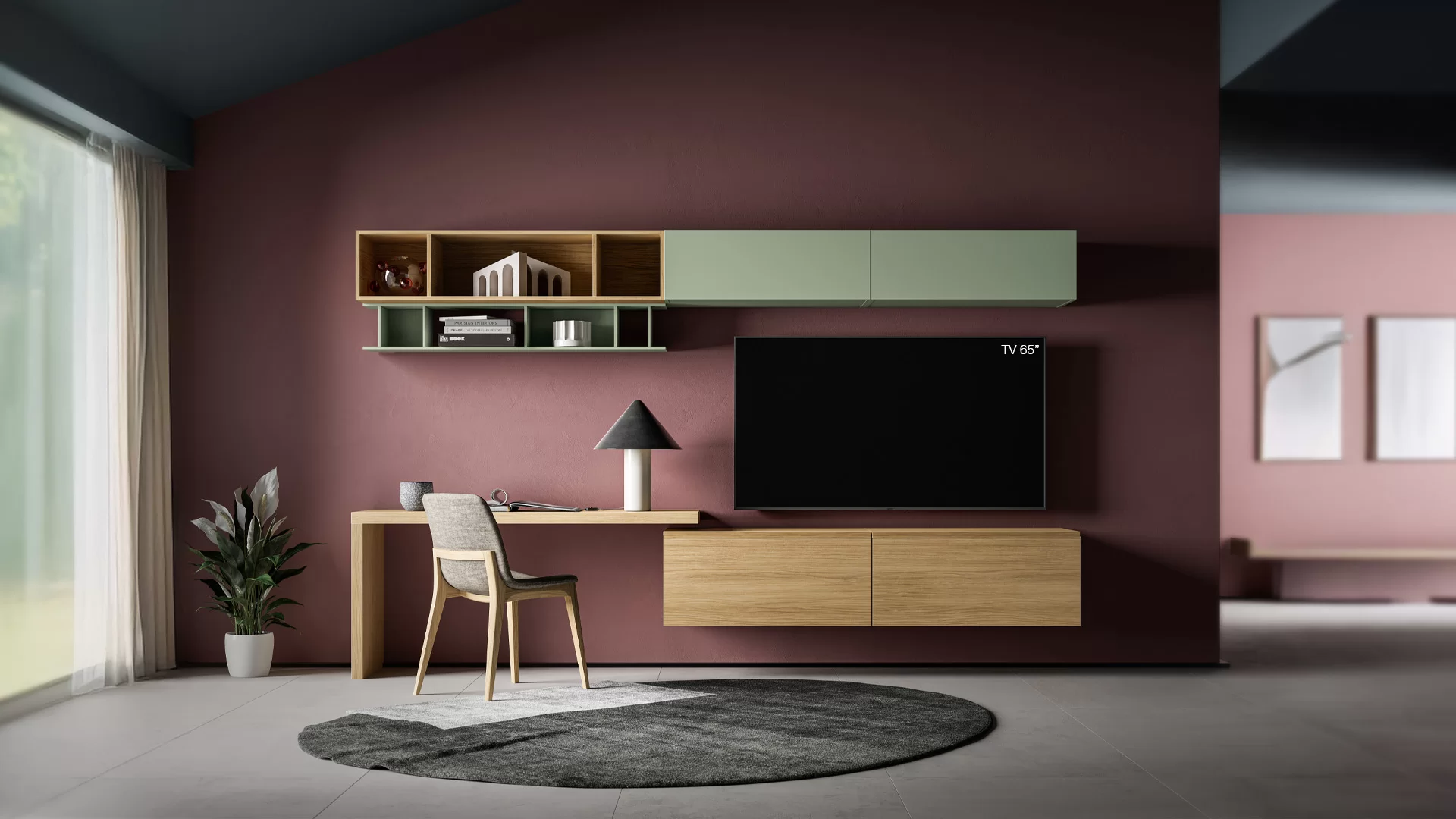
In small spaces, every piece of furniture needs to have multiple functions: storing, separating, transforming, and more. In this little living room, the wall unit also doubles up as a home office.
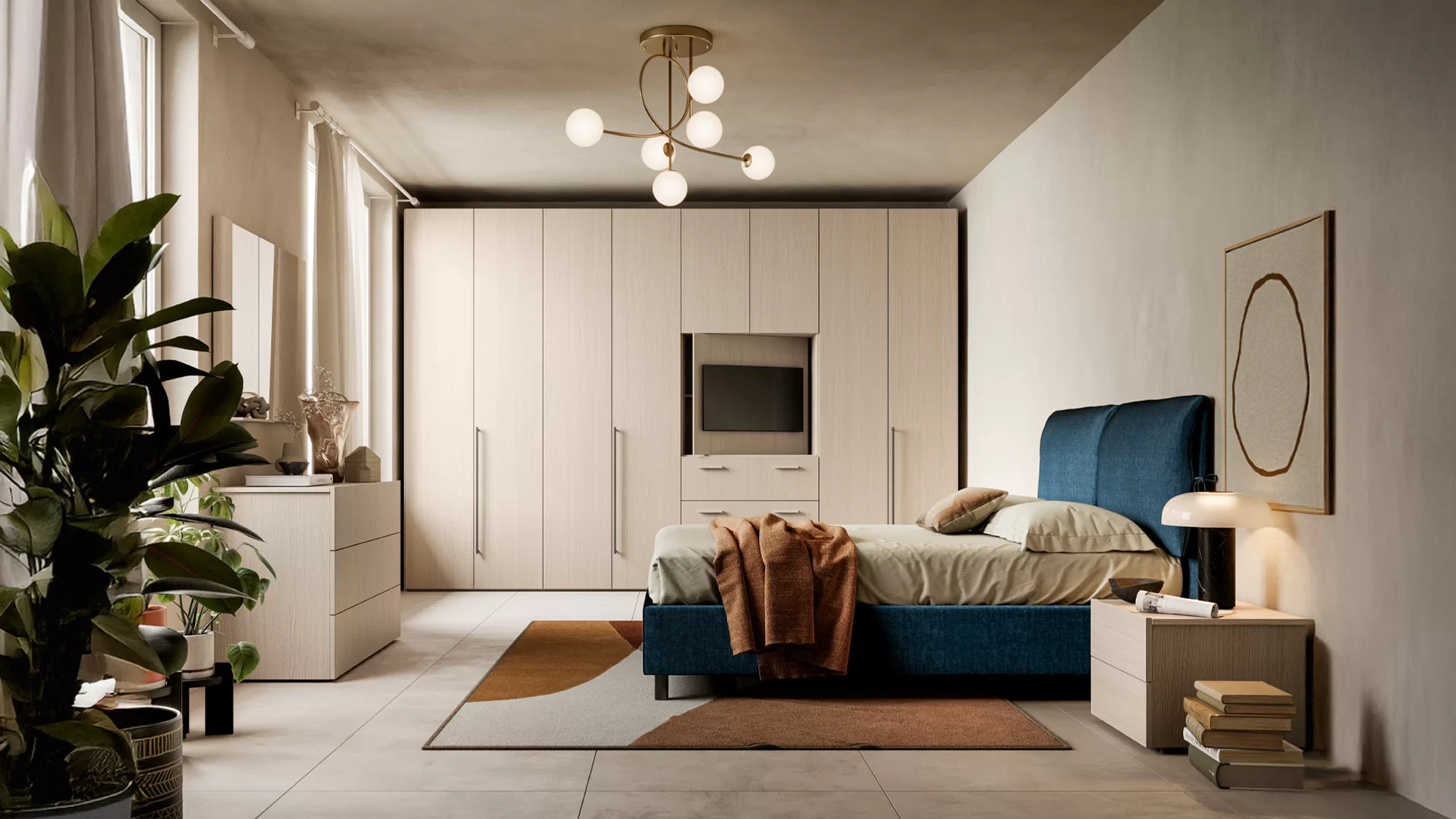
In a small bedroom, the wardrobe can become a practical TV stand for watching films and series from the comfort of your bed.
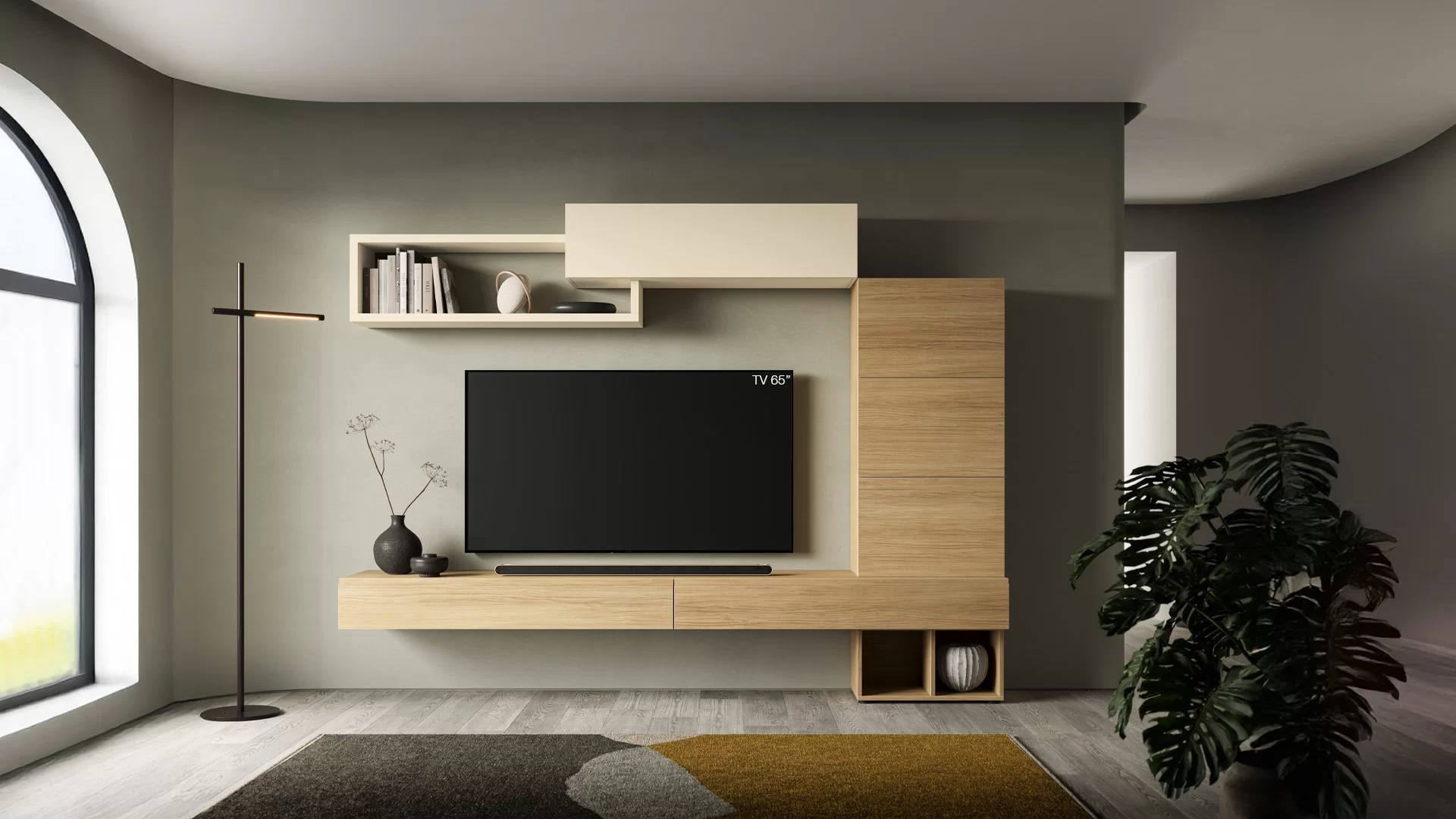
#4 Use the height
Height is a resource when space is at a premium: shelves, tall units and wall units are all great options for making the most of the walls in a small living room.
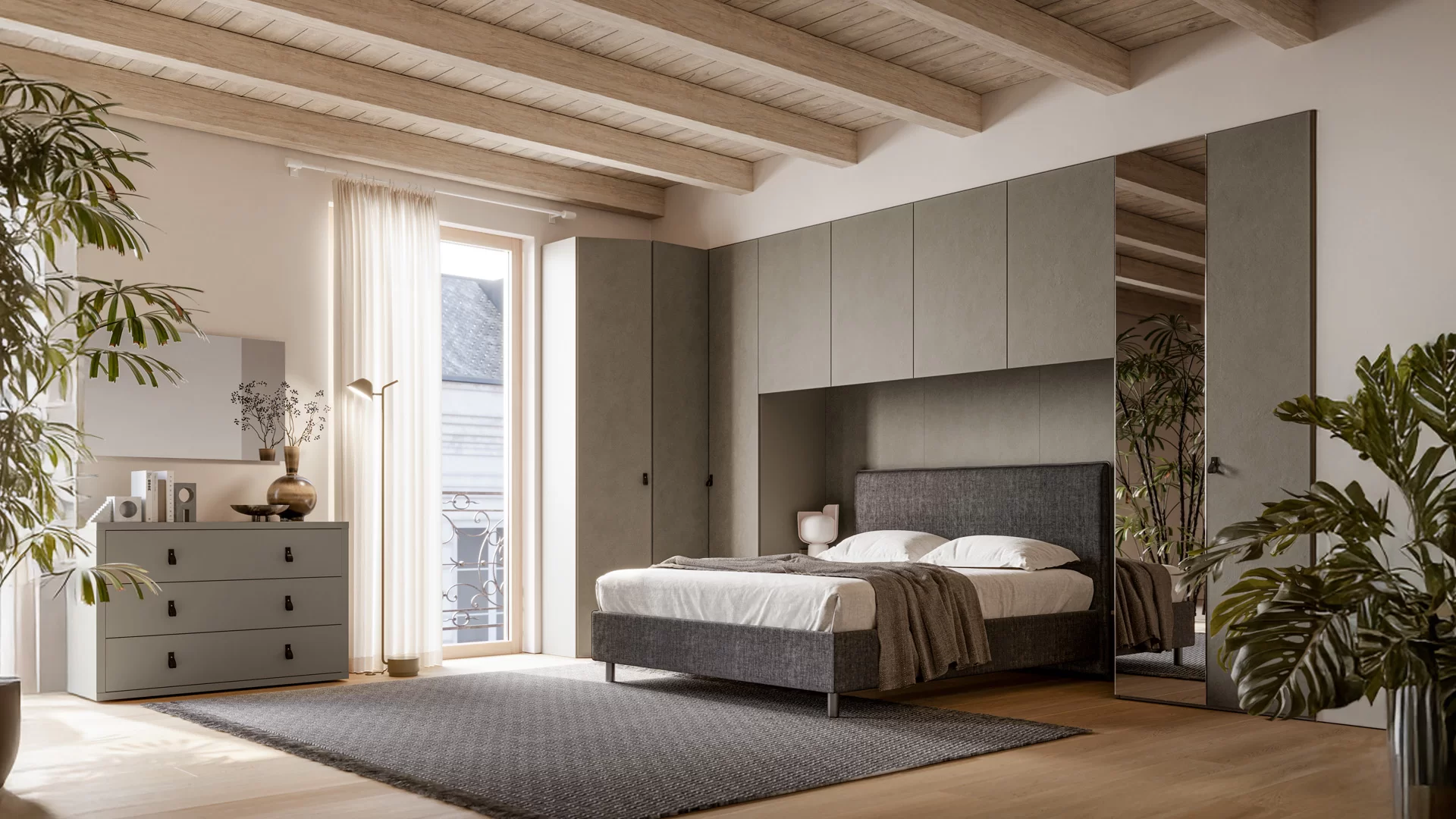
In the bedroom, with a bridge configuration you can use the areas above and to the sides of the bed to increase storage capacity.
#5 Less is more
In the living room, as in the bedroom, taking away is better than adding: choosing a few well-proportioned pieces of furniture is the golden rule because if you use too many items you risk visually compressing the space.
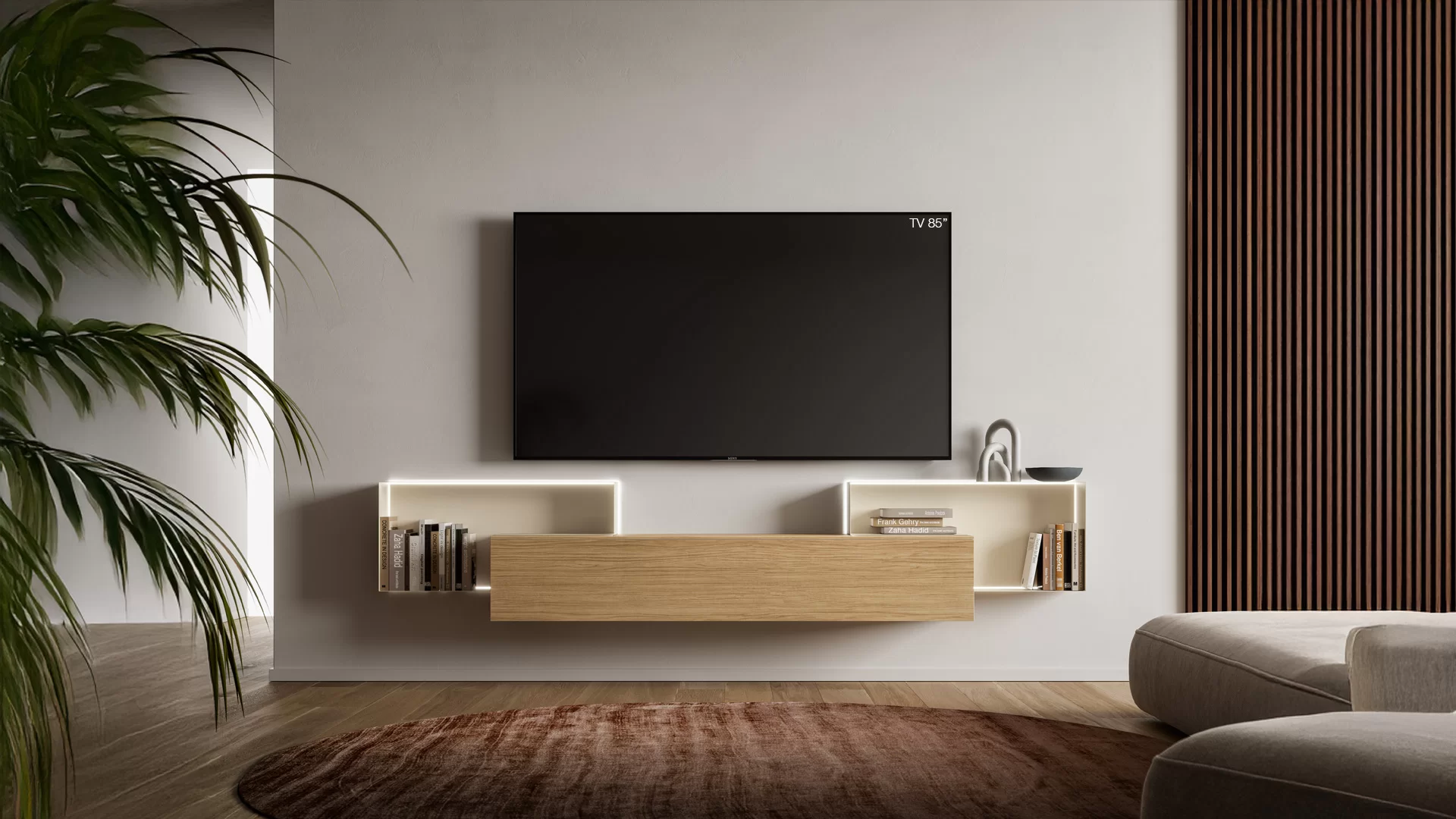
In a Scandinavian-style living room, a storage unit, two in-built open compartments and a two-seater sofa with pouffe are all you need to furnish the space.
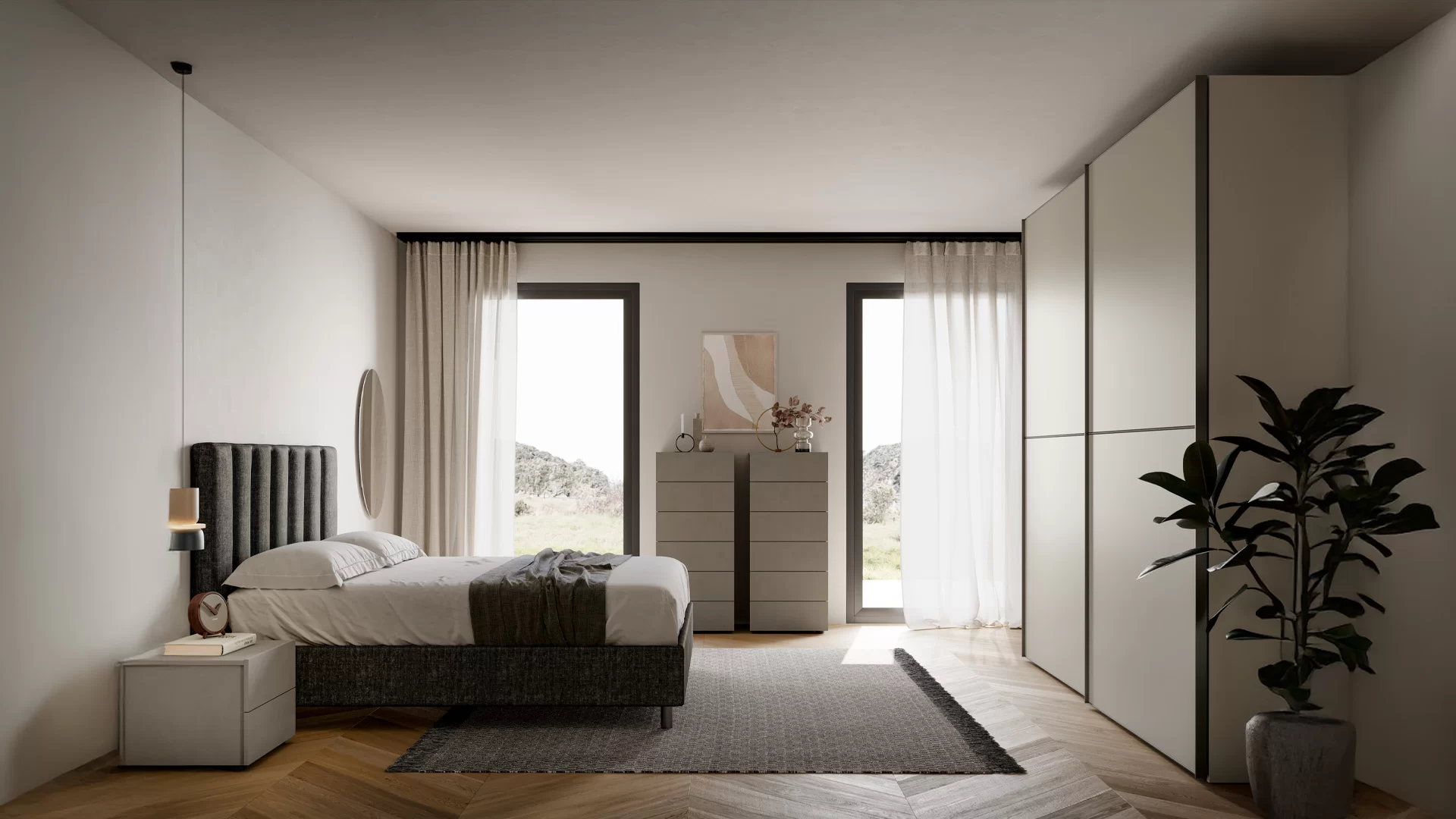
In a minimalist bedroom, an upholstered but slim bed, a tall chests of drawers between French doors, a linear bedside cabinet and a sliding wardrobe furnish the space without making it too cluttered.
Multifunctional, space-saving furniture
Let’s take a closer look at rule #3: it isn’t just about choosing furniture with smaller dimensions but smart furniture designed to perform various functions.
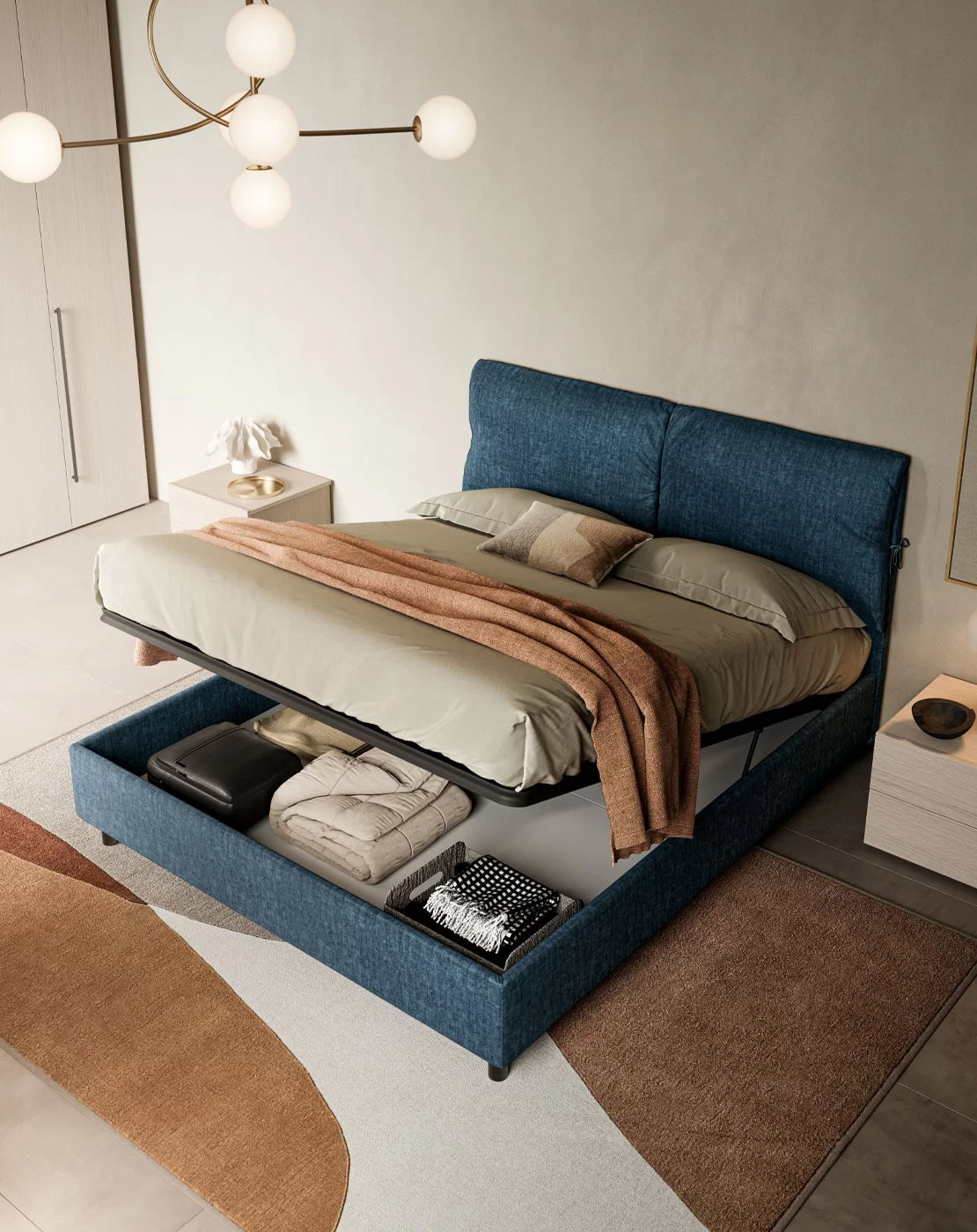
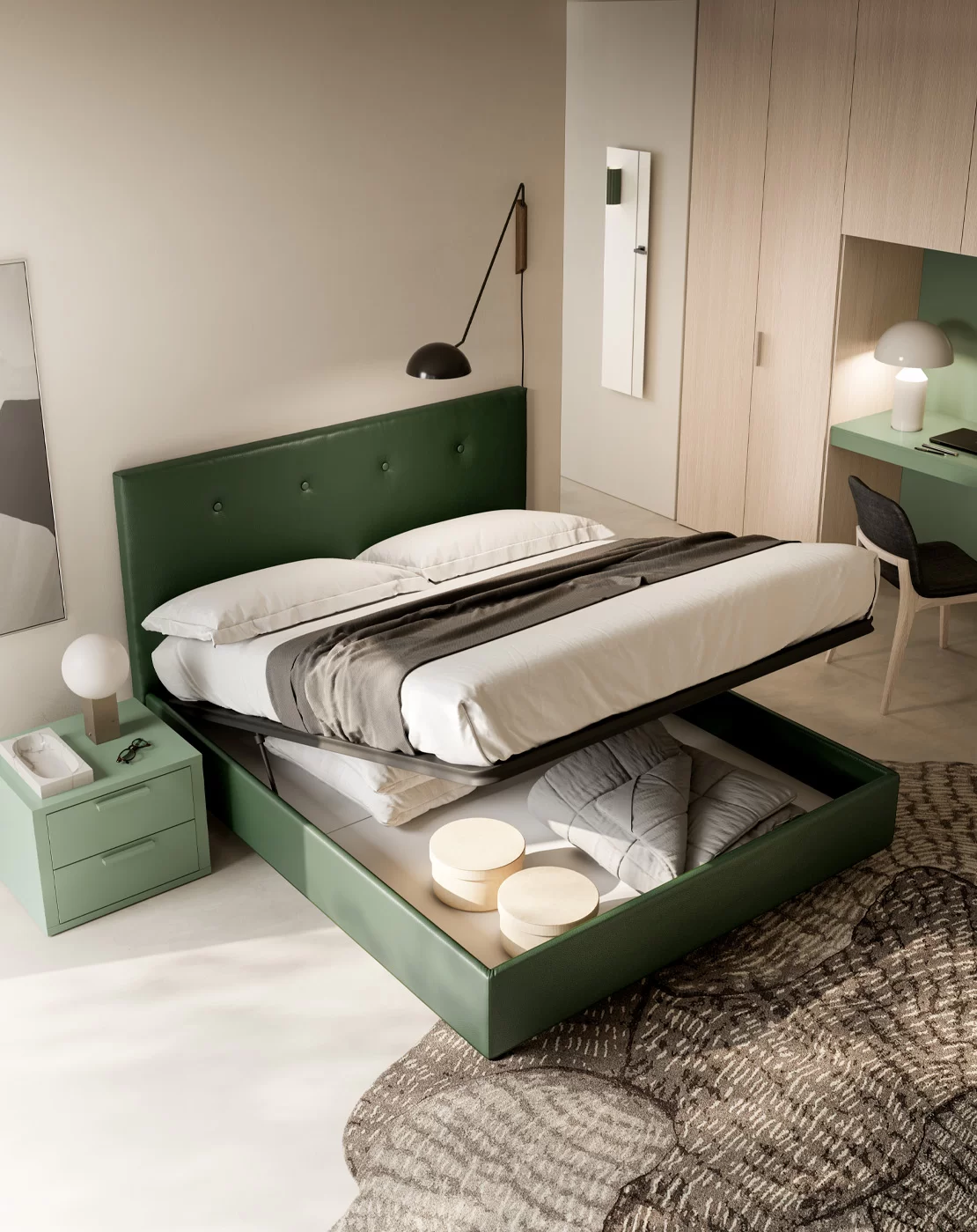
An extendable table in the living area and storage bed in the bedroom are classic examples of practicality: they satisfy different needs and allow you to increase the usable part of the space, without making structural changes to your home.
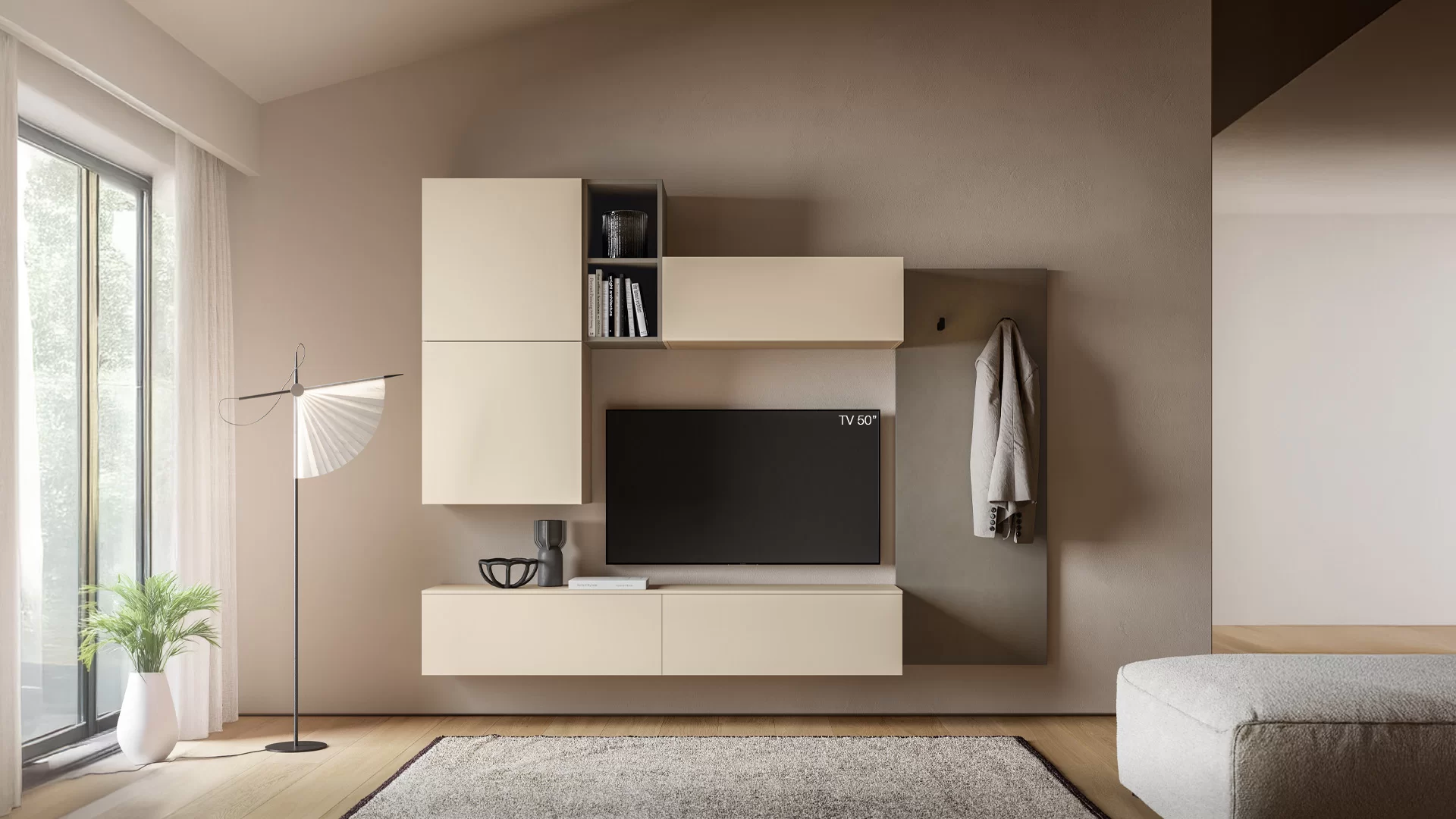
Modular systems are highly versatile solutions for small spaces: thanks to the option of combining closed compartments, open modules, panelling and surfaces, over time you can adapt this type of furniture to your needs. For example, as in the photo below, you can add a clothes hanger panel to the living room at any time if it is adjacent to the entrance.
Custom-made furniture delivers an effective combination of multifunctional and space-saving features because it is tailored to the actual dimensions and configurations of the space.
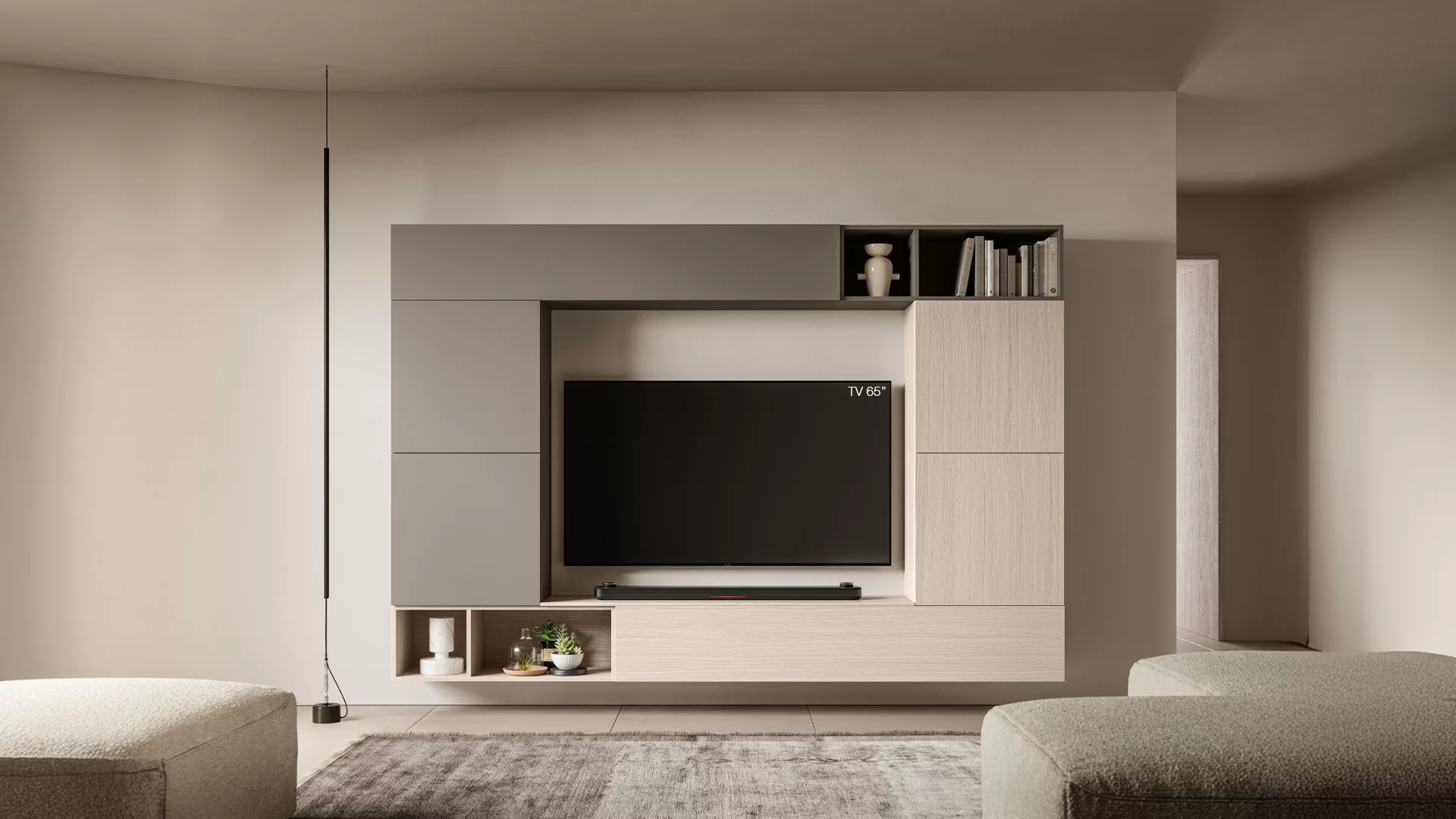
It is also important to remember that, in a small flat, every item of furniture “works harder” than it does in a larger house where the “workload” is distributed among a greater number of furnishings. That’s why you should opt for robust, well-designed solutions that are built to last.
Colours, lighting and materials to expand the space
When you furnish a small flat, it’s also important to take colours, lights and materials into consideration. There are a few little visual tricks for making spaces seems larger and more airy.
The first regards the colour palette. Light and neutral tones (like white, beige, light grey or natural shades) help visually expand the space because they are better at reflecting the light. These can be combined with furnishings and elements in glass or with glossy surfaces that help to multiply the reflections.
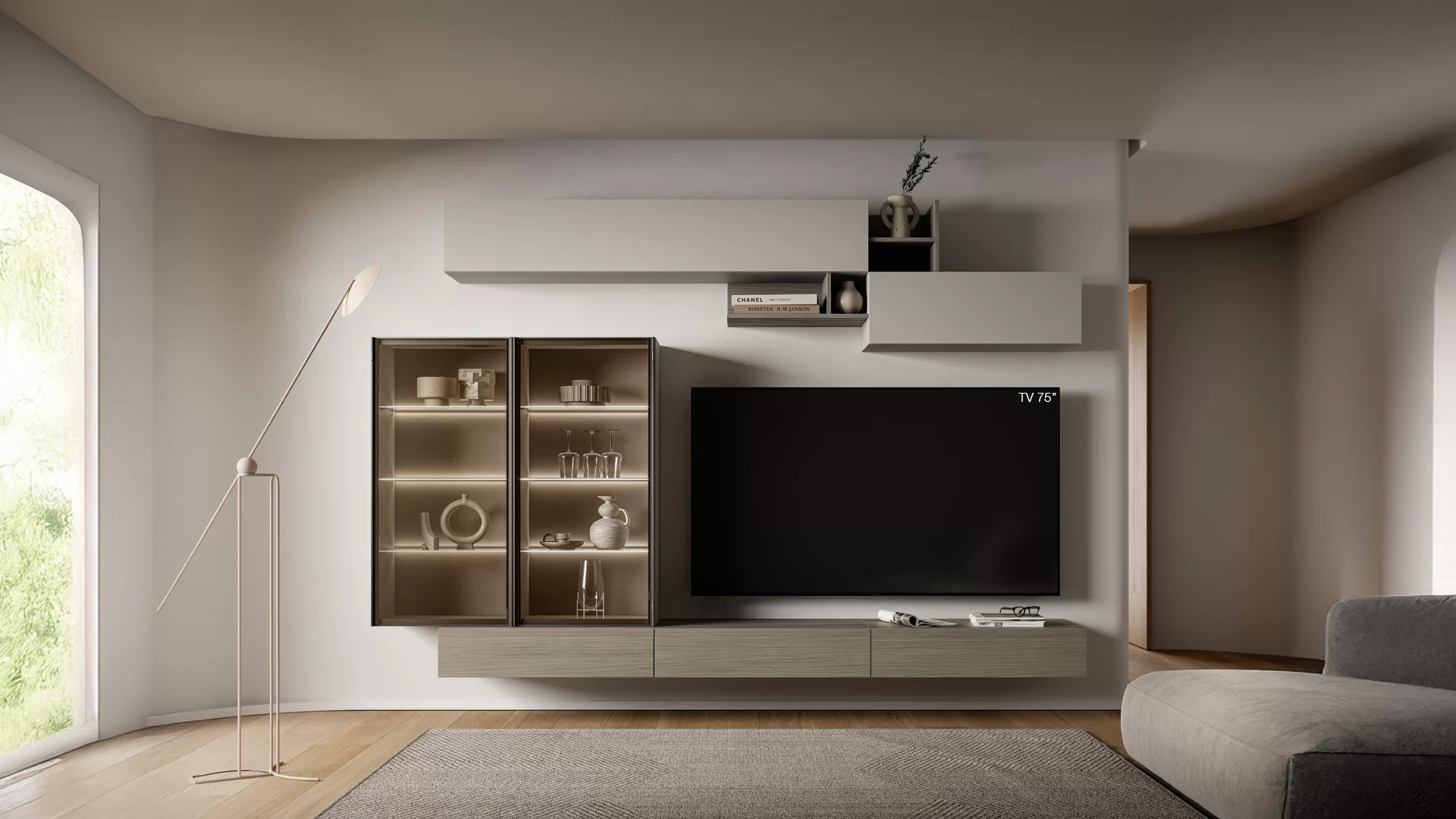
Natural light should always be exploited as much as possible. Floaty, light-filtering and semi-opaque curtains allow the light to enter the room unhindered, ensuring your privacy without weighing down windows and French doors.
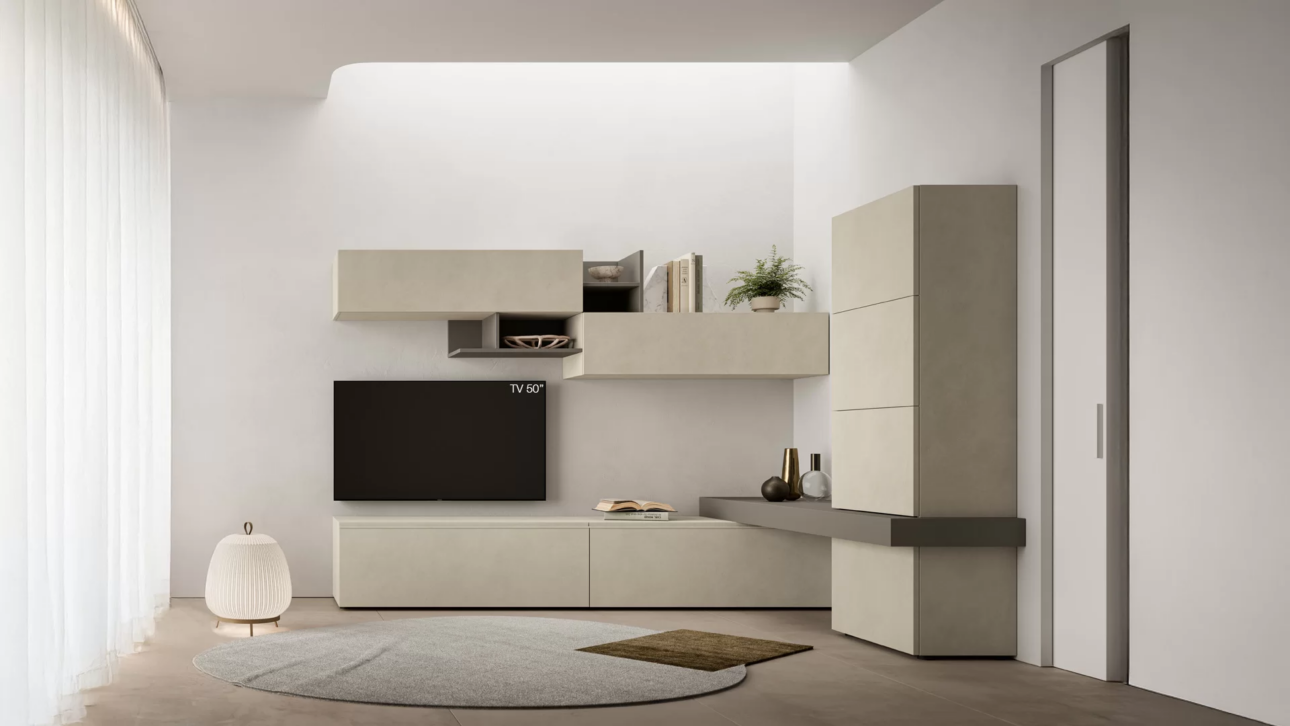
As for artificial lighting, the best solution is to avoid a single central source and to opt for diffused and layered light. Slender floor lamps, wall lamps, spotlights in strategic positions and backlit furnishings help to define the various functions of the space while also contributing to creating a more welcoming and relaxing atmosphere.
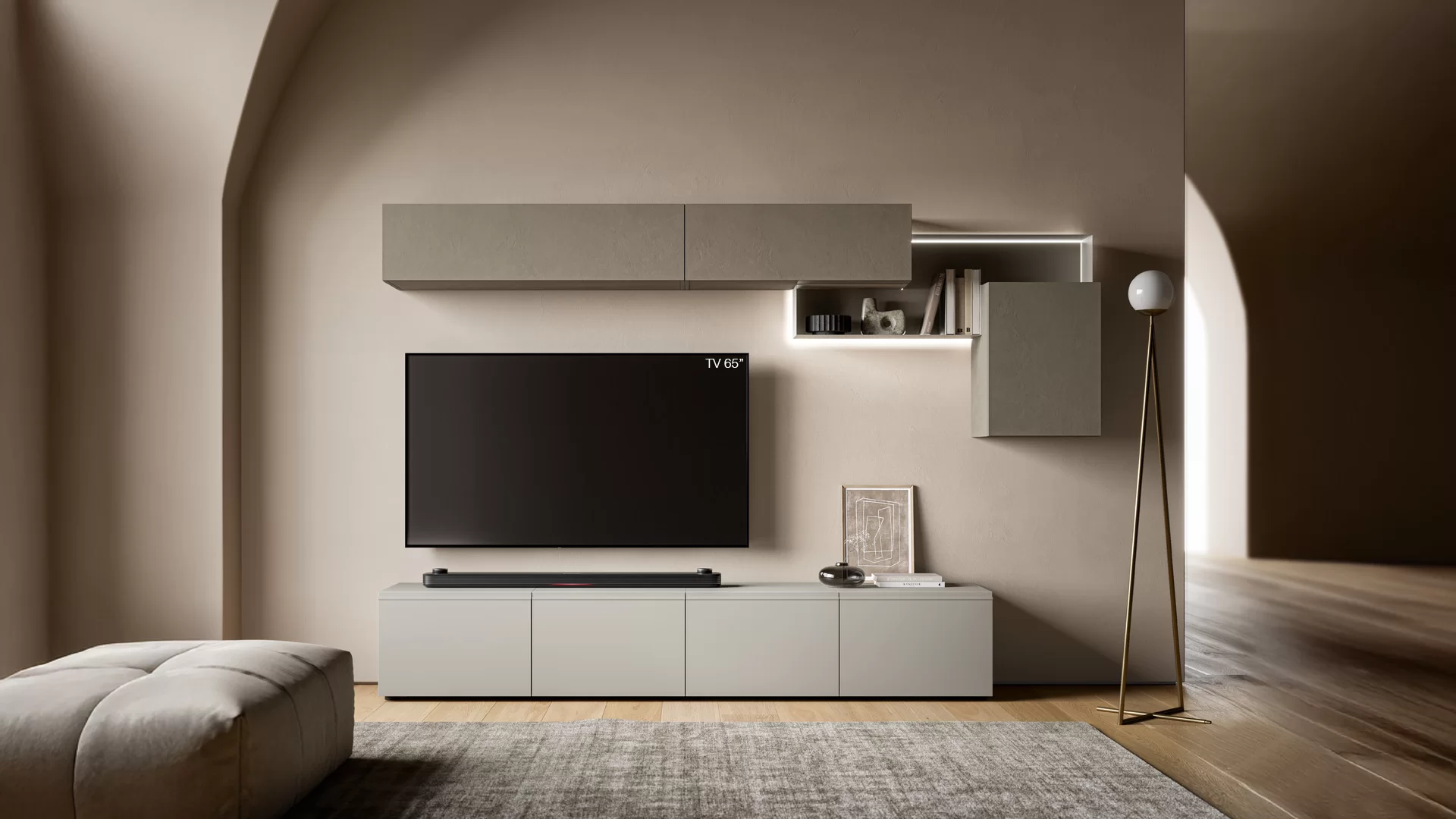
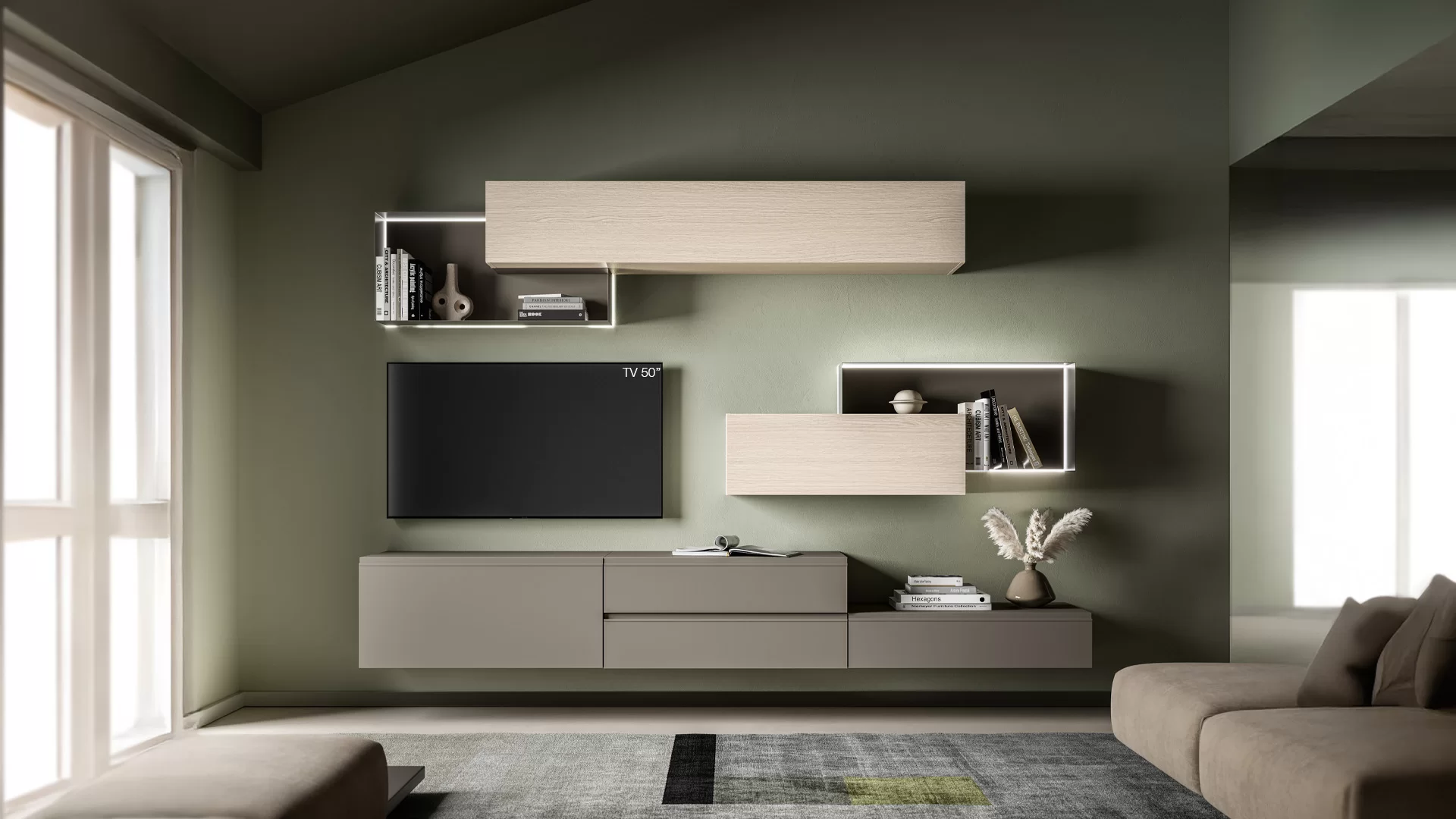
Another key element for making the flat seem larger is the strategic use of mirrors, particularly in the bedroom. Mirrors of various shapes and sizes can be positioned on free walls, over or alongside the bed, or above the dresser also to create a practical make-up vanity.
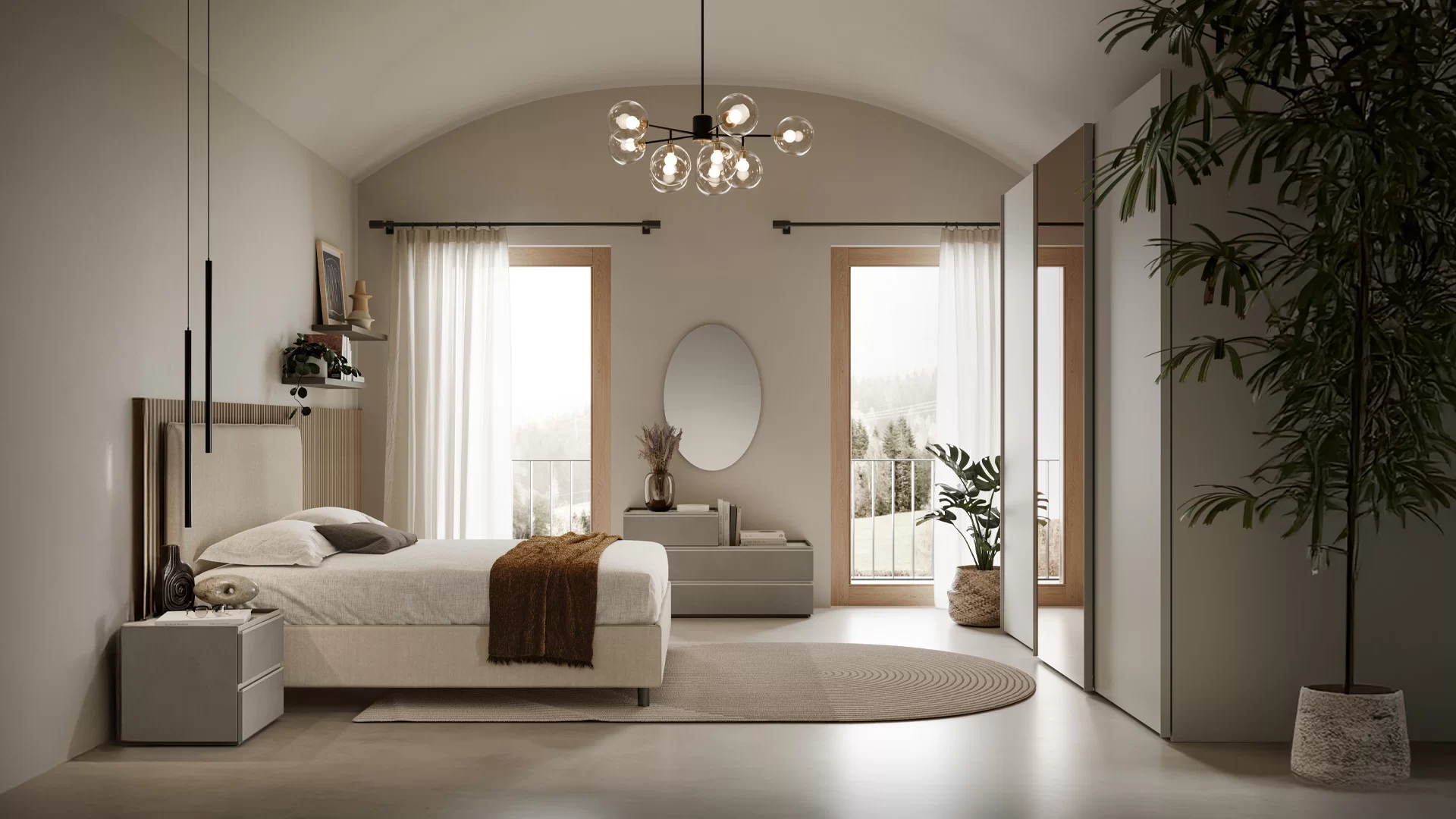
Mirrors built into the wardrobe door are also really good for brightening the space.
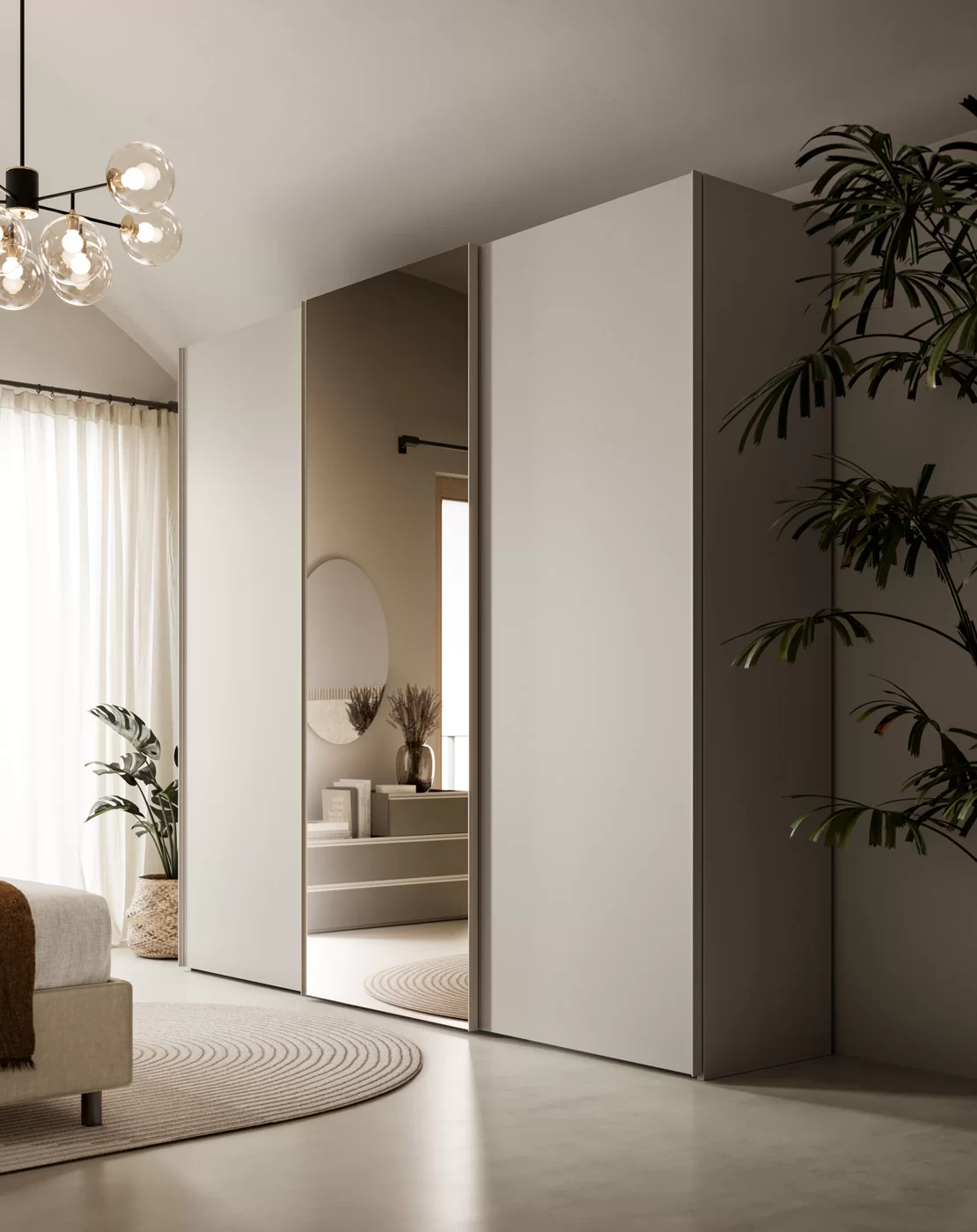
Finally, choosing matching materials and shades for furnishings, floors and walls helps to create visual continuity, essential in a small home. Contrasts must be carefully considered and textures light if you want to achieve the right aesthetic balance.
A real-life example: the interior design project of a small flat
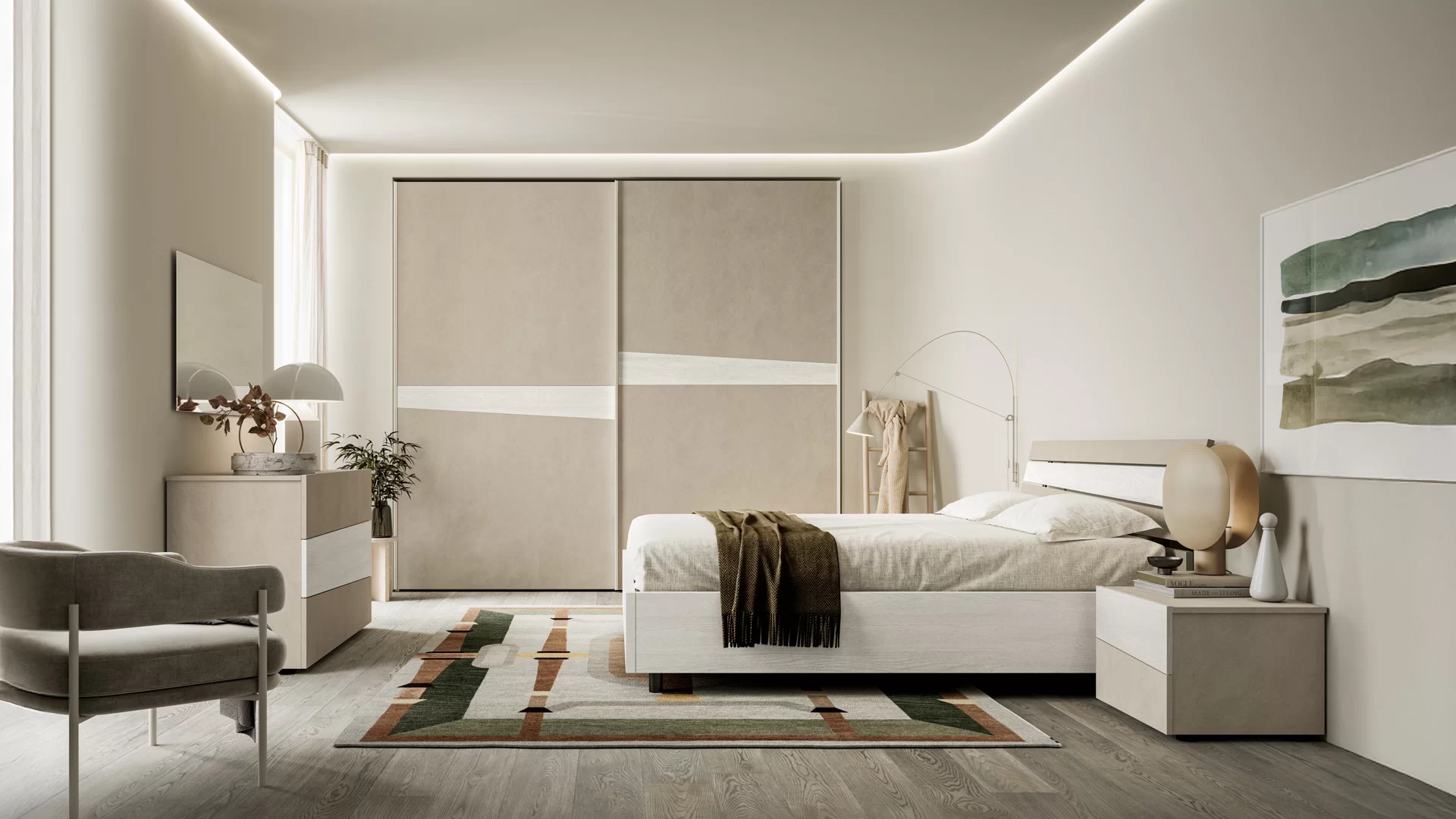
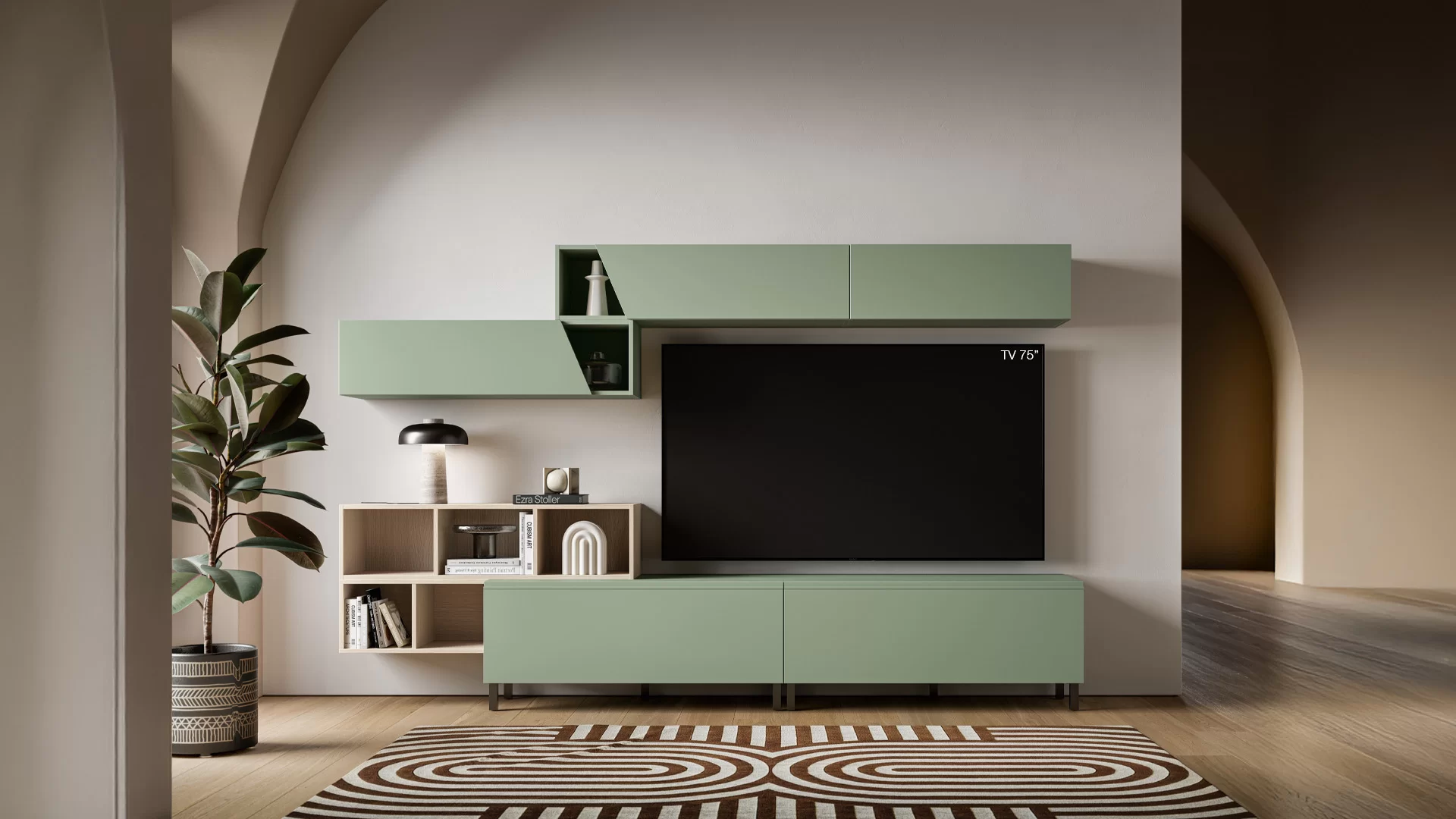
Now we’ll take a look at a real-life example of a small flat for inspiration. Green (fresh and fashionable) was chosen for both the living area and the bedroom, combining it with neutral shades to create continuity between the spaces.
The living area is furnished with a 3.61 metre-long composition. The base unit with feet is integrated with a small open bookcase and the TV is wall-mounted to leave the surface free; above, two modules with Sbieko doors create an interesting geometrical effect. A designer detail and a touch of colour is all it takes to make even the smallest of living rooms stylish.
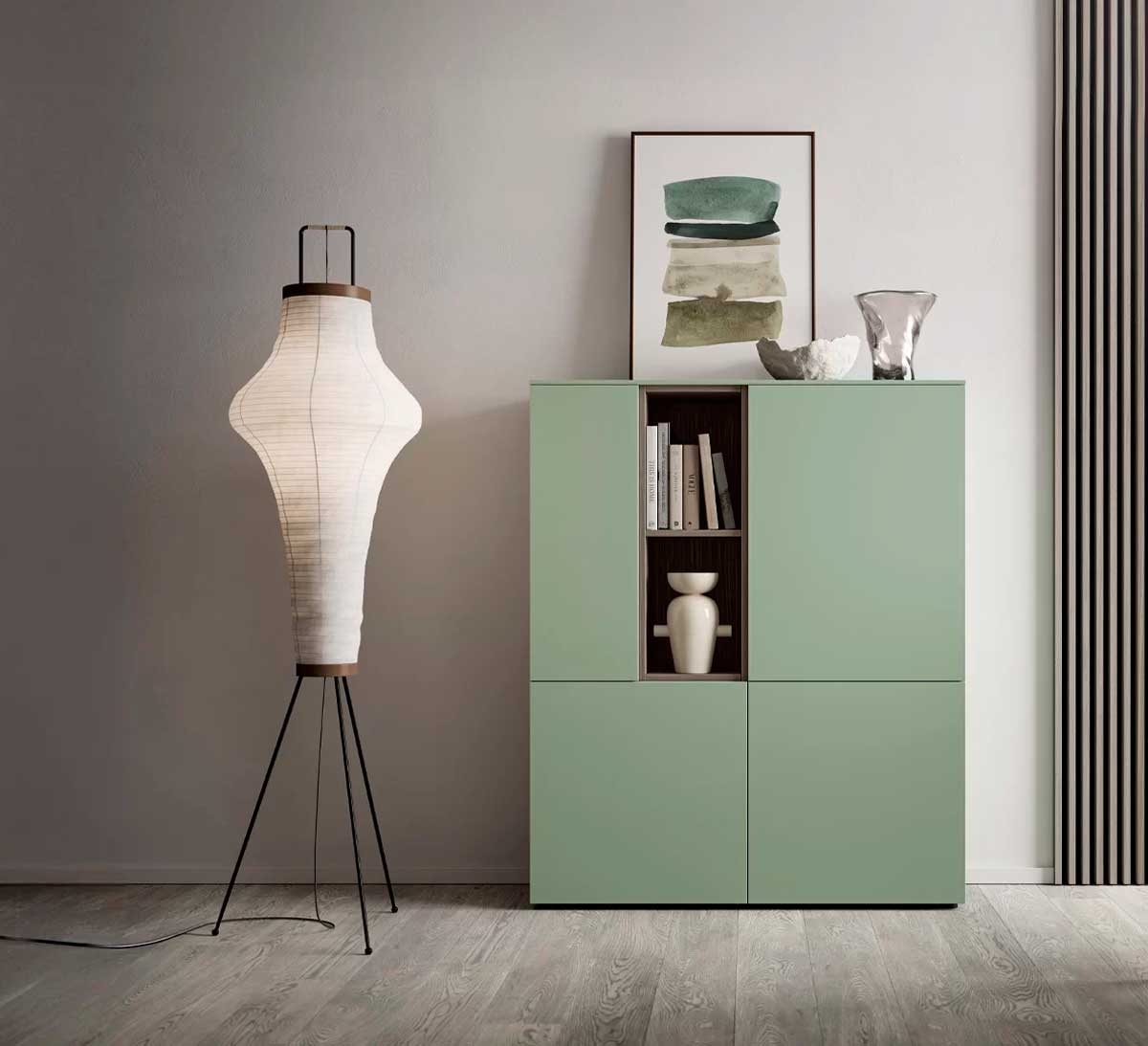
To increase the storage capacity, a cupboard in the same colour and with matching open compartment has been positioned on the side wall.
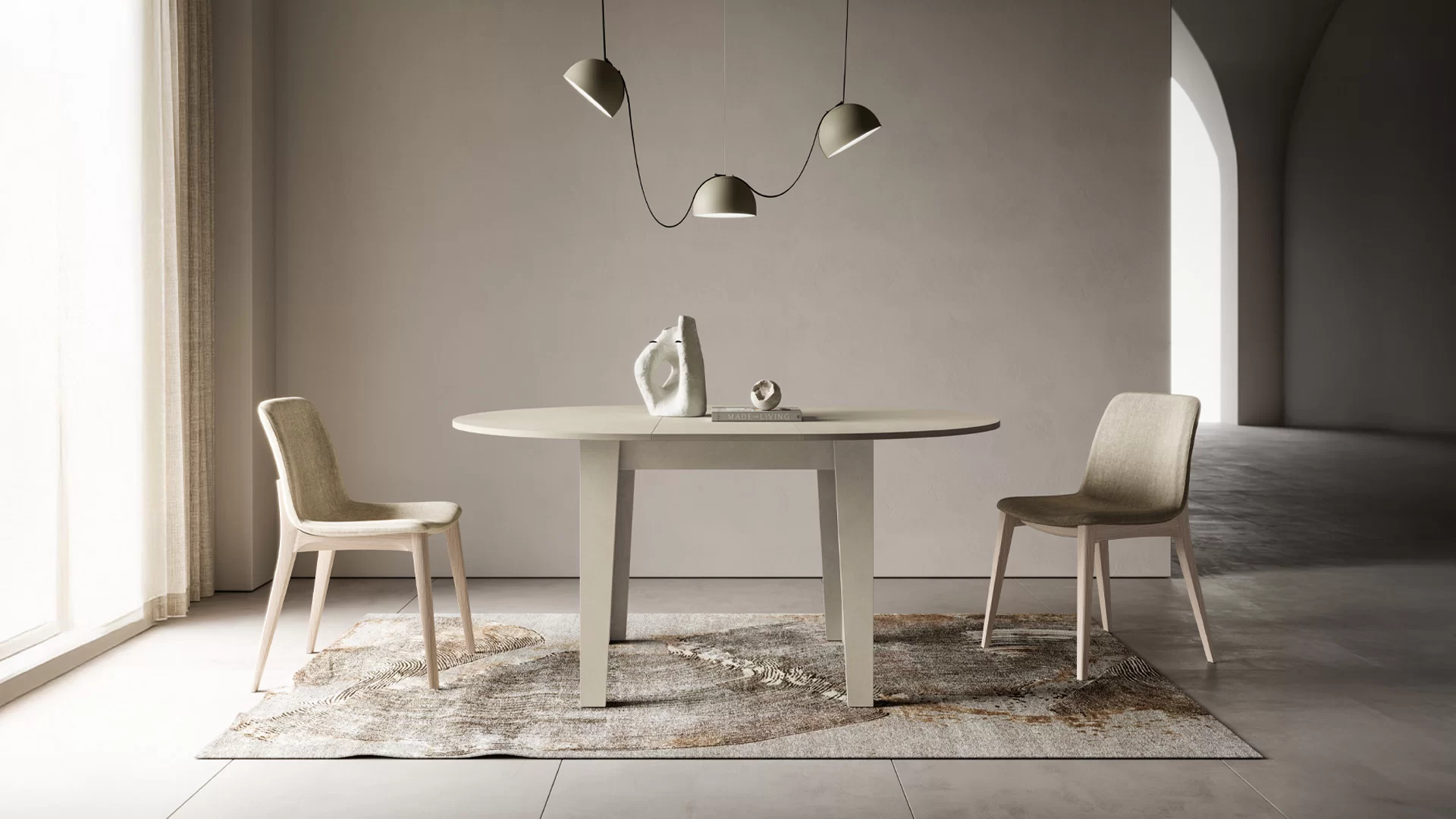
Opposite the wall unit, there’s also an extendable table, diameter 1.25 m.The table can be extended as required to host lunches or social occasions without interrupting the flow of the living room.
In the bedroom, the primary goal is always to guarantee comfort and order, even if the room is small. Let’s take a look at the solutions adopted.
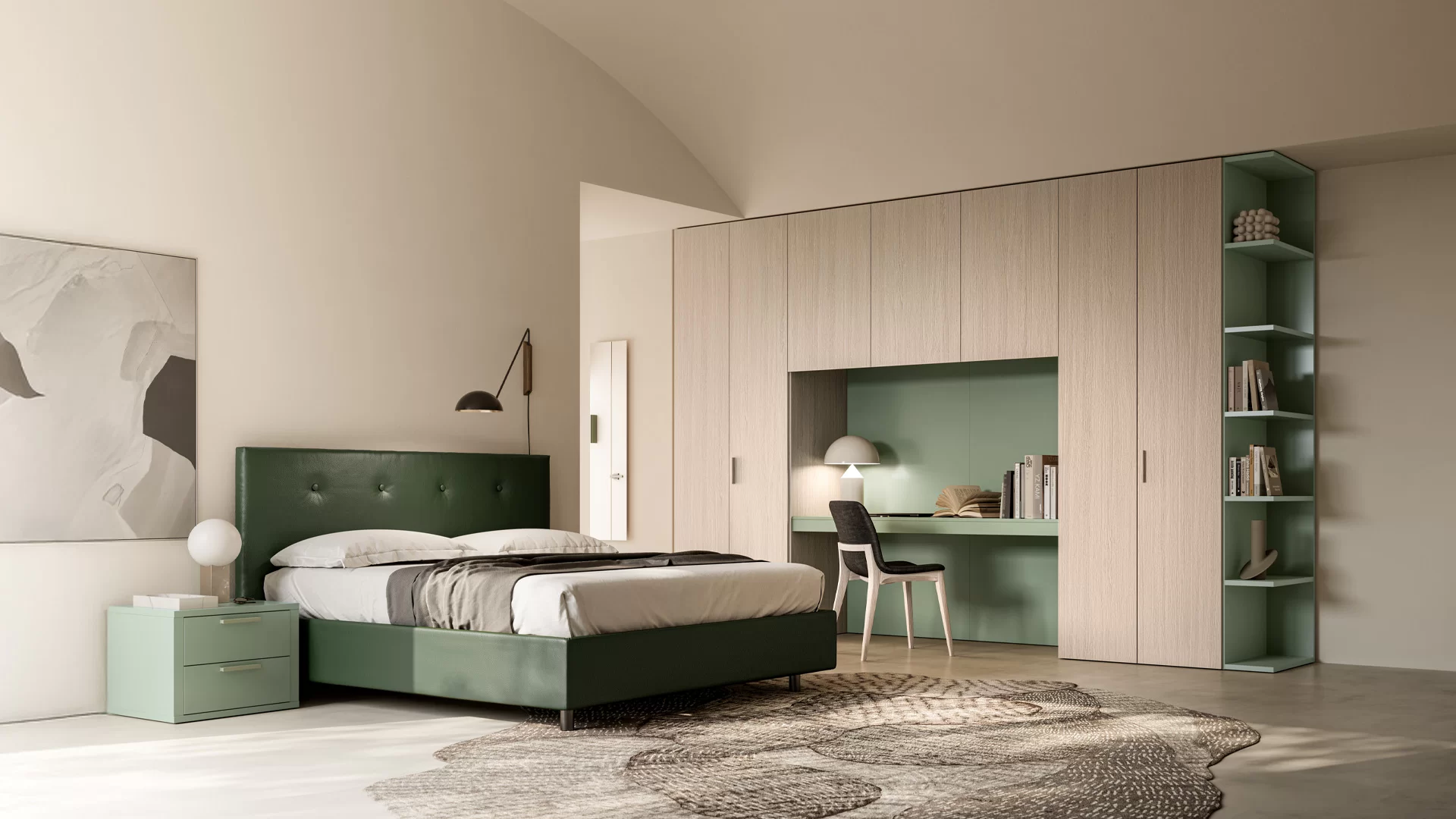
The storage bed measures 173.7×118 cm: it’s compact but allows you to maximise all the space under the mattress.
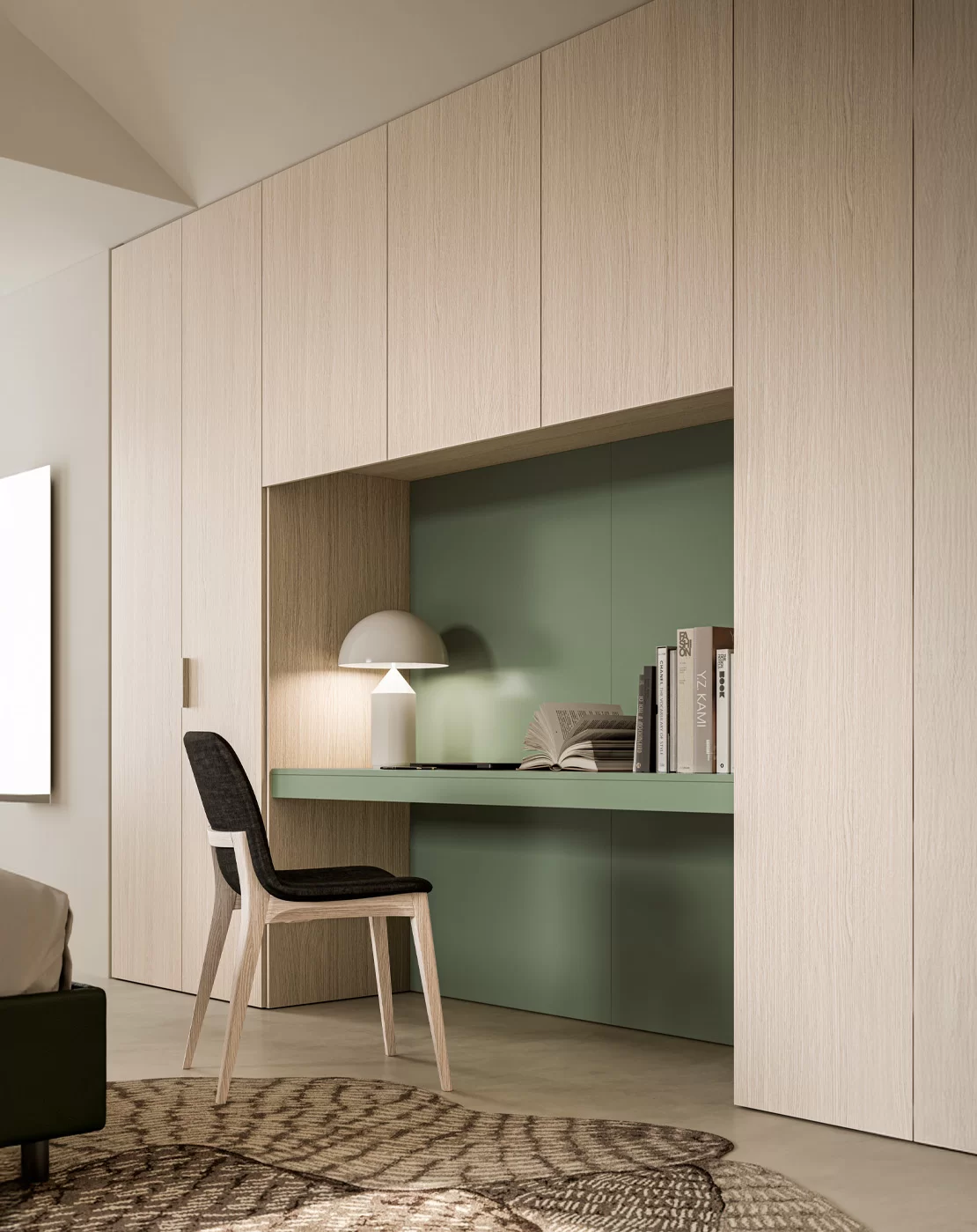
The space-saving wardrobe has been designed to take full advantage of all of the available vertical space. It has been fitted with a little niche and chunky shelf to create a highly practical and super-organised work or study corner.
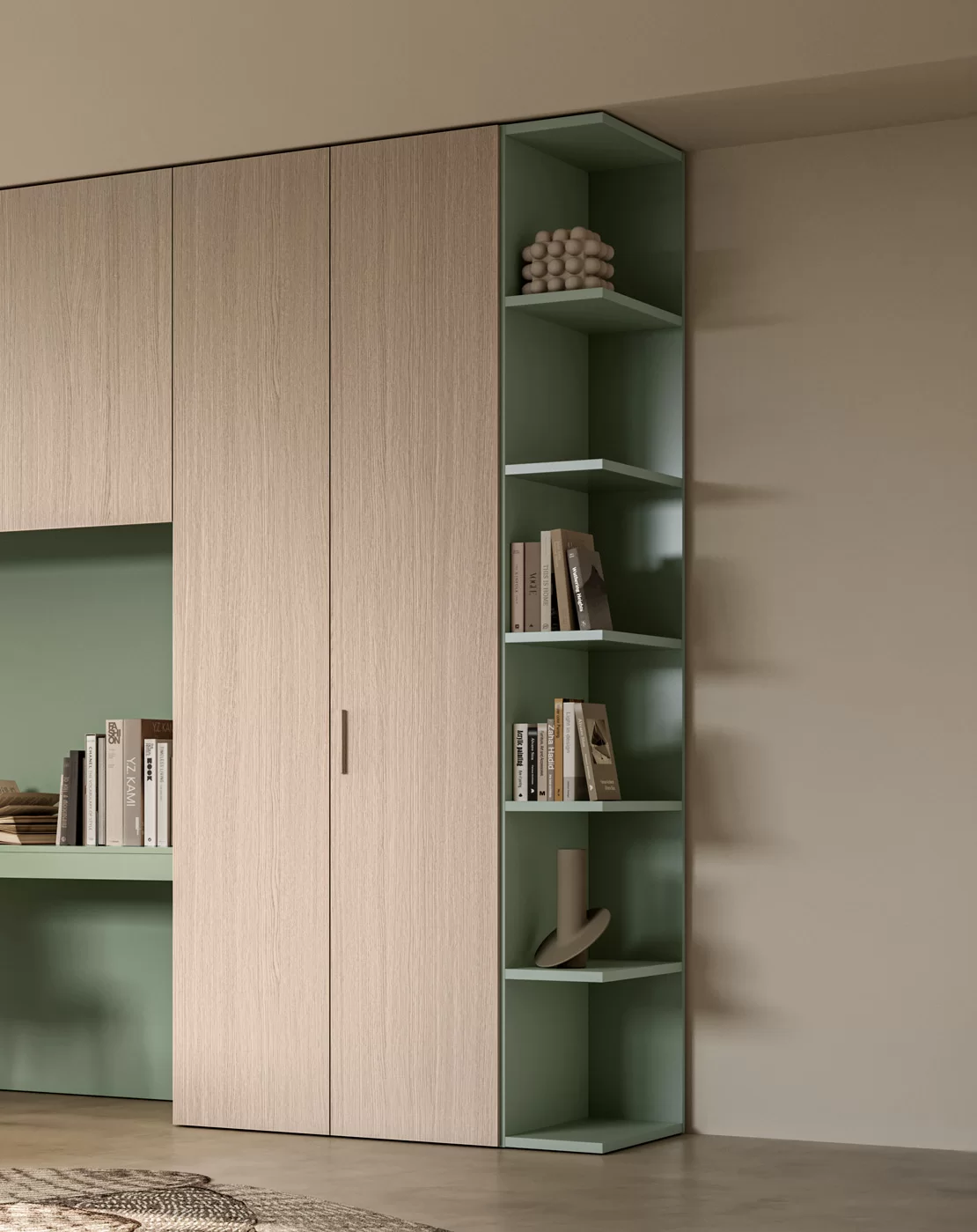
Because the room is also an office, a bookcase was also needed, hence the open-end unit with shelves built into the side of the wardrobe.
Comfort and style for small flats
Rather than making compromises, furnishing a small living room or bedroom is about learning to make more informed choices. As we’ve seen, a small flat can also be transformed into a functional home if you start by carefully measuring the available space, plan your furnishings intelligently and make optimum use of multifunctional, space-saving solutions.
Accurate measurements, furniture capable of performing multiple functions, optimised vertical space, a balanced colour palette and smart use of light are the key ingredients to maximising every centimetre. The details also make a difference, whether it be matching materials, lightweight textures or carefully chosen accessories.
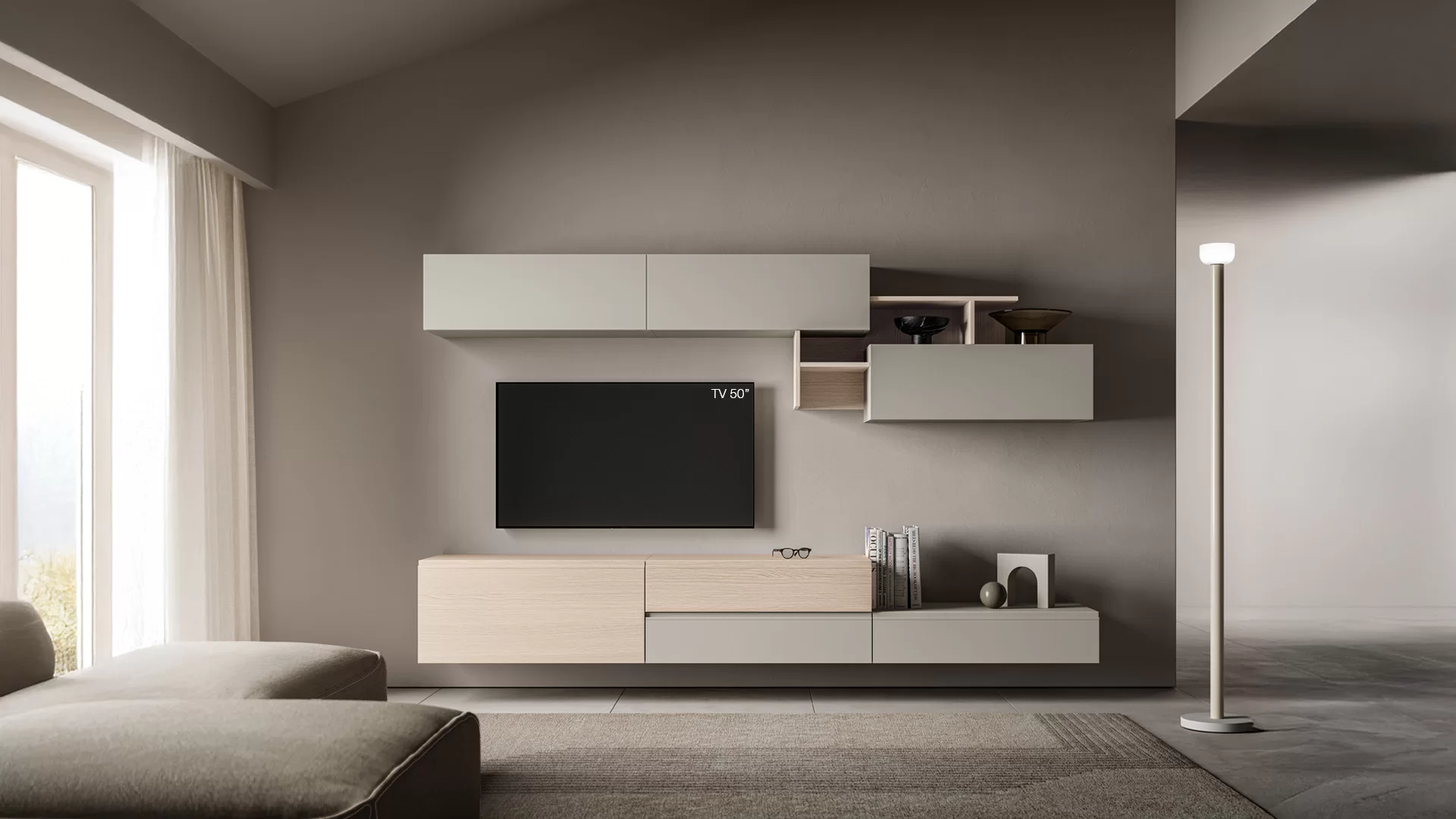
Santalucia Mobili’s modern furnishings are designed with this in mind: to offer versatile, modular and carefully crafted systems also for smaller settings. Discover the collections and customisation possibilities for furnishing the living room and bedroom in your compact space.